

 By Gusto Guitar
Compare the actual dimensions, isolate the tension change, and resolve conflicting millimetre and inch specifications before choosing a guitar.
A 628mm vs 648mm guitar scale comparison needs the actual tuning, strings and instrument configuration to make the differences useful to a buyer. The 20mm difference concerns scale length: the designed vibrating string length, rather than the guitar’s overall length or fret count. It can affect spacing and tension, but it does not tell you which complete instrument will feel better. Start with the exact number, the intended tuning and the installed strings, then test the playing tasks you need. This guide separates useful calculations from claims that require a real sample.
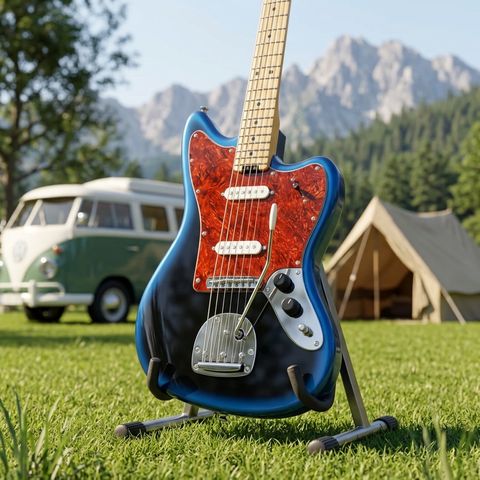
Product reference: GTST-03. Confirm the current model’s scale in its specification; a photograph cannot establish an exact vibrating length.
Check measurements in a 628mm vs 648mm guitar scale comparison
Using exactly 25.4mm per inch, 628mm converts to approximately 24.724 inches, while 648mm converts to approximately 25.512 inches. Those are calculations, not permission to rewrite a specification as a familiar industry label. Exactly 24.75 inches is 628.65mm, and exactly 25.5 inches is 647.7mm. A catalogue may round those values, but a buyer should not silently decide that it has done so.
If a title says 628mm and a specification table says 24.75 inches, ask whether they describe one nominal design with rounding, different revisions, or an error. Retain the supplied units in the enquiry and request one approved specification. This matters particularly when a purchasing team combines listings from several dates. A colour change does not itself establish a scale change, and an identical model name does not settle a conflicting dimension.
| Value supplied | Calculated equivalent | Purchasing treatment |
|---|---|---|
| 628mm | About 24.724 inches | Keep 628mm until the supplier confirms any rounding. |
| 648mm | About 25.512 inches | Do not infer it from body shape. |
| 24.75 inches | 628.65mm exactly | Reconcile with any separately stated millimetre value. |
| 25.5 inches | 647.7mm exactly | Record the nominal convention and model revision. |
2. Calculate the tension difference under controlled assumptions
D’Addario’s explanation of string tension identifies scale length, pitch and string gauge as relevant variables. For the same string construction and pitch, the ideal vibrating-string relation makes tension proportional to the square of length. Our comparison therefore uses (648 / 628) squared, approximately 1.0647. Under those fixed conditions, the 648mm string has about 6.47% more tension than the 628mm string.
That is a relative calculation, not a measured tension for either guitar. If a hypothetical string had 15 pounds of tension at 628mm, the same model of string at the same pitch would calculate to roughly 15.97 pounds at 648mm. The hypothetical starting value is chosen only to illustrate the ratio. Actual pounds require the string maker’s data, and bending feel also involves the complete instrument.
Changing pitch or string construction changes the comparison. A heavier set on the shorter guitar may feel firmer than a lighter set on the longer one. Even a shared printed gauge is not a guarantee that two different string products have identical mass per unit length or bending behaviour. Use the exact string product and tuning in a comparison record rather than writing only “tens” or “standard setup.”
3. Separate fret spacing from reach to the whole neck
In the ideal equal-tempered layout, all longitudinal fret distances scale with the nominal scale length. The 648mm layout is about 3.18% longer than the 628mm layout. The calculated nut-to-first-fret distance is approximately 35.25mm versus 36.37mm, a difference around 1.12mm. This is useful perspective: the change is real, but it does not explain every reach problem a player experiences.
Nut width, neck profile, string spacing and where the body places the neck can make two guitars with the same scale feel quite different. A shorter scale with a wide neck may still challenge a particular chord stretch. Conversely, a comfortable body position can make a longer scale easier to use than expected. Try the actual first-position chord and the transition into it, rather than judging hand size against one catalogue number.
4. Use a comparison that answers a playing question
For bends and vibrato
Choose a familiar phrase with a bend to a clearly audible target pitch. Tune both guitars accurately, use comparable fresh strings, and play through the same clean sound. Check whether you reach the target comfortably, whether the note chokes, and whether you unintentionally pull neighbouring notes sharp. Record those observations separately. Choking can involve action, fret condition or fingerboard geometry; the scale figure alone does not diagnose it.
For low tuning and strong picking
Use the intended tuning from the start. Play the lowest open note, a short palm-muted passage and fretted notes in the register used by the arrangement. Listen to pitch stability under your normal attack and check intonation with an appropriate tuner. A preference for greater resistance may favour one setup, but 648mm is not a universal guarantee for every low tuning. Strings and the available adjustment range must suit the actual requirement.
For chords and long rehearsals
Play slowly first so that forceful fretting does not conceal an uncomfortable stretch. Then repeat the same passage at tempo, seated and standing. Notice whether you alter the wrist or move the instrument to reach it. A useful trial includes transitions, not just a held chord that you can eventually arrange your fingers into. Stop treating a single successful attempt as proof of comfortable repeated use.
5. Measure the right thing when the listing is unclear
Overall length includes body and headstock dimensions and cannot substitute for scale. Nor can a count of 22 or 24 frets. A practical nominal-scale check on a conventional straight-fret instrument is twice the distance from the nut’s string contact point to the centre of the twelfth fret. Have the supplier show a clear ruler placement rather than send a tape stretched across the entire guitar.
Actual saddle positions are adjusted for intonation and may not all sit at one identical distance from the nut. That compensation is why a photograph of a tape to one saddle needs interpretation. A technical drawing or an unambiguous nominal-scale confirmation is stronger evidence than an approximate angled photograph. For multiscale instruments, request the bass and treble endpoint scales separately; one number is insufficient.
6. Turn the comparison into an acceptance record
For a sample order, write down the model revision, supplied scale and units, string make and gauges, tuning, action measurements where available, and the passages used. Ask the supplier to preserve those details with the sample reference. The goal is to make a later production sample comparable, rather than remember that the first guitar felt “quite loose.”
When two samples feel different, investigate one variable at a time. First establish that both are in the intended tuning and that the string specifications match. Then compare setup and playing position. Only after those checks should the team attribute a difference to scale length. This sequence reduces the risk of approving a preferred setup while accidentally specifying an unrelated construction change.
A retailer can use the same record to improve product descriptions. State the confirmed scale, describe the observed feel as a sample observation, and avoid assigning every shorter instrument to beginners or every longer one to heavy music. Buyers often have several needs at once: comfortable bends, clear rhythm parts and familiar chord spacing. The best description helps them compare those needs without making promises the number cannot support.
Compare scale length on the relevant solid-body instruments before introducing other variables. For extended-range choices in the 7- and 12-string category, retain the actual tuning, string arrangement and individual model measurements.
Questions worth resolving before ordering
Will 628mm automatically be easier for a beginner?
No. The modest spacing and same-string tension differences may help some players, but setup and neck fit remain decisive. Compare an actual lesson exercise and an accurately fretted chord. Excessive action can make either scale unnecessarily difficult.
Does 648mm mean a different musical range?
Not by itself. With the same tuning and fret count, both offer the same nominal fretted notes. Scale length changes the physical arrangement and required tension, rather than adding a new string or two extra frets.
What if the title and table disagree?
Request a corrected model-specific specification before treating either as authoritative. Do not average the numbers or relabel them to match a familiar guitar family. Keep the clarification with the order, especially when several finishes share one model code.
Browse the Gusto product categories to identify the instrument family first, then ask for the exact model’s scale and setup information. The useful decision combines a confirmed dimension with a repeatable playing test.

Get Best Guitars
Join Gustoguitar.com Newsletter to get more information of electric guitars, classical guitars, and all kinds of guitars.


