

 By Gusto Guitar
Compare body fit, pickup combinations, bridge behaviour and working controls—then translate familiar style labels into a clear specification for your own guitar.
An ST-style vs TL-style comparison is most useful when it examines the actual body, pickups, bridge and controls on two complete instruments. In practice, a player is choosing a collection of features: how the body rests against the arm, which pickup combinations are available, whether the bridge moves and how easily the controls can be used during a song. Start with those requirements and the style choice becomes more precise.
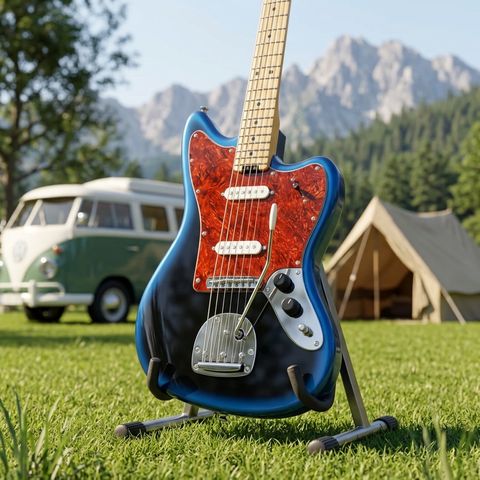
A GTST-03 example from Gusto Guitar’s solid body range. Confirm the exact pickups, switching and bridge fitted to the model being quoted.
Compare ST-style vs TL-style configurations before labels
In this guide, ST-style and TL-style are descriptive shorthand for broad design families associated with the Stratocaster and Telecaster. The Fender names identify that manufacturer’s instruments; a similarly shaped guitar from another supplier is not automatically a Fender product or built to an identical specification.
Fender’s comparison of traditional Stratocaster and Telecaster features describes familiar reference points: a contoured double-cutaway design with three pickups on one side, and a single-cutaway design commonly using two pickups on the other. It also notes that variants exist. Use those reference points to organize questions, not to fill in missing specifications on an unfamiliar guitar.
Before comparing quotations, replace each shorthand term with an explicit field. Write the body shape and contours, actual pickup arrangement, selector functions, bridge type, neck dimensions and control layout. This prevents a supplier from answering a question about a traditional configuration with an offer for a modern variant that serves a different purpose.
First decision: how much do body contours matter to you?
Try each sample seated before concentrating on the sound. Place your picking arm where it normally rests, then play for long enough to notice whether you are adjusting your posture to avoid an edge. Stand with a strap and repeat the exercise. The objective is to identify a comfortable shape for your body and technique, not to award a universal ergonomics score to a silhouette.
Contemporary variants may add contours to a traditionally flatter body or change the heel and cutaways. A front photograph can hide those differences. Request side and rear views, and check the exact sample if forearm support, upper-fret access or standing balance is central to your decision.
Neck feel deserves its own evaluation. Two guitars with similar bodies can have very different neck profiles, widths and fret dimensions. Conversely, two different body styles can both feel comfortable. Do not let a familiar headstock or outline stand in for the measurements your hands actually encounter.
Second decision: which pickup combinations do you use?
Count usable combinations, not just visible pickups
A traditional three-pickup, five-position arrangement and a two-pickup, three-position arrangement offer different ways to select sounds. However, a switch with five positions does not tell you exactly what every position does on a modified circuit. Ask for a selector diagram that identifies the active pickups and any special wiring.
Likewise, an HSS configuration changes the purchasing question. You are no longer comparing only two traditional single-coil designs. Coil-splitting options or additional switching can add further differences. Document those functions before choosing a sample so they can be checked systematically on delivery.
Do not reduce the bridge-pickup comparison to a slogan
Fender’s explanation of its traditional bridge pickups discusses physical dimensions and metal mounting components as relevant differences. That is a reason to identify the actual components. It is not evidence that every TL-style bridge pickup, or every replacement sold in that shape, will deliver the same output and response.
For an audition, play a short bridge-pickup passage on each instrument, then compare the combinations you expect to use most often. Keep one recording at the original output level and another at a similar listening level. The first shows the practical level difference; the second helps you consider the character without automatically preferring the louder example.
Third decision: do you need a moving bridge?
A common distinction in traditional designs is a tremolo-equipped ST-style guitar versus a fixed-bridge TL-style guitar. Modern instruments can depart from that pattern. Confirm the actual bridge rather than deciding from the body outline or whether a tremolo arm happens to appear in one photograph.
If you use pitch modulation, ask for a demonstration of the system fitted to the proposed sample. Check the return to tuning after the type of movement you actually use, and request its setup instructions. If you do not use that function, consider whether a fixed-bridge option better matches your priorities instead of assuming that more hardware necessarily means more versatility.
The future setup matters too. Tell the seller which string gauge and tuning you intend to use. Ask what must be rechecked if either changes. A buyer planning to alternate tunings frequently should discuss that use before approving a sample set up for a different routine.
A feature matrix for a meaningful enquiry
| Your requirement | What to compare | Evidence to request |
|---|---|---|
| Comfort over a long session | Contours, balance and neck measurements. | Rear and side photographs plus a physical trial. |
| Specific pickup combinations | Pickup types and the function of every selector position. | Wiring description and a labeled sound demonstration. |
| Pitch-modulation technique | The exact moving-bridge system and adjustment procedure. | Sample test and model-specific instructions. |
| Reliable model-to-model comparison | Strings, setup, controls and amplifier conditions. | A consistent test sequence rather than unrelated clips. |
| A clear production order | The confirmed configuration and permitted substitutions. | A dated sample specification and approval record. |
Listen for your application rather than a genre stereotype
Calling one family a country guitar and the other a rock guitar does not answer whether either sample suits your playing. Define a few actual parts instead: rhythm chords that must remain distinct, a single-note phrase that needs to be heard in a mix, and a quieter passage controlled from the guitar’s volume knob.
Try those parts through the same practical setup. Check the pickup selections you would use during the song, not just the setting chosen by the demonstrator. If a control change helps one guitar, note it. The relevant question is whether you can reach the required result conveniently and repeatably.
For a remote purchase, ask for a continuous demonstration showing the selector position and control settings. A heavily processed montage can be entertaining while leaving the buyer uncertain about the configuration being heard. Clear labeling and consistent conditions make the comparison useful without requiring an elaborate recording session.
For a dealer: avoid ordering two models that solve the same problem
A small product range benefits from defined roles. One model might offer a straightforward two-pickup layout, while another provides a different bridge function or a particular set of pickup combinations. The point is to give customers a meaningful choice, not merely two outlines with nearly identical working features.
Build a short specification card for each proposed model. If the cards differ only in colour and a broad style label, ask whether that distinction is enough for the intended audience. If the controls or bridge differ, make sure the sales description explains what the difference lets the player do.
Keep appearance choices separate from changes requiring sample approval. A new finish is not equivalent to a substituted pickup or bridge. Identify which components and functions must remain consistent, and use the approved sample as the reference for future orders.
Check service details before accepting the sample
Photograph the bridge, controls and electronics access. Ask which replacement parts need a specific spacing or mounting pattern and how a technician can identify them. A part described only as an “ST bridge” or “TL pickup” may leave important dimensions unresolved.
Operate each control in a normal playing position. Check for awkward switch access, accidental knob movement or cable interference. These observations can be discussed precisely with the supplier and may matter more to the player than a small cosmetic difference between two otherwise suitable models.
Common questions about ST-style and TL-style guitars
Does every ST-style guitar have a tremolo?
No broad style name should be treated as a complete hardware specification. Check the actual model, bridge photographs and supplier documentation. A hardtail configuration can be a deliberate variant rather than an incomplete traditional design.
Does a TL-style guitar always have two single-coil pickups?
That is a familiar traditional arrangement, but other configurations exist. Request the pickup types, control functions and selector diagram for the guitar being offered rather than assuming them from its shape.
Which is easier for a beginner?
A comfortable neck, a suitable setup and understandable controls are more useful criteria than the family name alone. Let the beginner try both positions and basic control changes, then choose the instrument that supports practice without unnecessary difficulty.
Can I compare the two styles from one sound clip?
A clip can help shortlist a sound, but it cannot confirm comfort, component compatibility or every control function. Use it alongside the specification and a repeatable sample test, especially when the instruments differ in pickup configuration.
Compare actual configurations in the solid-body electric guitar range. If another body construction is in the shortlist, use the body-construction comparison before attributing a difference only to ST-style or TL-style labels.
Turn your preference into a model specification
Write the features you want in plain language: preferred body fit, useful pickup combinations, bridge function and neck requirements. Then compare actual instruments against that list. This keeps the purchase focused on playing needs and gives the supplier a specification that can be checked.
Browse Gusto Guitar’s solid body electric guitars, including the GTST-03 and GTTL-02 pages as starting points for an enquiry. Ask for the current model specification before confirming configuration, sample or order.

Get Best Guitars
Join Gustoguitar.com Newsletter to get more information of electric guitars, classical guitars, and all kinds of guitars.


