

 By Gusto Guitar
A coil-split control changes how a multi-coil pickup operates. Verify which coil remains, which selector positions are affected and whether the resulting sound is useful in your music.
Guitar coil splitting changes how a compatible humbucker operates, so the resulting control functions and sound need to be checked on the actual instrument. One guitar may split both pickups with a single control, another may provide separate switches and another may change automatically in particular selector positions. Understanding the actual circuit helps you evaluate the feature without expecting it to reproduce every quality of a different single-coil guitar.
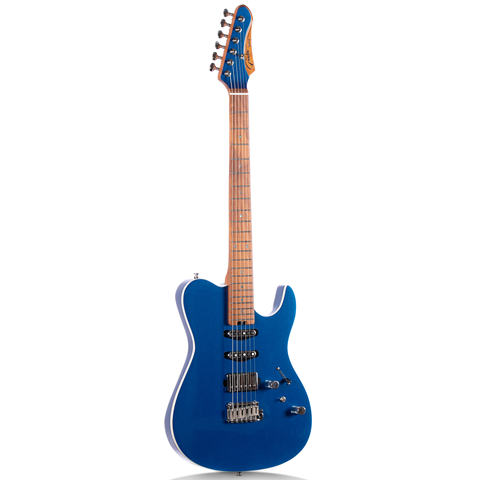
Gusto Guitar GTTL-03 reference image. Confirm the current control function and affected pickup positions rather than identifying a split from appearance.
Define guitar coil splitting before comparing control labels
In a conventional full split, one coil of a humbucker is taken out of normal operation while the other remains active. Fender explains this basic distinction in its coil-splitting and coil-tapping guide. This is an electrical operating change, not the physical removal of half the pickup.
The remaining coil still belongs to that pickup, in its installed position and surrounding circuit. A split humbucker does not become a different pickup with another coil shape, magnet arrangement or mounting location. Listen to the result as a useful setting in its own right rather than demanding an exact imitation of a separate instrument.
Also establish which coil remains active. That detail can matter when the pickup is combined with another pickup or when a supplier is trying to reproduce an approved sample. A general statement that the guitar splits does not answer it.
Why coil tap is not a dependable synonym
Fender describes a traditional tap as taking a connection from an intermediate point in a winding rather than using its full end-to-end path. That is conceptually different from turning off one complete coil of a humbucker. A catalogue that uses split and tap interchangeably should therefore be clarified.
However, terminology can also be specific to a manufacturer’s circuit family. PRS Europe’s tap, split and isolated-split explanation defines its tap arrangement as retaining part of one coil with the other fully active. It separately describes split and isolated-split methods.
The useful response is not to rename every manufacturer’s feature from a distance. Ask what the named control actually connects on the exact model. Keep the maker’s label alongside a plain-language circuit description so the purchasing record and customer instructions remain accurate.
Separate splitting, parallel operation and pickup selection
A split function should not be confused with selecting a different pickup or with a different connection between two active coils. A push-pull knob can perform several possible jobs, and the shape of the control does not identify the installed function.
Ask the supplier to explain the full operation in two states: ordinary position and changed position. Then ask which selector settings are affected. If a switch acts only on the bridge pickup, a neck-only setting may remain unchanged, which is useful information rather than evidence that the feature is broken.
For an instrument with several extra controls, obtain a complete map. Otherwise, a demonstration may switch more than one variable at once, leaving you unable to reproduce the sound later.
Read a split feature as a small operating matrix
| Field | Question to settle | Why it matters |
|---|---|---|
| Affected pickup | Bridge, neck, both or a position-dependent combination? | Identifies where a change should be audible. |
| Operating control | Which knob, switch or selector position activates it? | Makes the feature repeatable during playing. |
| Circuit function | Full split, maker-defined partial arrangement or another function? | Prevents misleading terminology. |
| Active coil | Which coil remains in use where relevant? | Supports accurate combinations and repeat orders. |
| Combined positions | What happens when another pickup is also selected? | The complete sound depends on more than the isolated coil. |
Expect a different response, then assess the level change
Changing the active pickup arrangement can change both level and tonal balance. Do not judge the quieter setting as automatically worse or normalize every demonstration segment so aggressively that the real transition disappears.
First, play the same phrase before and after operating the control without changing amplifier settings. Listen to the actual level step. Then compare at a sensible matched listening level to evaluate the character separately. These are two different tests and both can be useful.
If the split is intended for a quieter accompaniment section, a level reduction may suit the arrangement. If it is intended for an exposed lead, check whether a practical control or amplifier adjustment gives the required result. The decision should follow the musical job rather than a rule that all settings must be equally loud.
Test noise in the operating positions you need
A conventional full split should not be assumed to retain the normal hum-cancelling behaviour of the complete humbucker. Evaluate the split setting with the intended gain and surroundings documented. Also test any combined positions that you plan to use.
Do not infer that a split plus another single-coil is automatically hum-cancelling. The specific pickup pairing and circuit need confirmation. A useful sample report names the selector position and control state instead of giving the whole guitar a single quiet or noisy label.
If unwanted sound appears, distinguish electrical hum from other symptoms such as feedback or an intermittent connection. Ask for an appropriate diagnosis rather than treating every issue as an unavoidable consequence of splitting.
A five-step audition for a split-equipped guitar
1. Establish the ordinary humbucker setting
Use a short clean passage with chords and single notes. Record the guitar controls and amplifier setting so the baseline can be repeated.
2. Operate only the split control
Repeat the passage and note the change. Avoid changing pickup position, volume and effects simultaneously, because that conceals what the split itself contributes.
3. Try the useful combinations
Follow the approved control map through the affected selector positions. Identify which combinations you would actually use rather than treating every theoretical option as equally valuable.
4. Use the intended driven sound
Play a representative part at the required gain and include rests. Listen for articulation and manageable noise, not just a sustained note that fills the clip.
5. Rehearse a real transition
Switch between two song sections while playing. Check whether the control is reachable and whether any necessary level adjustment is simple enough for your performance.
Check the physical control as well as the sound
Try operating the switch while holding the guitar normally. A push-pull knob, a push-push mechanism and a separate mini-switch can require different hand movements. Confirm which type is supplied and whether it can be used without accidentally changing the volume or tone setting.
For a remote purchase, request a clear demonstration of the control movement. That small detail helps distinguish an electrical feature you like in a recording from an operating arrangement that suits your hands.
For modifications, confirm the complete installation
Do not assume any humbucker can be connected to any split switch without checking the pickup’s available connections and the intended circuit. Obtain the maker’s diagram and have compatibility assessed by someone qualified for the work.
Wire colours are not a universal instruction system across brands. Use the documentation for the exact pickup and controls, not a photograph of another installation. A feature name is not a safe substitute for a verified diagram.
Before authorizing work, agree which pickup will change and what the finished positions should do. That prevents a modification from meeting the word split while failing to provide the combination the player expected.
For purchasing, approve the function rather than the knob
Keep the control map, pickup identification and demonstration with the sample record. A push-pull component is only evidence that a switching mechanism exists; it does not establish how the guitar is wired.
If a supplier changes pickups or wiring on a later batch, repeat the functional check. A visually identical control layout can still produce a different result. Update the website description to match the confirmed build rather than retaining a copied claim.
Related reading: HH, HSS and SS configuration guide. Layout and splitting are related questions, but neither replaces the other.
Check the circuit on a specific model in the solid-body range. For an instrument in the headless guitar category, verify coil-split availability independently of the tuning system or body outline.
Common coil-split questions
Will a split humbucker sound exactly like a separate single coil?
Do not assume an exact match. Evaluate the remaining coil in its actual position and circuit, and judge whether that sound is useful.
Does a push-pull knob prove coil splitting?
No. Confirm its assigned function and the affected selector positions.
Is coil tap always the same thing?
No. The terminology and implementation need clarification from the maker, particularly where a manufacturer uses its own defined circuit names.
Browse Gusto Guitar’s solid-body models and request a current switching map and demonstration for the configuration you are considering.

Get Best Guitars
Join Gustoguitar.com Newsletter to get more information of electric guitars, classical guitars, and all kinds of guitars.


