

 By Gusto Guitar
Send a versioned specification, a clear quantity mix and a structured reply sheet so that suppliers can quote the same instrument on the same basis.
An electric guitar RFQ should describe the actual instrument, order assumptions and unresolved questions clearly enough for suppliers to quote the same scope. A message asking for the best wholesale price may produce several plausible quotations for quite different instruments, accessories and delivery scopes. The useful work is to turn your buying brief into fields that a supplier can confirm, qualify or decline. This guide provides a practical specification and response format. It is not a current Gusto quotation, and the example fields do not establish availability, minimum order quantities or delivery terms.
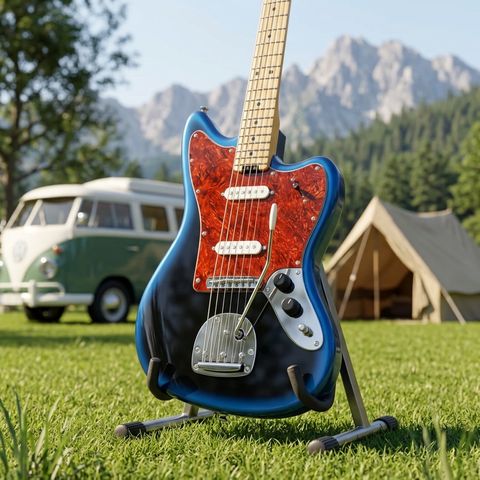
Existing model reference: GTST-03. Attach the exact product revision and proposed changes to an enquiry; this image alone is not an approved specification.
Define the instrument in an electric guitar RFQ
Use an RFQ number, issue date, revision and named decision contact. Put the same identifier on the specification, artwork and response sheet. State whether you are requesting an existing model, a modified model or feasibility advice for a concept. These three requests may need different levels of technical review, and a supplier should not have to infer which one you intended.
Keep one primary specification file. Label photographs by what they demonstrate, such as finish direction, control location or packaging fit. A reference guitar may have features you do not want, so identify exclusions as well as desired details. If a later message changes the bridge, update the specification revision rather than leaving the supplier to reconcile several contradictory chat messages.
Separate required, preferred and unresolved fields
Mark a non-negotiable requirement as required. Mark a preference as open to alternatives, and mark unknown values as supplier proposals. This prevents an early suggestion from becoming an accidental commitment. It also gives the supplier a useful way to explain a feasible alternative without presenting it as a silent substitution.
For example, a fixed bridge may be required while hardware colour is negotiable. A particular string count may be essential while a suitable pickup model remains open for recommendation. Do not make every field mandatory merely to complete the form: an unjustified restriction can exclude an otherwise suitable instrument and obscure the actual priorities.
A specification sheet you can fill in
| Field | Buyer entry | Supplier reply required |
|---|---|---|
| Model and revision | [Existing model / drawing reference / concept] | Confirm exact basis and list deviations. |
| Strings, tuning and scale | [String count; note for each string; scale and units] | Confirm values; clarify rounding or conflicts. |
| Neck and playing geometry | [Joint; fret count; nut width; profile dimensions if critical] | Confirm measurement positions and feasible limits. |
| Electronics | [Pickup models or requirements; switching matrix] | Provide actual parts and control behaviour. |
| Finish and identification | [Surfaces; sheen; artwork file and revision] | Identify reference sample and approval method. |
| Setup and sample checks | [Strings; action method; test passages; review plan] | Propose model-specific targets for agreement. |
| Included items | [Case/bag; cable; tools; instructions; packaging] | Separate included, optional and unavailable items. |
| Quantity mix | [Units by configuration and colour; repeat-order scenario] | Quote each configuration on the stated mix. |
This sheet is a starting structure, not a universal technical standard. Add dimensions that matter to your use, and remove details that are irrelevant. For a multiscale or headless model, add endpoint scales and string-end compatibility. For active electronics, ask how the power requirement and battery access are documented. The aim is to expose decisions that affect the actual instrument.
Write measurable details instead of attractive adjectives
“Fast neck,” “low action” and “professional pickups” do not tell two factories to build the same thing. Define a neck dimension at a stated fret, identify a component precisely where required, and state how a setup measurement will be taken. Ibanez’s RG7421 specification, for example, lists neck widths and thicknesses at identified positions, along with tuning, string gauges and switching information. Its values belong to that model; the useful lesson is the clarity of the fields.
If you request an action measurement, specify the string, fret, tuning and measurement reference. Fender’s Stratocaster setup guide uses a stated measurement position and explains that its guidance depends on instrument and playing requirements. Do not copy another brand’s number into an RFQ as though it were a universal acceptance limit.
Where you do not yet know a suitable target, ask for the supplier’s proposed setup and the method used. You can approve or revise it after evaluating the sample. A clear provisional value is more useful than a supposedly precise requirement that neither party can repeat consistently.
Request a complete price scope
Ask the supplier to distinguish the instrument price from sample charges, proposed development or tooling costs, optional accessories and packaging additions where applicable. Identify currency, quotation validity, quantity basis and what is included in the stated delivery scope. These are questions for the actual quotation; a historic marketplace price is not a reliable substitute.
Do not compare a bare guitar quotation against one including a hard case and then conclude that the second supplier is simply more expensive. Build a comparison using the same requested configuration and included items. Keep optional alternatives on separate lines so they can be evaluated without changing the base offer.
If quantities are uncertain, present honest scenarios: a proposed sample order, an initial production mix and a possible reorder. Request the applicable conditions for each rather than inventing a minimum quantity. A supplier’s response may depend on configuration mix as well as total units, so list finishes and electronics variants separately.
Ask for exceptions in a dedicated reply column
Require each important line to receive one of three responses: confirmed, proposed alternative or clarification needed. Ask for the exact difference when an alternative is offered. An overall reply of “yes, we can do it” can conceal unresolved materials, component sourcing or geometry. A field-by-field response lets the buyer see those gaps before approving a sample.
Include a short deviation log with the original requirement, proposed substitute, reason and effect on sample approval. A substitution might change mounting, appearance, operation or service information. Evaluate it on those consequences rather than accepting the phrase “same quality.” Any approved change should move into the next specification revision.
Define what happens between quotation and approval
State whether you expect photographs, dimensional evidence, a playable sample or a combination. Identify who will review it and what information must accompany it. A useful sample package includes model identification, the actual component list, strings and tuning, setup measurements and a list of any differences from the quoted specification.
Request a proposed sequence for open approvals, such as finish reference, artwork placement, component confirmation and final sample review. Ask which decisions must be settled before a meaningful production estimate can be given. A calendar date without its dependencies can look precise while remaining impossible to assess.
Separate sample acceptance from later production inspection. An approved sample describes the intended reference; it does not demonstrate that every later instrument has been inspected. Agree how later units will be compared with the reference and how discrepancies will be documented, without inventing a supplier quality process that has not been confirmed.
Use a short response review before choosing a supplier
Check completeness first, technical fit second and commercial comparison third. A low price with missing bridge information or unconfirmed artwork is not directly comparable to a fully specified offer. Send one consolidated clarification list using the RFQ number and row references. This is faster to resolve than a sequence of vague follow-up questions.
After clarification, issue an updated specification and retain the earlier revision for traceability. Record who approved a changed component or relaxed requirement. This protects a reorder from drifting into a mixture of the original brief and later informal suggestions.
Reference a specific family such as the solid-body guitar range in the inquiry. If the RFQ concerns the headless category, include the installed hardware requirements so suppliers can price the same configuration.
Ready-to-send cover message
“Please review RFQ [number], revision [revision], for [model or concept]. Confirm each specification line, identify deviations separately, and quote the stated quantity mix with included items and optional costs distinguished. Please propose a sample and approval sequence, note quotation validity and timing assumptions, and flag any information needed before feasibility or pricing can be confirmed.”
Attach the completed sheet and clearly labelled references rather than copying the cover message alone. Choose a starting family in the Gusto product range, and send a model-specific RFQ for review. The goal is a reply that can be checked line by line, with open questions visible before anyone treats the specification as approved.

Get Best Guitars
Join Gustoguitar.com Newsletter to get more information of electric guitars, classical guitars, and all kinds of guitars.


