

 By Gusto Guitar
Compare the same specification and delivery scope, separate recurring unit costs from one-time charges, and evaluate what the finished instrument actually includes.
A wholesale electric guitar price should be evaluated against the complete specification and purchasing scope, rather than compared as a standalone number. Two similar-looking instruments may differ in components, construction, finishing work, setup, accessories and the quantity basis of the offer. The first task is to identify those differences before deciding whether one quotation represents better value. This guide provides a cost-comparison method rather than current price ranges, and it does not turn historic marketplace figures into a Gusto offer.
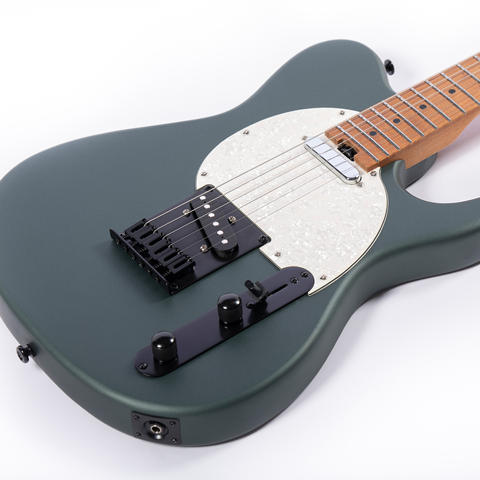
Existing product reference: GTTL-02. Obtain a current quotation for the exact model, quantity, included items and delivery scope.
Define the scope behind a wholesale electric guitar price
Every price should belong to a model revision, configuration, quantity mix, currency, validity period and stated scope. Record these beside the number. If a supplier quotes a family of guitars, ask which exact version the price represents. A range covering several materials or electronics options is not directly comparable to a fixed quotation for one approved instrument.
Separate a preliminary estimate from a confirmed quotation. An estimate may depend on unresolved artwork, component availability or sample approval. Keep those dependencies visible rather than presenting the number internally as a settled cost. If the configuration changes, request confirmation of the effect on the offer.
Materials matter through a defined construction
A wood name is only part of the specification. Identify the role of each material: body core, structural top, decorative veneer, neck or fingerboard. Do not compare a figured surface on one guitar with a solid structural cap on another as though the same description guarantees the same construction. Ask for the actual build description where the distinction affects the buying brief.
Neck joint, chambering, body contours and binding can also distinguish instruments that share a familiar outline. Discuss these as confirmed construction differences, not automatic sound rankings. A higher quotation may reflect additional operations or a different material arrangement, but the supplier should explain the actual difference rather than rely on a premium adjective.
Evaluate whether that difference serves the product you want to sell. A decorative feature can have real market value without becoming a claim about superior performance. Conversely, paying for a feature that customers neither need nor recognise may reduce the usefulness of the specification even if the feature is well executed.
Finish complexity is more than a colour name
Specify the surfaces, sheen and visual treatment. A solid colour, a transparent finish over selected figure, a burst and a masked accent line do not describe identical work. Warmoth’s official finish guidance describes different finish treatments and explains that transparent appearances depend partly on the underlying wood. That is a manufacturer’s example of why the finish description needs detail, not a cost schedule for Gusto.
Request the actual proposed finish and approval reference before attributing a price difference to colour alone. Matching a headstock, adding binding or changing the neck finish may introduce additional requirements. A photograph should be labelled as a direction until the supplier confirms what can be reproduced and how variation will be assessed.
Do not assume that matte is always cheaper than gloss, or that every natural-looking finish requires less work. Ask about the specified process and included surfaces. The cost comparison should use the actual offered treatment, rather than an industry stereotype about its appearance.
Hardware and electronics need exact identities
A quotation for “locking tuners” does not identify the same component as another quotation using the same phrase. Record the manufacturer and model where specified, or request a sufficiently clear description when a generic component is proposed. Check bridge type, adjustment range, string spacing and mounting compatibility alongside price.
For pickups, include exact models, conductor requirements, switching behaviour and any active power arrangement. An extra switch is not evidence that a requested function works as intended. Compare the approved control matrix and sample demonstration, and keep branded-component claims tied to the actual parts supplied.
The ESP M-I NTB NT USA specification separates construction, neck dimensions, hardware and electronics choices. Its details belong to that model. As a comparison technique, separating these categories helps a buyer discover what changed between two offers instead of treating the whole instrument as one undifferentiated upgrade.
Quantity changes the comparison basis
Ask whether the quoted unit price assumes one configuration, several colours or a mixed order. A price for a larger single-version batch should not be presented as available for a smaller fragmented order without confirmation. List the allocation by model and configuration and request the same allocation from each supplier.
Distinguish charges that recur per unit from any sample, artwork, development or tooling charge that is quoted separately. Ask whether a charge repeats on reorder and under what conditions. Do not assume that a fee is either permanent or automatically refundable. Its treatment belongs in the written quotation.
| Comparison line | Record separately | Why it matters |
|---|---|---|
| Guitar unit price | Exact specification and quantity basis | Prevents comparing different instruments as identical. |
| One-time charges | Sample, artwork or development if quoted | Avoids hiding them inside the first-order unit figure. |
| Included accessories | Case/bag, tools, cable and instructions | A bare guitar and a complete package have different scopes. |
| Inspection and setup | Agreed checks and who performs them | Shows what work remains after receipt. |
| Delivery scope | Packing, transport and other stated inclusions | Prevents adding a cost already included or omitting one. |
| Reorder conditions | Revision, component continuity and fee treatment | The first-order calculation may not describe a later order. |
Use transparent arithmetic for the first order
Consider an entirely hypothetical comparison in generic currency units: offer A is 100 per guitar for 20 guitars plus a separately stated 200 setup charge. Offer B is 108 per guitar for the same 20 with no separate setup charge. Before any other differences, A totals 2,200 and B totals 2,160. The lower displayed unit price is therefore not the lower first-order total.
These figures are arithmetic examples, not market prices. They become meaningful only if the specifications and included items match. If B includes a different case or A uses a different bridge, those differences must be resolved before treating the totals as equivalent offers. Keep optional alternatives separate from the base comparison.
For a reorder, recalculate using the actual fee conditions. A non-recurring charge may change the relative totals, while a revised component or changed quantity can change them again. Do not project the first-order result indefinitely without checking what remains valid.
Include the work that remains after receipt
A buyer may need receiving inspection, setup, relabelling, photography or packaging preparation before an instrument is ready for sale. Estimate that work honestly and identify which tasks the supplier has already included. Avoid counting a setup twice, but also avoid assuming that the word “checked” describes the exact acceptance process you need.
Record how discrepancies will be reported and reviewed, and ask for the applicable service arrangement. Do not build a cost comparison on an imagined warranty recovery or an unconfirmed replacement policy. If a concern cannot be priced meaningfully yet, keep it as an unresolved condition rather than assigning it a reassuring zero.
Compare value with a controlled sample review
Use the same tuning, known strings where appropriate, signal path and test passages when comparing samples. Check every relevant control and the playing tasks required by the customer. A higher-output pickup or a more flattering amplifier setting can make one sample seem better without answering whether its construction and setup suit the brief.
Keep cosmetic preferences distinct from functional findings. A retailer may intentionally pay more for a finish that supports a product position, but that decision should remain separate from a claim that the instrument has better intonation or reliability. Each conclusion needs its own evidence.
Compare the price scope of the solid-body range with any proposed model from the headless guitar category. Different hardware and configuration requirements should be resolved in the quotation rather than hidden inside a unit-price comparison.
When a quotation looks unusually low
Ask what specification, quantity and scope produced it. Check for optional accessories, unconfirmed substitutions, omitted charges or a price that applies only to a different configuration. A low figure is a reason to clarify, not proof of poor quality or proof of a bargain. Request one consolidated response so the comparison remains traceable.
Choose a model in the Gusto product range and request a current itemised quotation. A useful buying decision rests on a comparable instrument, a complete scope and transparent arithmetic rather than the smallest number in a product grid.

Get Best Guitars
Join Gustoguitar.com Newsletter to get more information of electric guitars, classical guitars, and all kinds of guitars.


