

 By Gusto Guitar
Focus on actual instrument weight, visible grain, finish choices, and the complete configuration.
An ash vs mahogany comparison needs verified construction details and complete instruments before it can support a useful buying decision. Those shortcuts can hide the practical questions a buyer needs to answer. Which ash is being described? What is the complete body construction? How much does the finished guitar weigh, and what finish has been approved? This guide uses those questions to compare actual instruments and quotations. It does not give a fixed weight to either wood, identify a species from a photograph, or claim that a body material alone determines an electric guitar’s amplified sound.
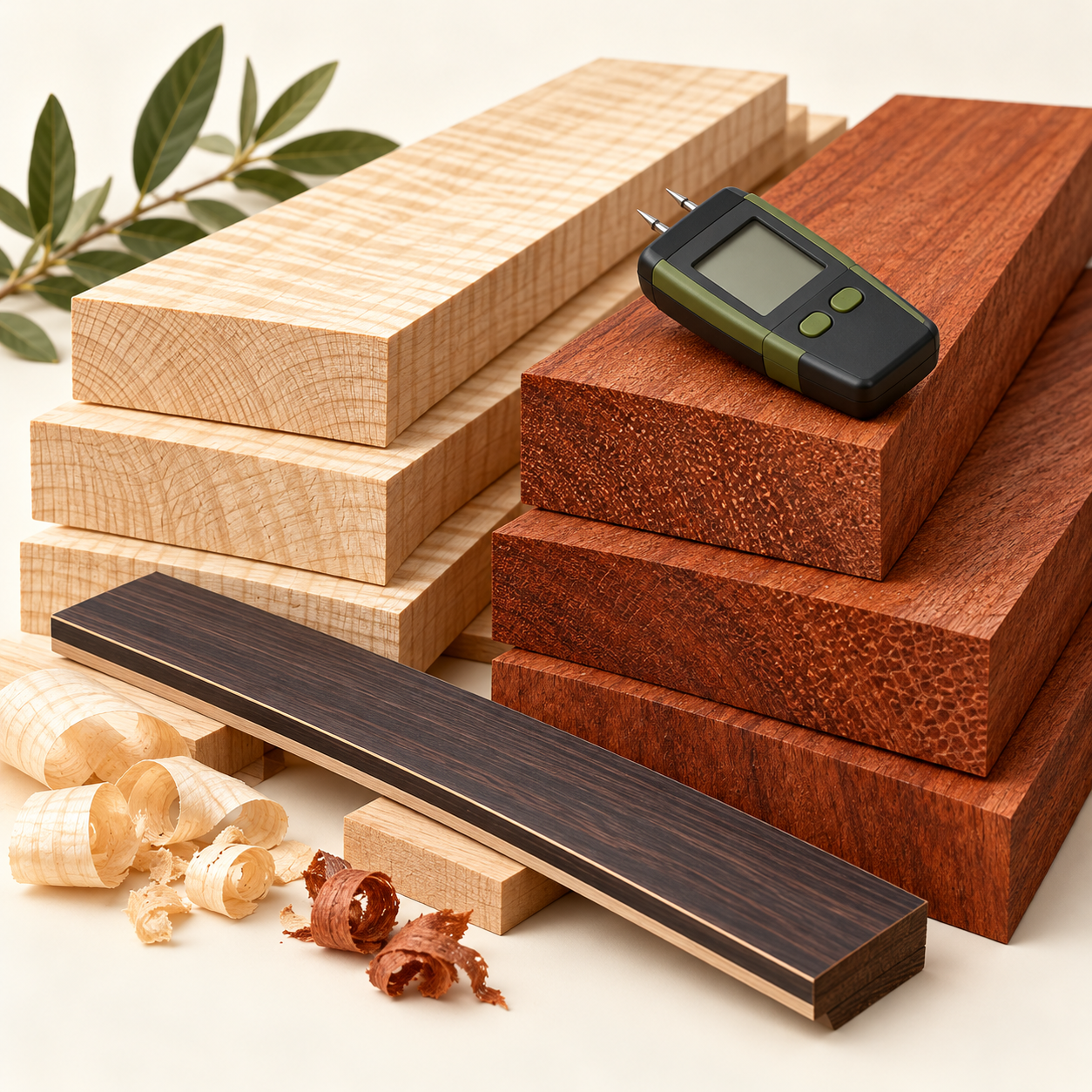
Define construction in an ash vs mahogany comparison
Request the exact supported material wording for the proposed body. If the supplier uses a broad commercial name, record it honestly rather than replacing it with a more precise species claim. Ask whether a top, core, or other layer uses a different material. A clear construction statement is the starting point for every later comparison.
Fender’s tonewood reference distinguishes different ash descriptions and notes variation. The practical lesson is that ash is not a sufficient finished-weight specification. The source describes Fender’s material experience; it does not establish the species, density, or measured behavior of any Gusto instrument offered under a similar name.
Make finished weight an explicit requirement
If comfort matters, ask for a complete sample weight under a defined condition. State whether the guitar is weighed alone or with accessories. Keep shipping weight in a different field. A number copied from a carton or another model can make a comparison look precise while answering the wrong question.
For a batch order, ask what variation can be expected and whether an agreed instrument-weight range is available. Do not invent a tolerance after production. If a range is important, confirm the measurement process and exception handling in advance. A broad preference for lightweight ash or solid mahogany is less useful than a requirement that the supplier can understand and verify.
Evaluate balance in the intended playing position
Mass and balance are different observations. Try the sample seated and standing with a suitable strap. Notice whether the instrument settles comfortably, whether the neck tends to move, and whether your posture changes to hold it. Keep those notes attached to the complete sample instead of assuming that the body material explains every handling difference.
A buyer who plays short studio sessions may prioritize different handling from someone standing for a long set. Describe the real use rather than searching for one universally comfortable body wood. If several people will use the instrument, gather more than one player’s observations and record differences rather than forcing a single subjective score.
Decide how much grain should remain visible
A transparent finish makes natural appearance part of the product proposition. Ask for the intended visual reference, acceptable variation, and any selection criteria. Grain pattern, color, and the way pieces meet can affect the visual result. An exterior photograph can help approve appearance, but it cannot by itself establish species or concealed construction.
For an opaque finish, the buyer may care less about visible grain but still require accurate material records. Do not assume an invisible body material can be substituted without agreement. Keep the technical specification and appearance specification linked but distinct. That makes it possible to approve a color while still leaving an unresolved material question open.
Understand finish work without inventing a cost rule
Ask the supplier how the desired surface will be achieved on the proposed construction. If a change in material affects finishing work, request a clear explanation and a revised quotation where relevant. Do not assume that one species always requires a fixed surcharge or that a particular finish process automatically signals higher quality.
Compare the finished sample for the agreed surface, consistency, and workmanship. An attractive grain pattern does not excuse contamination, damage, or another genuine defect. Conversely, natural variation should not be rejected under a vague standard that was never agreed. Define the visual requirement before asking the supplier to reproduce it across a batch.
Keep the sound comparison honest
Use the same signal chain and similar test conditions when comparing candidates. Record pickup layout, control functions, strings, tuning, bridge, and setup. If these differ, the result is a comparison of complete guitars. You can prefer one and make a valid purchasing choice without proving that ash or mahogany alone caused the result.
Avoid turning familiar adjectives into measurable guarantees. Words such as bright, warm, open, or focused can communicate a player’s impression but need context. Ask whether the instrument works for the intended use at the settings that matter. Keep any marketing summary tied to verified model behavior rather than repeating a generic wood description as a promise.
Inspect construction and playability separately
Check the sample’s neck joint, hardware installation, fretwork, electrical functions, and setup against the agreed requirements. A body material label is not evidence that those tasks were performed well. Prioritize repeatable functional observations over assumptions about what a traditional-looking instrument ought to deliver.
If a problem appears, record it without diagnosing the wood as the cause. A recurring buzz, loose component, or tuning issue may involve several possible factors. Document the conditions and ask for an appropriate assessment. A useful report supports correction and reinspection; a speculative explanation can distract from the actual fault.
Compare quotations at a common scope
List every difference between the proposed builds before evaluating price. A material change may be accompanied by a different finish, top layer, hardware package, or accessory. Ask for those changes to be identified explicitly. Otherwise, the price comparison may tell you little about the material decision you intended to make.
Keep sample development, visual selection, packing, and inspection work visible too. Do not call one offer better value merely because its unit price is lower while its scope is incomplete. The relevant question is whether the total agreed offer meets your technical and commercial brief. Current quantities and lead times should be confirmed rather than borrowed from another product listing.
Use a sample to test your actual priorities
Write down the questions the sample must answer: appearance, handling, playing response, or production suitability. Some questions can be answered by a physical trial, while concealed material identity may require records. Keep the evidence type clear. A beautiful sample should not silently close every unresolved item in the specification.
Imagine a hypothetical ash-bodied sample that is heavier than a proposed mahogany-bodied sample. This does not make the record wrong simply because it conflicts with a broad expectation. Check that both measurements concern the complete instrument and are taken consistently. Then use the actual results in the decision instead of discarding them to preserve a material stereotype.
Control changes after approval
Retain the approved sample identification, material declaration, finish reference, and revision. Ask how a proposed substitution will be communicated and approved. A similar appearance may conceal a different construction, while a natural visual change may occur without a material substitution. Both need appropriate treatment rather than the same automatic response.
For repeat orders, confirm that the specification is still current. Do not assume an old photograph means the original construction remains available. If a change is necessary, decide whether it affects the buying role, product description, or sample approval. This protects consistency without demanding that natural materials behave like identical molded components.
Explain the choice to the customer
A useful product description states the verified body material and construction, then explains the model’s relevant features. It should not use the material as a shortcut for every claim about comfort, tone, or durability. Include measured weight only when its basis and applicability are clear, especially if production instruments vary.
Link readers to the appropriate instruments in the Gusto Guitar product range and request current specifications before repeating them. When the evidence is incomplete, ask a focused question rather than inventing a confident comparison. That approach helps a buyer distinguish actual model differences from general background information.
Request matched specifications for the relevant solid-body electric guitars. Before comparing a solid body with a chambered or semi-hollow instrument, use the solid body vs semi-hollow guide to identify the extra variable.
Make a complete-instrument decision
| Priority | Ask for | Decision basis |
|---|---|---|
| Weight | Complete sample measurement | Actual carrying requirement |
| Appearance | Finish reference and variation rules | Approved visual result |
| Material | Supported body and layer statement | Traceable specification |
| Sound | Comparable complete-instrument trial | Observed performance |
| Repeat order | Current revision and change approval | Confirmed consistency |
Choose the candidate whose verified appearance, handling, function, and order terms meet your needs. If a particular material is essential, make it a controlled requirement. If it is a preference, weigh it alongside the rest of the instrument rather than allowing it to conceal a more important issue.
An ash-versus-mahogany comparison is most useful when it produces a clearer brief and a better sample assessment. It is least useful when it promises a fixed weight or one inevitable tone from a name. Keep measurements, observations, and material declarations separate, then bring them together in a purchasing decision you can explain and repeat.

Get Best Guitars
Join Gustoguitar.com Newsletter to get more information of electric guitars, classical guitars, and all kinds of guitars.


