

 By Gusto Guitar
Treat magnet grade as one specification within a complete pickup and circuit.
Alnico 5 guitar pickups need to be evaluated as complete designs within the actual guitar circuit, rather than by magnet grade alone. A buyer still needs to know the pickup type, construction, intended position, circuit, physical fit, and behavior in the actual instrument. This checklist explains how to turn a short magnet claim into a usable purchasing record. It does not rank every magnet type, promise that all Alnico 5 pickups sound alike, or identify the magnets inside a Gusto pickup from an exterior photograph.
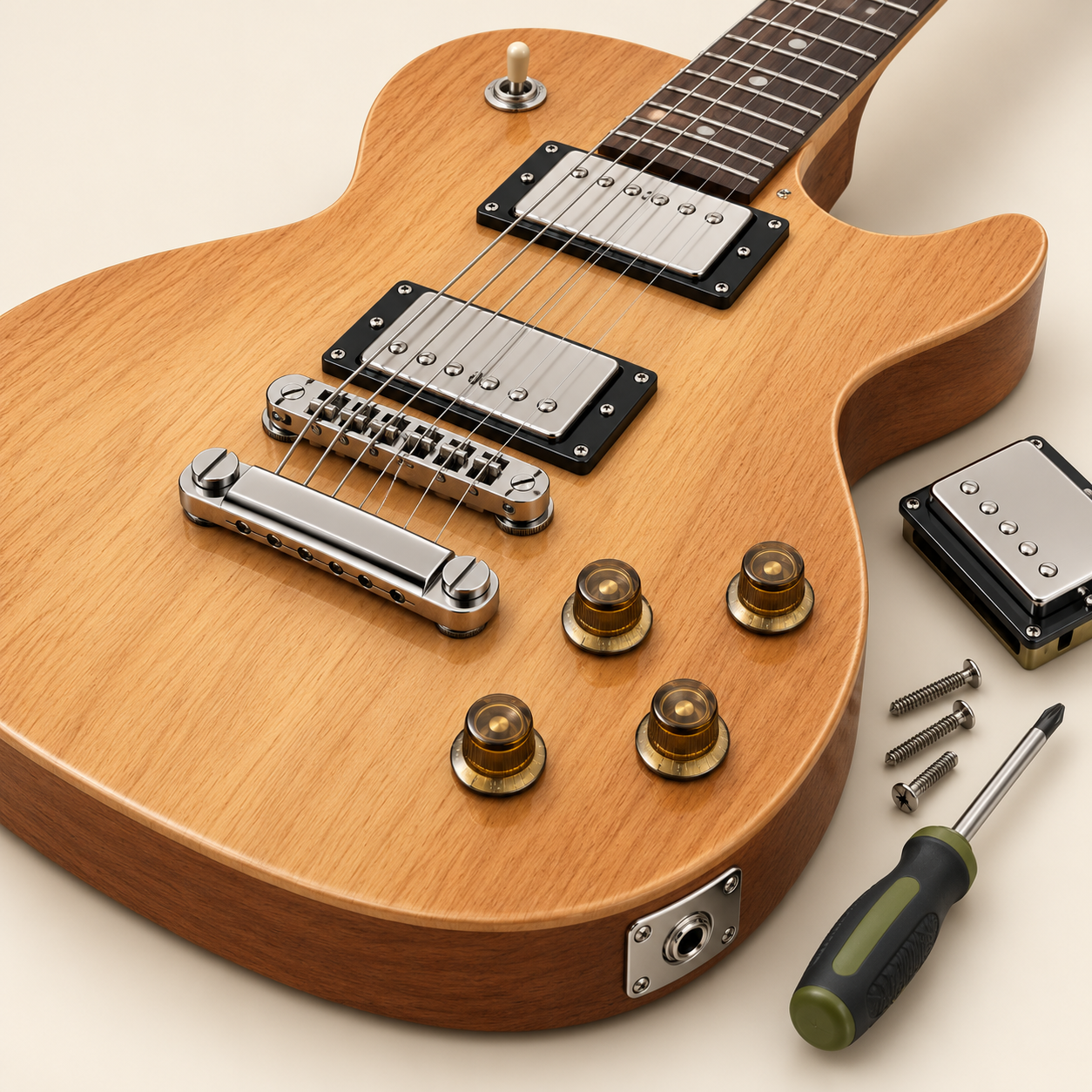
Specify Alnico 5 guitar pickups beyond the magnet
Seymour Duncan’s pickup learning guide describes Alnico as an alloy involving aluminum, nickel, and cobalt and discusses magnet type within pickup design. Use that as background for understanding the label. It does not make the label a complete performance specification or establish that an unverified pickup contains a particular alloy.
Ask the supplier which pickup in the guitar uses the stated magnet. A title may describe the set generally while the neck and bridge units differ. Request a model-specific declaration or component identification where available. If only the listing title supports the claim, mark it as awaiting confirmation rather than repeating it as a verified technical fact.
Identify the pickup structure
Record whether the proposed unit is a conventional single coil, a humbucker, or another construction. A familiar cover shape does not necessarily reveal the internal arrangement. Ask for the intended pickup position and the actual set configuration. A buyer comparing two guitars should know whether the magnet claim applies to comparable pickup structures.
Keep the physical format separate from the electrical description. A pickup designed to fit one cavity may use a different internal arrangement from another of similar size. Do not infer hum cancellation, coil splitting, or a particular output level solely from the word Alnico. Those functions need their own specification and, where relevant, a functional test.
Request a complete function map
For an assembled guitar, ask what each selector position and switching control does. Record whether coils are combined in series or parallel where that is part of the agreed circuit. If a split function is offered, confirm which coil remains active and how the function is operated. The magnet grade alone answers none of these questions.
Use a plain-language function table alongside the wiring reference. A guitarist should be able to understand which sound is selected without interpreting wire colors. If a supplier sends a generic diagram, confirm that it matches the actual pickup leads and switch used in the instrument. Similar-looking components do not make every diagram interchangeable.
Check physical compatibility
For replacement or private-label work, request the relevant mounting dimensions, string spacing, cavity requirements, and lead arrangement. Do not assume that a pickup described for a familiar guitar style will fit every instrument using that outline. Covers, mounting tabs, screw arrangements, and instrument geometry can differ.
Keep dimensions tied to the actual component revision. A useful sample check includes installation clearance and the ability to make the intended height adjustments without interference. If the pickup is supplied as part of a complete guitar, the buyer still needs a way to identify the component for future service. Retain its part reference rather than relying only on a marketing name.
Read electrical figures with context
If a supplier provides resistance or another electrical measurement, ask for the measurement conditions and what the figure is intended to describe. Do not turn one number into a direct ranking of loudness, tonal quality, or musical suitability. A useful purchasing record keeps the actual specification rather than replacing it with a simplified performance claim.
For a component order, agree which measurements or declarations will be checked and how. For a complete instrument, include functional and listening assessment as appropriate. The goal is to verify the proposed product, not to create a universal pickup score from whichever number happens to be easiest to publish.
Compare sound through controlled observations
Use the same instrument and circuit where a sensible controlled comparison is possible, or document every relevant difference between complete guitars. Keep amplifier settings, recording chain, strings, and playing material consistent enough for the question being asked. A listening preference can guide a purchase even when it does not isolate the magnet as the cause.
Evaluate the sounds your customers need. Clean clarity, driven response, balance between positions, and the usefulness of switching functions may matter differently to different players. Record specific observations rather than declaring all Alnico 5 pickups ideal for one genre. A design can work well in one context without becoming a universal recommendation.
Include height and setup in the test record
Pickup position relative to the strings belongs in a comparison record. If one sample is set differently, first decide whether you are comparing delivered setups or attempting a more controlled assessment. Follow the relevant instrument or pickup maker’s instructions for adjustment rather than applying one generic height to every design.
Do not modify several variables at once and then attribute the result to a magnet. Keep the as-received record and any later adjustment notes separate. If a preferred result depends on a particular setup, include that in sample approval where practical. This makes the reference more useful to the supplier and to whoever prepares the production instruments.
Verify noise and switching behavior
Test each specified position through a known-working cable and amplifier. Note whether a symptom is position-specific or affected by the environment. Avoid assuming that every noise means a defective magnet or that the Alnico label implies silence. Circuit construction, pickup arrangement, and the test setup need to be considered separately.
If output is intermittent or a control fails its agreed function, document the repeatable symptom and request a proper assessment. Do not replace the magnet as an exploratory first step. A purchasing inspection should establish whether the assembled instrument performs as specified; repair decisions should follow evidence and appropriate technical competence.
Keep other brands' examples separate
A respected pickup maker may use Alnico 5 in several distinct products. That demonstrates that a shared magnet label can appear in different designs, not that an unrelated pickup duplicates those products. Do not borrow a branded model’s output, materials, manufacturing process, or tonal description for a Gusto instrument without actual component evidence.
If a quotation names a branded component, confirm the exact model, supply arrangement, and supporting documentation. If it uses a generic component, describe the verified generic specification honestly. The customer needs to know what is being supplied rather than infer a brand association from a familiar technical term.
Approve a repeatable specification
For a batch order, retain the component identification, declared magnet information, function map, installation details, and approved sample record. Ask what happens if the component becomes unavailable. A substitute should be assessed for the characteristics that matter to the order, rather than accepted because its magnet label matches.
Define inspection evidence before production. Some checks concern visible configuration and functional behavior; concealed material identity may rely on supplier records. Keep those evidence types distinct. A photograph can verify cover color and placement but cannot prove alloy composition. A technical declaration can support material identity without demonstrating the guitar’s actual playability.
Approve the set as a set
When neck and bridge pickups are supplied together, include their relative behavior in sample approval. Ask whether the combination is an identified set or two separately selected components. Retain the tested selector and control settings when noting balance. If only one unit changes during production, review the relevant combinations again rather than assuming that an unchanged magnet grade preserves the approved result. This keeps the purchasing decision attached to the instrument the customer will receive, while leaving subjective preferences clearly identified as observations.
Check pickup layout against an actual instrument in the solid-body electric guitar category. For a jazz-oriented body, the semi-hollow and jazz guitar range provides a separate model context; neither category photograph verifies magnet grade.
Questions for a current inquiry
| Field | Check | Evidence |
|---|---|---|
| Magnet claim | Which pickup and what declaration? | Component record |
| Structure | Single coil, humbucker, or other? | Confirmed design |
| Function | What does each position do? | Function map and test |
| Fit | Mounting and string spacing | Dimensions and sample |
| Sound | Conditions and whole configuration | Controlled listening notes |
| Repeatability | Approved revision and substitutions | Change approval |
Identify the guitar or pickup configuration in the Gusto Guitar product range and ask which specifications are confirmed for that model. Request the pickup type, intended position, wiring functions, physical identification, and current sample options. Leave unanswered items open instead of filling them with another maker’s catalog data.
Choose the complete pickup-and-circuit arrangement that meets the playing brief and can be supplied consistently. Alnico 5 may be part of that decision, but it should remain one controlled field among several. A sound purchasing checklist turns an attractive label into clear questions, verified functions, and a sample reference that can be checked again.

Get Best Guitars
Join Gustoguitar.com Newsletter to get more information of electric guitars, classical guitars, and all kinds of guitars.


