

 By Gusto Guitar
Establish the delivered condition, then separate personal setup choices from faults that need attention.
Electric guitar setup after delivery starts with documenting the actual instrument, strings and tuning before changing its adjustments. A guitar may need a player’s preferred setup, may show a repeatable fault, or may simply be unfamiliar in its delivered configuration. Those are different situations. Recording the instrument, strings, tuning, and observations makes the next step clearer. This guide focuses on the receiving player’s workflow rather than a factory acceptance standard, and it does not prescribe universal relief, action, pickup-height, or truss-rod values for Gusto instruments.
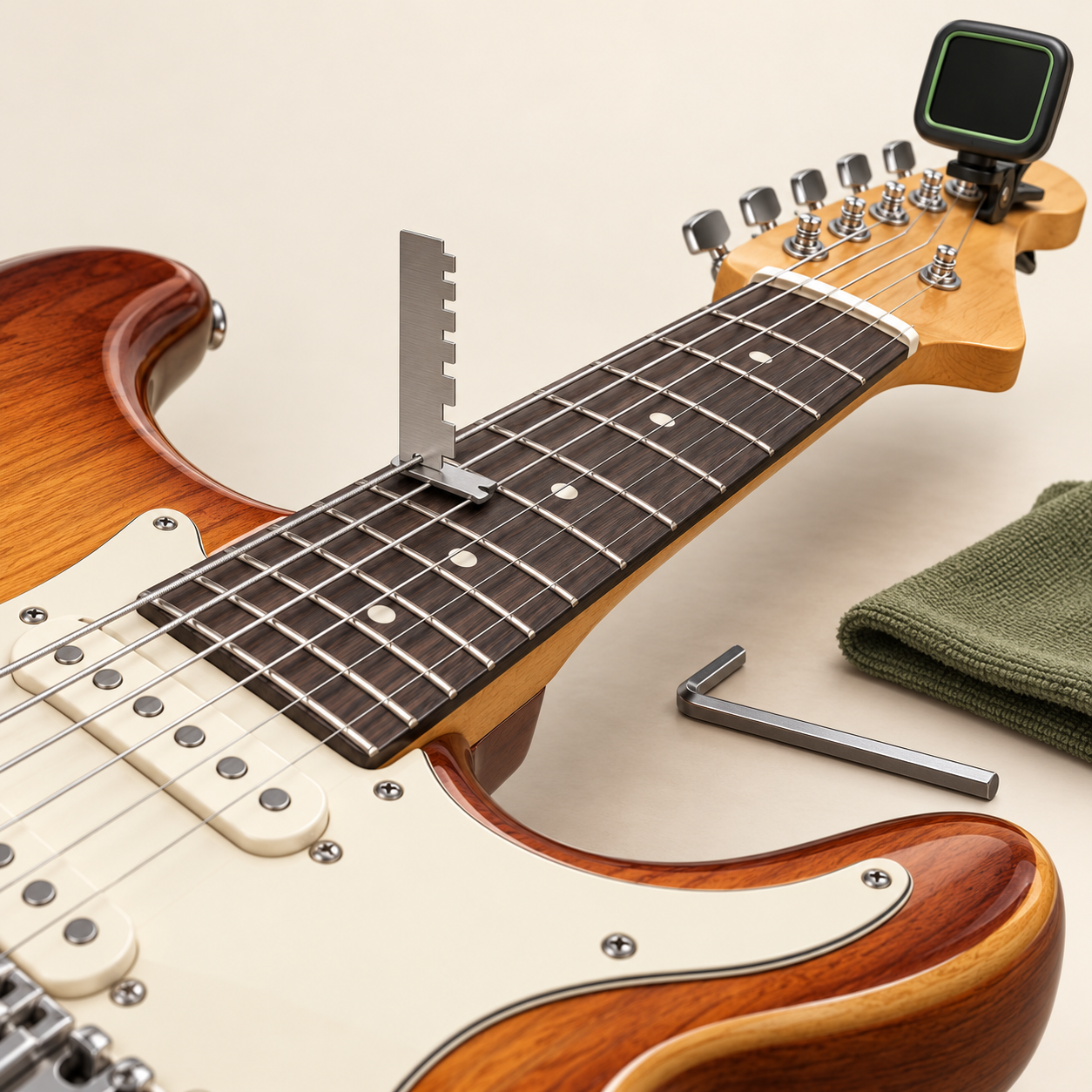
Record the starting condition for electric guitar setup
Retain photographs of the package, instrument, and included items, especially if there is visible damage. Identify the model, handedness, finish, and actual configuration. Do not begin modifying the instrument before preserving observations that may matter to a supplier discussion. A later repair can make the original condition harder to assess.
If the guitar appears damaged, follow the agreed reporting process rather than treating the problem as routine setup. Keep protective materials until the situation is resolved where practical. This article does not supply warranty terms or claim deadlines. The applicable order and current supplier instructions govern how a receiving concern should be handled.
Confirm the strings and operating arrangement
Check the intended tuning and identify the installed string set where possible. Verify the actual bridge type and any locking arrangement. A familiar body shape does not prove a familiar setup procedure. If the bridge or lock is unknown, request its instructions before loosening screws or changing strings.
Fender’s maintenance guidance explains that environmental conditions and string changes can affect setup. That supports keeping those variables in the record. It does not mean every delivered change is harmless or that Fender’s service intervals and dimensions apply to a different manufacturer’s instrument.
Let the instrument reach a suitable inspection condition
Follow the maker’s handling advice for the actual delivery circumstances. Avoid a universal waiting rule copied from another construction or brand. Keep the guitar in a stable environment and use appropriate support. If there is moisture, damage, or another unusual condition, address that before a normal playing trial.
Record environmental context when relevant without treating one room reading as a diagnosis. The purpose is to help interpret changes, not to explain away a problem. If the instrument behaves unusually after ordinary handling, preserve the observation and ask for an assessment rather than repeatedly adjusting parts to compensate for an uncertain cause.
Establish tuning before judging the setup
Use a reliable tuner and verify the intended pitch of each string. Check that the correct tuning machine or control is being operated. On an unfamiliar system, trace the string path rather than guessing. An instrument judged far from its intended tuning may give misleading impressions of feel and clearance.
Keep tuning stability observations specific. Note whether one string drifts, whether a normal bend triggers the change, or whether a moving bridge is involved. Do not replace parts based on one unexplained fluctuation. A concise symptom record can distinguish a routine settling check from a persistent issue requiring service.
Measure relief with a relevant method
Use the method specified for the actual instrument or a qualified technician’s assessment. Record the reference points, string, tuning, and units. Relief concerns neck curvature and should not be confused with string action at a single fret. A number without its method cannot be compared reliably with a supplier’s report.
Do not use the truss rod as a general response to every buzz or high-action complaint. Confirm the system and correct tool before any adjustment, and stop if uncertain or if resistance is abnormal. A post-delivery checklist can identify a question without turning into an instruction to force unfamiliar hardware.
Check action and nut-area behavior separately
Record string clearance at the agreed location and under consistent conditions. Assess whether the result suits the intended playing use and any order requirements. A personal preference for lower action is not automatically evidence that the delivered instrument fails its agreed specification. Keep those two judgments distinct.
Observe open-string and low-fret behavior without trying to reshape a nut slot during the initial review. If an issue needs material removal or specialist judgment, obtain suitable service. An irreversible adjustment made to solve a guessed cause can complicate both the instrument and any legitimate delivery claim.
Play a deliberate note and chord sequence
Work across each string and the areas you use rather than relying on one opening chord. Include shifts and bends where relevant. Note the string and fret for a repeatable buzz, choke, rattle, or dead note. Record whether the issue is audible through a clean amplifier as well as acoustically.
Use normal technique and sensible listening levels. A very different attack can produce a different result, so describe how the symptom occurs. Avoid the vague conclusion that the guitar needs everything adjusted. Specific observations help determine whether the next step concerns setup, fretwork, a loose part, or another issue.
Review intonation after the basic setup is understood
Once open tuning is established, check fretted pitch with a relevant method and consistent pressure. Keep the observations tied to particular strings and positions. Do not detune the open strings to disguise a fretted discrepancy. If the result remains unsatisfactory, assess the setup and actual bridge according to its instructions.
Identify which bridge controls affect height, intonation, or another function before turning them. A similar-looking screw can serve a different purpose on another design. Keep original settings where practical and document changes. If available adjustment seems insufficient or the mechanism is unclear, seek help instead of forcing additional travel.
Verify bridge and locking functions
If the guitar includes a moving bridge, test its intended operation gently after identifying the system. Follow the maker’s normal-use instructions and observe whether the instrument returns as expected. Do not use an aggressive demonstration to assess an unfamiliar sample. The purpose is to establish ordinary function, not to stress-test it.
For locking or headless hardware, confirm that the correct components and instructions are present. Do not transfer torque values or string procedures from another system. A loose-feeling string or tuning concern should be investigated with the actual hardware reference, string set, and repeatable symptom rather than a generic cure.
Check pickups and controls as a separate task
Use a known-working cable and amplifier. Test every selector position and the specified control functions. If the instrument has powered electronics, follow its actual power instructions. Do not infer a battery requirement from appearance or a knob count. Keep a function map with the instrument if its circuit is unfamiliar.
Pickup-height observations should follow relevant guidance and the actual design. Avoid applying one clearance to every pickup. If output balance or another behavior is a concern, record the setup and positions involved. Mechanical playability and electrical function can both matter, but changing one does not automatically correct a problem in the other.
Decide what requires service and what reflects preference
Make a short list of repeatable concerns and a separate list of desired personal changes. Preserve the as-received record before authorized work. If a delivery problem may require supplier approval, follow the current process. A useful report states facts without assuming either that everything is defective or that every concern is merely preference.
For a player-selected setup, explain the desired playing use to the technician and agree the string and tuning specification. Ask for the final measurements or observations to be retained where useful. That creates a repeatable reference instead of a vague request to make the action low.
Tie the baseline record to the instrument in the solid-body electric guitar category. The body-construction buying guide provides context when a comparison includes a different body type; setup targets still require model-specific agreement.
Retest and retain the final reference
| Stage | Useful evidence | Avoid |
|---|---|---|
| Receipt | Identity and condition photographs | Changing before recording |
| Tuning | Strings and pitch map | Judging at unknown tuning |
| Relief and action | Method and readings | One universal target |
| Playing | String and fret observations | Vague all-over diagnosis |
| Controls | Verified function map | Knob-count assumptions |
| Retest | Changes and final result | Confusing new feel with correction |
After adjustments, retune and repeat the relevant note, bridge, and control checks. Record what changed and whether the original symptom remains. Do not close a concern solely because the instrument feels different. A correction should be connected to a repeatable observation and an actual retest.
For a current model in the Gusto Guitar product range, request its specific setup and hardware information before borrowing another brand’s figures. A successful receiving review leaves the guitar identified, the delivered condition preserved, and the final setup understandable. It supports comfortable use while keeping faults, maintenance, and personal preferences clearly documented.

Get Best Guitars
Join Gustoguitar.com Newsletter to get more information of electric guitars, classical guitars, and all kinds of guitars.


