

 By Gusto Guitar
Compare two body-material options through complete instruments, finish requirements, and verifiable purchasing details.
A basswood vs poplar comparison is most useful when it examines complete electric guitars and verified construction rather than a wood name alone. Choosing between them is less useful if the rest of the instrument is unknown. Body construction, neck, bridge, pickups, setup, finish, and the individual piece of wood all belong in the comparison. This guide focuses on how to evaluate two proposed instruments or purchasing specifications. It does not assign a guaranteed tone, finished weight, or quality grade to either material, and it does not identify the wood in a Gusto model from its photograph.
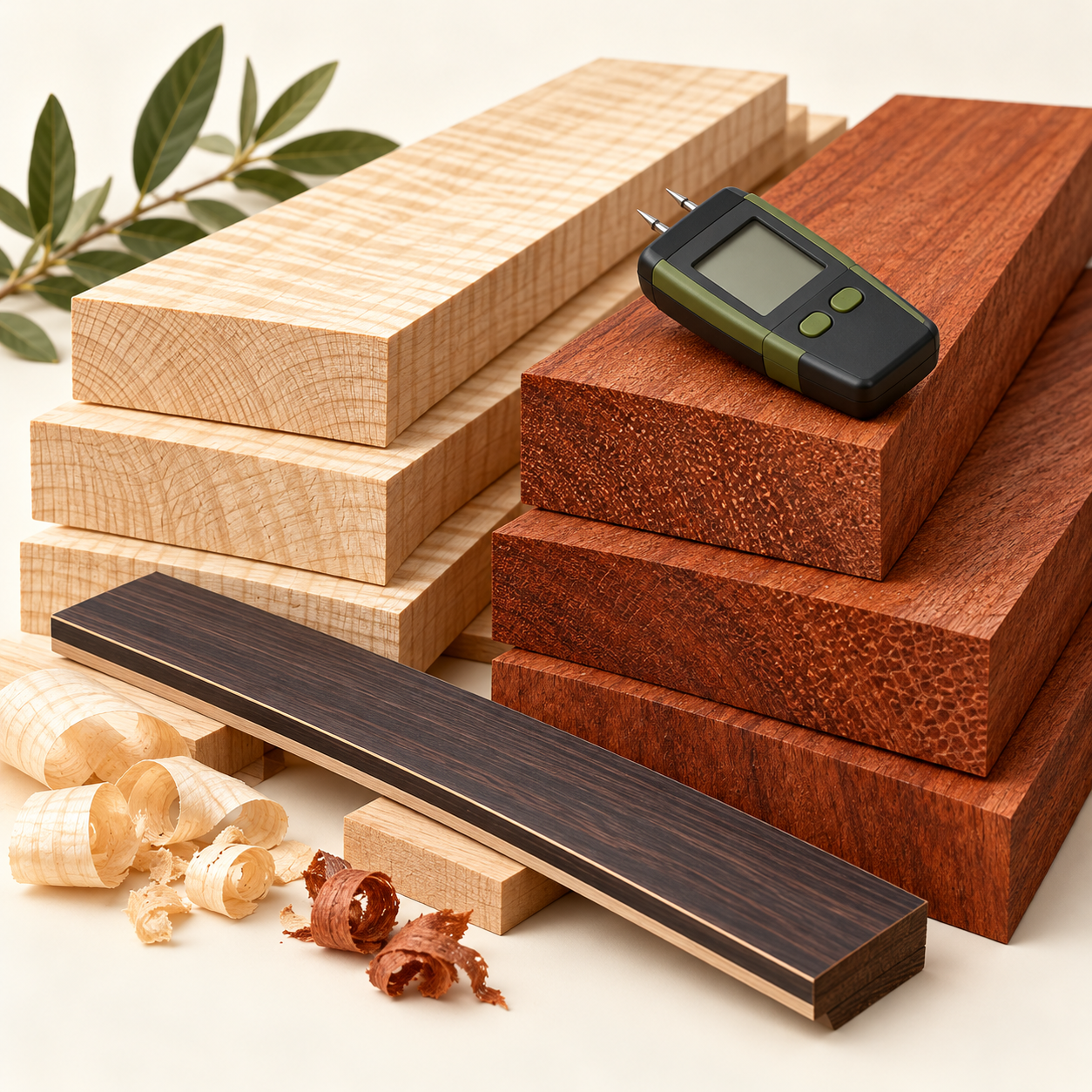
Define what a basswood vs poplar specification includes
Ask whether the named wood describes the main body, a core, a top layer, or another part. A listing may put a familiar wood name in its title while its specification describes a different construction. Request a single corrected material statement for the model you intend to buy. This should identify any separate top or decorative layer rather than treating the body as an unexplained block.
Fender’s body-wood overview includes both poplar and basswood among electric guitar materials. That confirms their place in the discussion, but the maker’s descriptions do not establish the performance of an unrelated instrument. Use published material descriptions as background and evaluate the actual proposed build separately.
Avoid using the wood name as a price grade
A lower-priced guitar may use either material for reasons that include availability, production choices, or the intended specification. The name alone cannot tell you how carefully the frets were finished, how consistently the neck was made, or whether the electrical functions work correctly. A buyer can spend too much attention on the body label and miss the features that determine daily usability.
Compare quotations for the same scope. If one instrument has different hardware, pickup construction, finish work, or inspection requirements, a price difference cannot be attributed to the body wood alone. Ask for a controlled alternative quotation if the material choice is genuinely the variable under consideration. Keep any other changes visible rather than calling two substantially different builds a wood comparison.
Treat weight as a measured requirement
Do not promise that every basswood guitar weighs less than every poplar guitar. The finished instrument includes its dimensions, cavities, neck, bridge, and other components. If carrying comfort matters, request the weight of the complete sample and clarify whether production is expected to meet an agreed range. A photograph and a generic wood label cannot supply that measurement.
For a wholesale order, specify how weight will be recorded and how exceptions will be handled. Ask whether a quoted weight refers to the guitar alone, the guitar with accessories, or a shipping package. Keep those figures in separate fields. This prevents a useful comfort requirement from becoming confused with freight planning or a number copied from another model.
Evaluate sound without changing everything at once
If you want to compare two actual guitars, use consistent strings, tuning, amplifier settings, and playing material where practical. Record differences in pickup position, pickup height, bridge, and controls. You are comparing complete instruments unless the builds are tightly controlled. A preference from that test can guide your purchase without proving that one wood is universally brighter, warmer, or more suitable for a genre.
Use both clean and the working sounds relevant to your customers. Listen for the qualities needed in context rather than trying to identify a hidden material by ear. Keep the listening notes descriptive and tied to the tested samples. A note such as clearer separation in this setup is more defensible than a claim that every guitar made from the selected wood must sound the same.
Plan the finish as part of the specification
Ask the supplier what the proposed finish will show and how natural variation is handled. An opaque finish, a translucent finish, and a decorative top create different appearance expectations. Do not assume that a body-material change is invisible simply because the finished color name remains unchanged. Sample approval should cover the relevant appearance, not just the raw-material description.
Specify the desired visual result with photographs or approved samples where appropriate. Keep unacceptable finishing defects separate from acceptable natural variation. If a supplier proposes a substitute material, ask whether the same finish process and appearance can be retained. A change that is technically possible may still require a fresh visual reference before it is suitable for your range.
Ask about construction and hardware support
Record the neck joint, bridge mounting, and any relevant component interfaces for the actual model. The purchasing question is whether the assembled instrument is properly built and supported, not whether one wood name automatically guarantees secure hardware. Inspect the sample for the agreed fit and function, and ask how production will be checked against that reference.
Do not perform destructive tests on a saleable instrument to settle a material debate. If engineering evidence is required for a component interface, agree an appropriate evaluation with the maker. For ordinary purchasing, a documented sample, clear specification, and relevant inspection plan provide more useful evidence than an improvised attempt to judge strength from an inconspicuous screw.
Check consistency across an order
An approved sample represents one instrument at one point in time. Ask how its material and construction will be identified in production records. If a body blank supplier or construction changes, determine whether that is a controlled change requiring approval. The aim is traceability of the agreed build, not an unrealistic promise that natural materials have no variation.
For inspection, identify which features can be observed directly and which rely on production documentation. Exterior photographs can record finish and body outline; they cannot reliably verify a concealed core. Keep material declarations, sample identification, and inspection records connected so that a reviewer can understand what was checked and what evidence supports the wood claim.
Use the comparison to improve your range
If two otherwise suitable models use different body woods, decide what meaningful choice they offer the customer. A separate listing may be justified by a different construction or buying role. It should not be created solely to repeat a broad tone claim under another keyword. Explain verified differences in a way that helps a buyer choose between the actual products.
For a small opening range, serviceability, clear information, and consistent availability may deserve more weight than adding both materials. For a specialist range, a documented material preference may matter to customers. These are business decisions that should follow your evidence of demand, not a rule that either basswood or poplar belongs only in a particular price tier.
A practical sample comparison
Imagine two hypothetical six-string samples with similar body outlines. One is declared basswood and the other poplar, but they also use different pickups and bridges. Start by recording those differences. If you prefer one sound or handling feel, keep that preference attached to the complete sample. Do not remove the component differences from the explanation and attribute the whole result to the body wood.
If the supplier can offer a more controlled comparison, agree which components and setup conditions will be held constant. Even then, record the individual samples and avoid extending the result beyond what was tested. The purpose is a sensible purchasing decision, not a laboratory conclusion that the available samples cannot support.
What to put in an inquiry
State the intended model, body construction, required finish, relevant weight requirement, and any material alternatives you are willing to consider. Ask for an explicit distinction between the main body and separate layers. Request current sample and production information rather than treating an old catalog entry as a guarantee of today’s construction or availability.
Use the Gusto Guitar product range to identify candidates, then verify each model’s actual specification. Ask for clarification when a title, photograph, and table do not agree. Keeping those questions visible is more useful than choosing a wood label first and trying to make every other fact support it.
Use the solid-body electric guitar range to request two complete, comparable instrument specifications. The body-construction comparison separates construction decisions from the unsupported claim that a single wood name determines the result.
Choosing between the two
| Decision | Record for both samples | Avoid |
|---|---|---|
| Material identity | Main body and separate layers | Inferring species from paint |
| Weight | Complete instrument measurement | Universal wood-weight ranking |
| Sound | Configuration and test conditions | Attributing all differences to wood |
| Appearance | Approved finish reference | Treating a color name as a full standard |
| Repeatability | Revision and change process | Assuming sample equals every future build |
Choose the complete instrument that meets the agreed needs for playability, appearance, handling, support, and purchasing terms. If the wood itself is a required part of the brief, make that requirement explicit and retain the evidence. If it is only a preference, do not let it conceal a more important difference in setup quality or component function.
Neither label removes the need to inspect the guitar. A careful buyer can accept either material while maintaining a demanding standard for the assembled instrument. The useful result of a basswood-versus-poplar comparison is a clearer specification and a better-supported decision, rather than a universal winner based on an incomplete description.

Get Best Guitars
Join Gustoguitar.com Newsletter to get more information of electric guitars, classical guitars, and all kinds of guitars.


