

 By Gusto Guitar
A first electric guitar should make regular practice practical: check the fit, playable setup, complete listening system and support before comparing decorative upgrades.
A beginner electric guitar should make learning practical through suitable fit, usable controls and a setup that can be checked before purchase. The guitar must feel manageable, produce a sound you want to hear and work in the room where you will learn. This checklist follows the decisions in purchase order, including the questions a new player may not yet know to ask and the checks worth repeating when the instrument arrives.
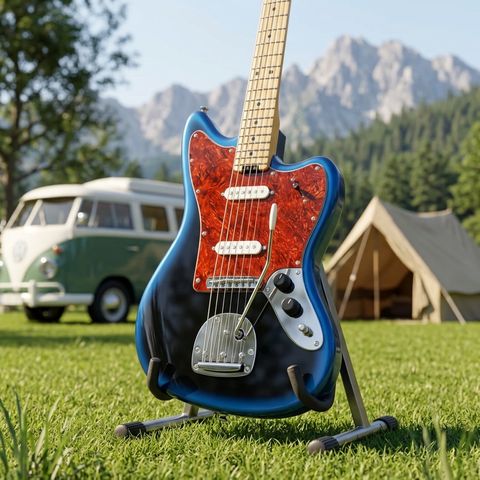
An electric-guitar example from Gusto Guitar; suitability for a beginner depends on the player’s fit and the actual setup, not the photograph alone.
Start a beginner electric guitar checklist with playing needs
Write down the simplest version of your intended routine: where you will sit or stand, when you can make sound and whether someone else shares the room. A guitar that suits loud rehearsals is not automatically a complete solution for quiet evening learning. Confirm your listening arrangement before spending the whole budget on the instrument.
For amplified practice, that arrangement may be an amplifier with suitable facilities or another compatible guitar listening system. If headphones are important, ask the seller to demonstrate the exact connection you intend to use. Do not assume ordinary headphones plug directly into an electric guitar or that every amplifier includes a headphone socket.
Fender’s new-guitar getting-started guide includes amplification and a strap among the practical considerations for an electric player. The useful lesson is to account for the whole playing arrangement, rather than copying the particular equipment examples in an older guide.
2. Set a budget for the complete purchase
Separate the instrument allowance from everything needed to use and look after it. Ask for a current, itemized quotation that identifies what is included. A photograph containing an amplifier, cable or bag is not proof that those items are in the package.
| Budget item | What to confirm | Reason |
|---|---|---|
| Guitar | Exact model, configuration, orientation and included items. | Prevents a package image from replacing an order description. |
| Listening system | Amplification or a compatible quiet-practice route. | Makes the practice routine possible from day one. |
| Basic accessories | Tuner, suitable instrument cable, picks and strap as needed. | Avoids small missing items stopping a session. |
| Protection | A correctly fitting bag, case or safe storage arrangement. | Matches how the instrument will travel and be stored. |
| Setup and support | Who checks playability and what later adjustment costs. | Separates buying the guitar from making it suit the player. |
Do not use an old wholesale listing to estimate today’s delivered price. Destination, shipping arrangements, current availability and applicable charges need confirmation. A modest instrument with a suitable setup and complete accessories may serve the learning routine better than a more expensive guitar that leaves those needs unfunded.
3. Check physical fit before choosing features
Hold the actual guitar in a normal playing position. Can your picking arm rest comfortably? Can you reach the first few frets without twisting your shoulder? If you will play standing, use a strap and repeat the test. A guitar can feel different when its weight is supported by a strap rather than your leg.
For a child or a smaller player, arrange a trial with a teacher or experienced shop assistant instead of choosing by age alone. Overall length, neck reach, body contact and balance all matter. A shorter scale can be worth trying, but it is not a complete measurement of fit.
Also confirm right-handed or left-handed configuration before ordering. Do not assume that reversing the strings is a complete conversion. Ask about the actual model and intended orientation, particularly if the guitar is a gift and the player has not yet been consulted.
4. Understand the controls you will actually use
Pickup selection
Ask the seller to demonstrate each switch position with a simple phrase. You do not need to master every technical term immediately, but you should know which controls change the sound and how to return to a useful starting setting. More switches do not automatically make a better learning instrument.
Volume and tone
Try the controls while holding the guitar normally. Check that their placement does not interfere with your picking hand. Have the demonstrator explain the difference between turning down the guitar and turning down the amplifier so you can repeat a sensible practice setting later.
Bridge operation
If the guitar has a tremolo arm, ask how it is used, stored and maintained on that model. If you do not intend to use it, ask how the bridge is supplied and whether the setup suits ordinary learning. Select the arrangement you can understand and support, rather than accepting a universal rule that one bridge is right for every beginner.
5. Ask for a playable setup, not an unexplained number
Action describes string height, but a single low-action claim does not establish good playability. The instrument should let you fret normal notes and chords with a manageable touch and acceptable noise. Neck adjustment, nut slots, bridge settings and fret condition interact; a beginner should not be expected to diagnose them from a sales specification.
Ask a competent person to play individual notes through the areas you are learning and demonstrate ordinary chord changes. Listen for persistent unwanted problems, not just a dramatic solo. If a particular note sounds wrong, describe where and how it happens instead of assuming every noise means a defective guitar.
String gauge should also be recorded. Fender’s beginner FAQ discusses lighter electric-guitar sets as a starting option. That does not mean every player must use the same gauge. Ask for a set suitable for the intended tuning and arrange an appropriate setup if it changes.
6. Use a short demonstration you can understand
You do not need to play well enough to evaluate everything yourself. Ask the demonstrator to perform a few clear tasks: open strings, a simple chord, single notes at several frets and a change between pickup settings. Keep the amplifier sound relatively clear for this part of the test so heavy effects do not obscure the basic result.
Then try the kind of sound that interests you. Enjoying the sound is part of wanting to practise, but check that you can reproduce it with the equipment you are buying. A demonstration through a different amplifier and several extra effects may create an expectation your package cannot meet.
Finish by tuning the guitar and playing again. Ask what degree of routine retuning is normal and how to use your tuner. A new player needs a repeatable process, not a promise that an instrument will never require attention.
7. Confirm the support and return arrangements in writing
Before paying, clarify the condition of the instrument, what has been checked and how to report a problem. For a remote order, confirm delivery arrangements and the applicable return or warranty terms with the seller. Do not infer these conditions from another brand’s policy or a generic marketplace heading.
Ask who will perform any initial setup and whether support is available locally. If an adjustment is needed after transport, knowing the agreed route avoids unnecessary experimentation. Keep the model identifier, order record and seller’s instructions together.
If buying a used instrument, arrange an inspection appropriate to its condition. Cosmetic wear and a functional problem are different issues, but a beginner may have difficulty distinguishing them. An experienced person can help explain what is acceptable and what needs repair before the guitar becomes useful.
8. Repeat the essential checks on arrival
Match the delivered model and included items to the order. Inspect for transport damage before discarding the packaging, following the seller’s reporting procedure. Avoid modifying the instrument while a delivery or condition issue remains unresolved.
Next, repeat the agreed tuning and playing demonstration using your own practice equipment. If something differs, record the symptom and the conditions. “The fifth fret on this string buzzes at my normal touch” gives a technician more useful information than “the sound is bad.”
Finally, practise assembling and packing away the setup once. Know where the cable, tuner, picks and any required power supplies belong. A routine that takes little effort to begin is a practical advantage for a new player.
First-purchase questions
Do I need an expensive guitar to start?
No particular price guarantees suitability. Prioritize a manageable fit, a playable setup, a complete listening arrangement and clear support. Compare the total cost of meeting those requirements.
Should I buy several pedals immediately?
Start with the sounds needed for your first learning goals. Additional equipment is easier to choose once you understand what the basic setup does and what is missing.
Can I fix every setup issue myself?
Learning routine care is useful, but avoid forcing unfamiliar adjustments. Follow the model’s instructions and use qualified help when the procedure or cause is unclear.
Use the solid-body electric guitar category to identify an actual instrument for the checklist. The solid body vs semi-hollow guide can then help separate body-construction decisions from setup and player-fit questions.
Take a clear checklist to the seller
Bring your practice situation, complete budget and a few musical examples to the conversation. Ask for the exact configuration, a straightforward demonstration and a written description of included items and support. That makes the first purchase easier to evaluate without requiring you to become a technician first.
See Gusto Guitar’s solid-body electric guitars and ask about a current model and suitable setup. Any package, price or availability should be confirmed for your order.

Get Best Guitars
Join Gustoguitar.com Newsletter to get more information of electric guitars, classical guitars, and all kinds of guitars.


