

 By Gusto Guitar
Compare appearance and maintenance while keeping coating color separate from base material and component quality.
Choosing black vs chrome guitar hardware involves the actual coating, component quality and care requirements as well as the appearance. A black bridge is not automatically more modern in function, and a chrome-looking tuner is not automatically a particular alloy. This guide explains how to choose and maintain a coordinated hardware finish while keeping technical compatibility and performance separate. It does not claim that any unverified Gusto component uses a named coating or has passed a corrosion test.
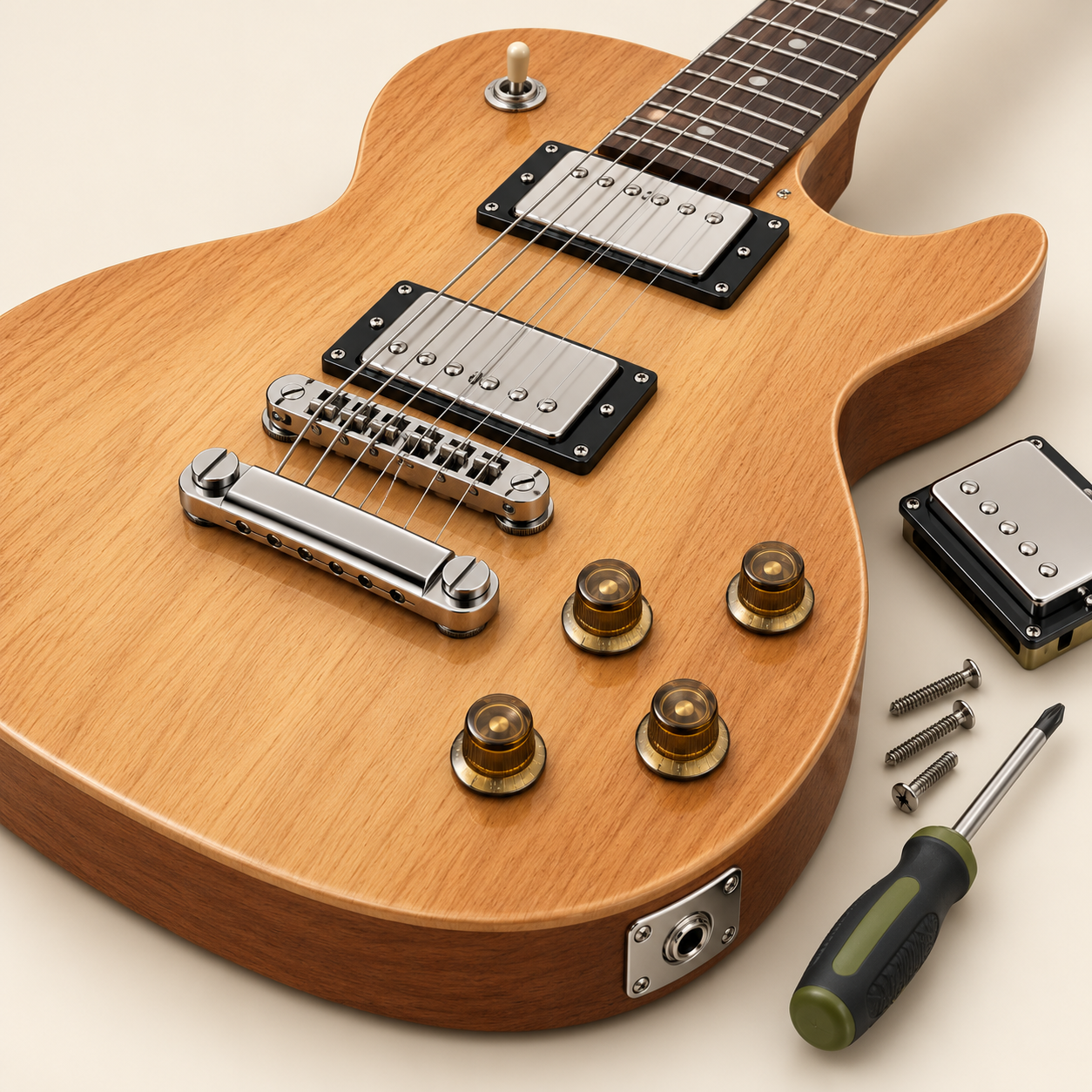
Compare black vs chrome guitar hardware specifications
Choose the intended visual relationship between hardware, body finish, pickguard, and controls. A dark instrument may use matching hardware or contrasting hardware for different reasons. Neither is a technical upgrade by itself. Use an approved sample or consistent photographs to explain the result instead of relying only on broad words such as black or silver.
Ask whether all visible components share the same finish description. Bridge, tuners, knobs, screws, strap buttons, and pickup covers may come from different component families. Small differences can be acceptable or important depending on the brief. Record the decision before production rather than assuming that one finish name guarantees a perfect match across every part.
Separate color from coating and substrate
Request the supported material and finish description when it matters to the order. Black may describe several different surface treatments, while chrome is often used loosely in listings to describe appearance. Do not infer a complete coating system from a photograph. The supplier should distinguish what is confirmed from what is merely a visual label.
This distinction matters when comparing maintenance instructions or performance claims. A care method suitable for one surface may be unsuitable for another with a similar color. If the actual finish is unknown, avoid an aggressive cleaning experiment and ask for guidance. A simple appearance preference should not lead to an unsupported assumption about chemical resistance or wear behavior.
Compare mechanical specifications independently
A bridge needs to meet the required spacing, mounting, adjustment, and string-compatibility requirements regardless of finish. Tuners need the correct fit and operating function. A color-matched replacement can still be mechanically wrong. Verify the component specification before deciding whether its appearance suits the guitar.
For a wholesale configuration, keep the component reference and finish code together. If a supplier offers a color alternative, ask whether it is the same component design or a different part. A visually minor substitution can change dimensions or service needs. Approve the complete part rather than assuming that a matching finish makes the substitution equivalent.
Set realistic expectations for visible wear
Different surfaces can show fingerprints, scratches, polishing marks, and contact wear differently. Ask what the maker can substantiate for the actual component. Do not promise that black hides all marks or that chrome never changes appearance. Use the sample and documented finish information to discuss normal care and expected use.
Distinguish a cosmetic preference from a defect standard. If matching sheen or color consistency matters, define a reference and viewing conditions. A photograph taken under different lighting can exaggerate a difference. For batch inspection, compare like conditions and record where a mismatch occurs instead of rejecting hardware under an undefined expectation of perfect uniformity.
Follow care advice for the real surface
MusicNomad’s electric-guitar care advisor organizes care around the surface being treated. The useful principle is to identify that surface before choosing a product. A cleaner’s suitability for one listed finish does not establish compatibility with every black or chrome-colored component, or override the instrument maker’s own instructions.
Use a clean, suitable cloth and the maker-approved routine. Keep abrasive compounds, household chemicals, and unverified solvents away from the guitar. Do not spray liquid into mechanisms or electrical openings simply because the nearby metal looks dirty. If a product is approved, follow its application instructions rather than improvising concentration, contact time, or polishing pressure.
Remove contamination without creating another problem
After normal use, address sweat and fingerprints according to the approved care routine. Keep the cloth clean so grit is not rubbed into the surface. Work around delicate areas carefully and avoid moving dirt into a bridge mechanism or control opening. A regular gentle routine is easier to document than an occasional aggressive restoration attempt.
If a mark does not come off with the approved method, stop and identify it. Dirt, oxidation, coating damage, and exposed base material are not the same condition. Repeated polishing may worsen some surfaces. Ask the maker or a qualified technician for an assessment instead of assuming that every dull area needs more force or a stronger chemical.
Plan coordinated replacement parts
If appearance consistency matters, retain the component model, finish description, and photographs when the guitar is new. This helps identify a later replacement. Even the correct nominal finish can differ across production runs or wear histories, so avoid guaranteeing an invisible match without a sample comparison.
Measure and verify the mechanical interface as well. A replacement knob, screw, tuner, or bridge should not be selected from color alone. Thread type, shaft fit, mounting spacing, and other dimensions can matter. Request the actual supplier part reference where available and keep any approved substitute clearly distinguished from the original.
Review the whole instrument under useful lighting
Assess the appearance in conditions similar to product photography and normal use. Check whether highly reflective parts create glare that conceals details, and whether dark parts disappear against the body in images. This is a photography and presentation issue, not evidence that one hardware finish performs better.
Use accurate images rather than recoloring photographs to imply an unverified variant. If a proposed finish is only a design option, label it accordingly until a sample is confirmed. A customer should be able to distinguish a photographed production configuration from a concept. That protects both the purchasing brief and the reliability of the product page.
Write an inspection requirement that can be used
Record the approved hardware finish, component references, acceptable cosmetic variation, and relevant functional checks. Inspect both appearance and operation. A perfectly matching bridge that cannot be adjusted correctly is not acceptable simply because the color is right. A functional component with a visible finish discrepancy needs its own agreed decision.
Keep findings tied to the actual instrument and component. Photograph the issue with context and note the lighting. If a replacement is approved, repeat the relevant mechanical and functional checks after installation. Do not close a hardware finding merely because a visually similar part has been fitted.
Avoid unsupported performance language
Words such as corrosion-proof, scratch-proof, and lifetime finish need evidence and defined conditions. A color choice does not supply that evidence. If resistance performance matters, request applicable component documentation or testing rather than adding a claim because it sounds appropriate for a premium product.
The same applies to claims that one finish improves sustain or tuning. Compare the complete component designs and the actual instrument before drawing conclusions. A change in bridge construction may affect the experience, but it should not be described as a result of color alone. Keep cause and observation distinct in technical and sales records.
Keep surface changes distinct from functional failures
A worn-looking area and a mechanism that no longer works require different records. Photograph appearance under consistent light, then test the actual component function separately. Do not reject a working mechanism as electrically faulty because its color changed, or accept a malfunction because the finish still looks new. For a reported concern, state both results. This helps the supplier propose the relevant assessment and prevents a cosmetic discussion from concealing a mechanical problem that needs a different correction and retest.
Evaluate hardware color on a complete model from the solid-body electric guitar range. Where the hardware is part of a headless tuning system, compare the headless guitar category separately and verify part compatibility before choosing a replacement finish.
Make a practical selection
| Decision | Black appearance | Chrome appearance |
|---|---|---|
| Visual match | Approve actual shade and sheen | Approve actual shade and sheen |
| Material identity | Not established by color | Not established by color |
| Fit | Verify component dimensions | Verify component dimensions |
| Care | Follow actual finish guidance | Follow actual finish guidance |
| Resistance claim | Needs applicable evidence | Needs applicable evidence |
| Replacement | Match part and finish reference | Match part and finish reference |
Choose black or chrome appearance based on the instrument’s intended design, the verified components available, and the maintenance information that can be supplied. A coordinated, documented configuration is more useful than a dramatic finish description with no part references. If exact matching is important, make sample approval part of the order process.
Identify relevant models in the Gusto Guitar product range and request current hardware options rather than assuming every pictured color is available in every configuration. Confirm the actual finish and care instructions for the selected model. The result should be a clear appearance choice supported by correct fit, reliable operation, and realistic care expectations.

Get Best Guitars
Join Gustoguitar.com Newsletter to get more information of electric guitars, classical guitars, and all kinds of guitars.


