

 By Gusto Guitar
Clarify what the minimum applies to, reduce unnecessary variants, and compare a smaller order with a larger commitment using realistic sell-through assumptions.
Electric guitar MOQ questions need a defined specification, model mix and current written terms before quantities can be compared meaningfully. It may apply to a model, finish, configuration, branded package or total order value, and a sample request may follow different conditions from production. A small buyer’s first task is therefore to establish the unit of the minimum. Only then can an order mix be assessed sensibly. This guide explains the questions and planning calculations; it does not state a Gusto minimum or turn an old marketplace listing into a current offer.
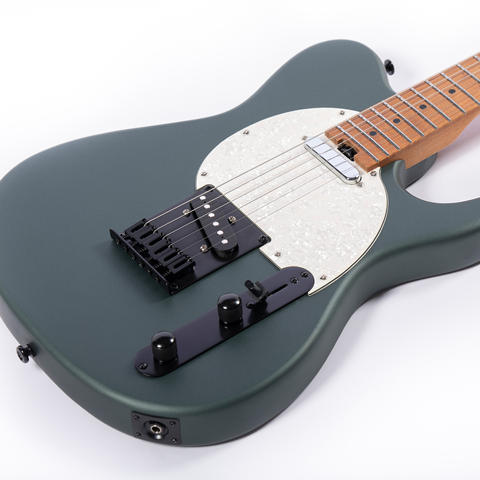
Existing model reference: GTTL-02. Order quantities and available configurations require a current supplier confirmation.
Define the order behind an electric guitar MOQ
Ask whether the stated quantity is per model, per colour, per electronics configuration or across the whole order. Also ask whether accessories and custom packaging have separate requirements. Twelve instruments split among four finishes may satisfy a total-order minimum while failing a per-finish minimum. The same total can therefore describe very different production requests.
A published supplier example illustrates the distinction. Sunsmile’s own FAQ describes its electric guitar and bass minimum per model and colour, while treating sample orders separately. This is that supplier’s published policy, subject to its confirmation; it is not a Gusto policy or a rule for the industry. The useful lesson is to ask what the number is counting.
Request the conditions in the actual quotation for your configuration. A listing may refer to an existing product, a different branding arrangement or an earlier offer. Do not assume that its smallest selectable quantity establishes the production minimum for a revised neck, custom colour and printed carton.
Distinguish a sample from a small production order
A sample is intended to evaluate a specific instrument or proposed specification. A production order supplies repeat units against an approved reference. Even if a supplier accepts one sample, that does not establish one-unit production pricing, repeat availability or free development. Ask what the sample includes and whether it represents the proposed production components.
For an existing model, a sample may answer playing and fit questions without requiring a new design. For a modified instrument, clarify which details are final and which remain illustrative. If the sample has substitute electronics, do not approve its control performance as proof that the intended production circuit has been tested.
Keep sample charges, any agreed credit and production pricing on separate lines. A possible credit should be confirmed with its conditions rather than subtracted automatically from the budget. The objective is to understand the commitment before order placement, not to negotiate against an assumed entitlement.
Count configurations before asking for a lower minimum
Write every requested combination as a distinct row. A guitar in two finishes and two pickup arrangements can create four configurations, even when the body shape stays the same. Add left-handed versions or different hardware colours and the mix becomes more fragmented. Ask which differences the supplier can group and which require separate quantities.
Use a concrete hypothetical example: a buyer wants 24 guitars in four finishes, six of each. If a supplier hypothetically requires 12 per finish, that mix would not qualify; two finishes at 12 each might. These numbers demonstrate the arithmetic only. They are not an available order arrangement or a suggested Gusto minimum.
| Proposed mix | Question to resolve | Possible response to discuss |
|---|---|---|
| One existing model, one finish | Does the confirmed minimum apply to this exact version? | Request the current quantity and sample conditions. |
| One model, several finishes | Is the minimum per colour or combined? | Reduce finishes or adjust the mix if acceptable. |
| Different pickup layouts | Are these separate configurations? | Quote each and identify any shared minimum. |
| Custom branded package | Does packaging have its own minimum? | Ask about a standard package with separately approved identification. |
| Several product families | Can the order minimum be combined across models? | Obtain a written allocation rather than assuming mixing is allowed. |
Why a request may become harder to group
Changes can introduce work or sourcing that does not scale neatly with the number of finished guitars. Ask the supplier which element limits the proposed small batch: an unusual component, a finishing requirement, packaging, new machining or another factor. Do not invent the supplier’s reason. A specific explanation makes it possible to simplify the request without sacrificing its core purpose.
For example, retaining a confirmed base model while reducing cosmetic variants may solve a different problem from replacing an unavailable bridge. Separate those discussions. A lower quantity achieved by silently changing the specification is not the same offer, so record any compromise in the approved configuration.
Small production and individual custom building are also different commercial routes. ESP’s Custom Shop page directs customers through an instrument specification and dealer quotation process. That external example should not be confused with a wholesale factory minimum or used to infer another supplier’s pricing model. Ask which type of order you are actually discussing.
Compare inventory exposure, not just unit price
A larger order may offer a lower unit price while requiring more cash and more time to sell. Build a simple scenario before accepting extra units. If a hypothetical shop expects to sell three of a configuration per month, 12 units represent four months of stock and 24 represent eight, assuming a constant rate. Real sales may differ; the calculation is a planning comparison, not a demand forecast.
Consider what happens if the first finish sells slowly or the preferred pickup changes after customers try the instruments. More variants can improve choice but split demand into smaller pools. A retailer should compare stock by configuration instead of dividing the total order by total monthly sales across unrelated products.
Include storage, inspection, setup work, packaging and expected support activity in the internal plan. Keep uncertain amounts visible as assumptions. Do not justify an extra order merely because a unit-price saving looks attractive before freight or unsold inventory is considered. Request a smaller-order quote and a larger-order quote on the same specification so the difference is measurable.
Ask about repeatability before planning a reorder
Confirm how a later order would be identified: model revision, finish reference, component list and approved sample. Ask whether the quoted configuration is a continuing option or tied to a particular availability situation. A small first order does not guarantee that identical components will still be available months later.
If continuity matters, ask how proposed substitutions will be disclosed and approved. Keep the response practical: exact part identifiers and a change record are more useful than a broad promise that future instruments will be the same quality. A replacement pickup or bridge can change both operation and service requirements even when the product name remains unchanged.
A focused message for a small-batch enquiry
State the base model and revision, target quantity by configuration, essential features and the variations you can simplify. Ask the supplier to confirm the minimum’s basis, sample conditions, included items, quotation validity and the effect of each proposed alternative. This makes the conversation about a feasible order rather than a general request for the lowest possible minimum.
When the response arrives, check that the quantity allocation matches the quote and that every accepted change appears in the specification. Resolve unclear entries before treating the proposal as ready to order. A brief confirmation table can prevent a mixed-colour request from being interpreted as a single-colour batch.
Define the model mix using the solid-body guitar category. If the order also includes options from the 7- and 12-string category, ask whether the confirmed quantity terms apply per configuration or across the combined order.
Questions buyers often overlook
Can I assume a sample price becomes the production price?
No. Request a production quotation for the approved specification and actual mix. Sample work, quantity and included items may be treated differently, and any credit needs explicit conditions.
Does a mixed order automatically reduce the minimum?
No. Mixing may help only if the supplier allows it on the relevant basis. Ask which models, finishes or configurations can be combined and retain the confirmed allocation.
Should I add units only to obtain a discount?
Compare the total commitment and realistic stock duration first. A saving per guitar does not remove the exposure created by instruments that take longer to sell.
Choose a starting model in the Gusto product categories and request current small-batch and sample conditions. A useful answer identifies exactly what can be supplied, in what mix, and under which confirmed conditions.

Get Best Guitars
Join Gustoguitar.com Newsletter to get more information of electric guitars, classical guitars, and all kinds of guitars.


