

 By Gusto Guitar
Record the whole instrument profile so case fit can be checked before purchase.
To measure guitar dimensions for a case, record the space occupied by the complete instrument, including hardware that could contact the lining or lid. The scale length printed in a guitar specification does not describe that space. Neither does a familiar body-style name guarantee a match. A useful measuring record lets a case supplier compare the real outline, depth, neck position, and vulnerable hardware with the actual interior. This guide explains how to make that record without inventing a universal clearance allowance or a case dimension for an unmeasured Gusto model.
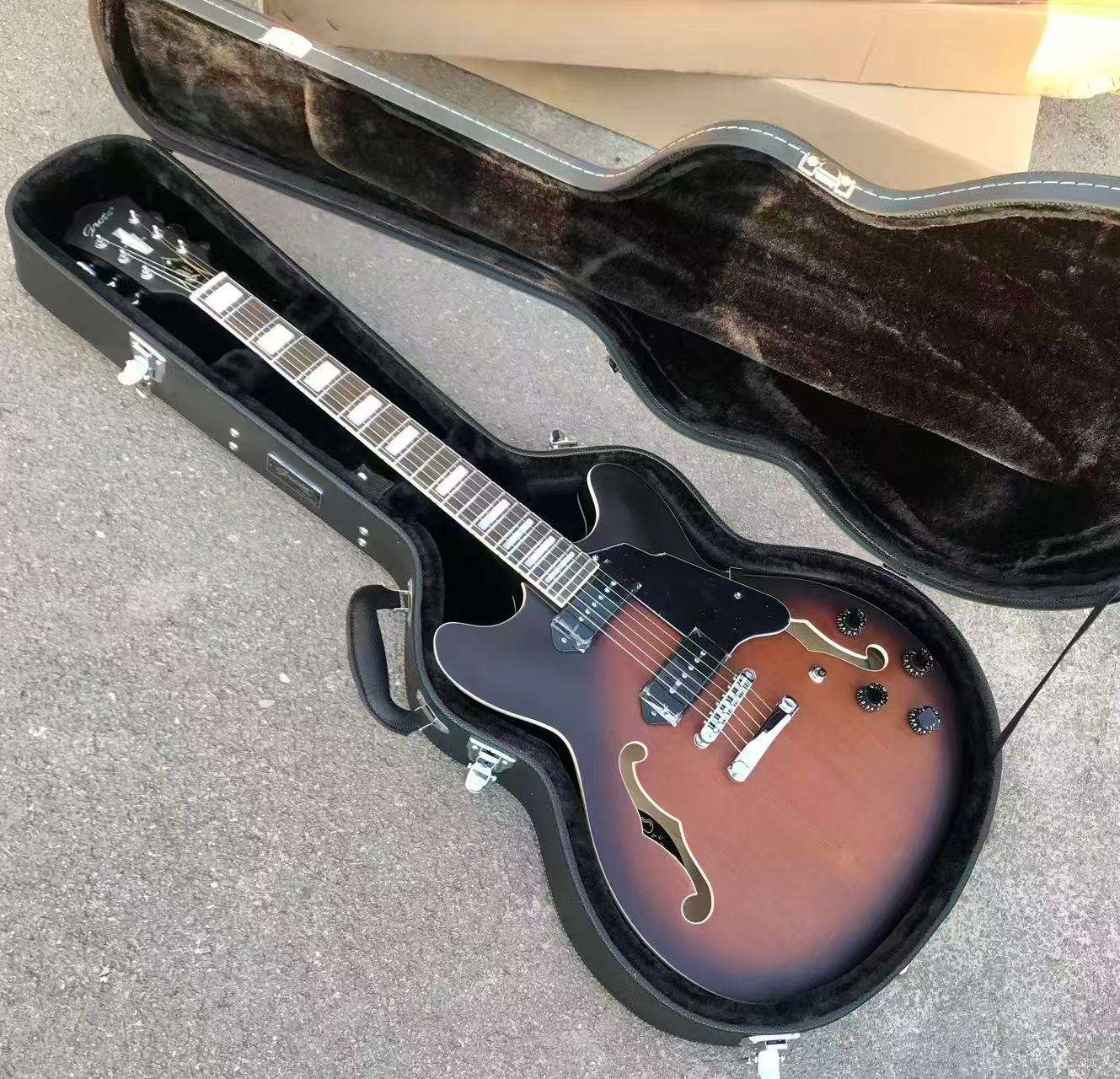
Measure guitar dimensions beyond overall length
Use a stable, clean surface with finish-compatible protection and suitable support for the instrument. Keep metal measuring tools from dragging across the finish. A helper can hold a flexible tape or note readings while you keep the guitar stable. You should not need to balance the instrument on its headstock or unsupported neck to obtain a dimension.
Choose one unit system for the main record and label it clearly. If you also provide conversions, retain the original measurement and avoid rounding that could conceal a close fit. Record the model, handedness, and any modifications. A replacement bridge, strap-lock button, or unusual tuner can change the space required even when the instrument’s model name stays the same.
Understand the different meanings of length
Overall length runs from the instrument’s furthest end to its opposite furthest end in the orientation used for the case. Body length describes the body section separately. Scale length concerns the vibrating-string geometry and is useful for playing specifications, but it cannot substitute for either carrying dimension. Keep all three terms separate if the supplier’s data includes them.
Gator’s case-fit guide lists overall length, body length, body height, and several body widths. Those distinct fields show why one number is insufficient. The measuring workflow here expands the buyer’s record with photographs and clearance questions; it does not claim to reproduce a maker’s approved fit test or supply missing dimensions for a specific case.
Measure overall length without following the curves
Keep the instrument in its normal resting orientation and record its full end-to-end envelope. Do not run a tape along curved surfaces and treat that longer surface path as the space needed inside a case. Include fixed projections that determine the extreme ends. Note separately if a component is normally removable and whether the intended packing procedure removes it.
Photograph the measurement with the endpoints visible when practical. A close photograph of a tape reading is difficult to interpret if the starting point is missing. Include enough of the instrument to make the reference clear. This helps the supplier resolve whether its published interior length uses the same endpoints and whether any shaped section narrows before the nominal end.
Record the body widths and their positions
Measure the widest parts of the lower and upper body, together with the waist where relevant. For an offset or asymmetrical instrument, also show where those widths occur along the body’s length. Two guitars can have the same maximum width while placing their widest points differently. A shaped case interior may fit one and interfere with the other.
For unusual outlines, make a simple dimensioned sketch or a full-size outline using a method that does not contact or mark the finish. Show protruding horns and any body section that extends beyond a conventional outline. Do not assume that an electric guitar case advertised as universal can accommodate every offset, extended-range, or custom shape without checking.
Measure depth with the hardware in mind
Record body thickness and identify any features that rise above the top or extend below the back. Bridge parts, control knobs, switch tips, and strap buttons can matter to clearance. Distinguish the bare wood thickness from the total occupied depth. If the supplier uses the term body height, ask which of these it means before comparing figures.
A case lid should not be used to force a protruding component into a pocket of foam. Ask where the lid supports or clears the instrument, and whether a removable arm should be stored separately. For an angled neck or headstock, a simple maximum depth may still be insufficient; the location and direction of the angle must be visible in the fit discussion.
Locate the neck support and headstock space
Record where the neck leaves the body and where a proposed support would sit. Check that the support bears on the intended area without placing the instrument under an unwanted bend. A support that suits another body position may leave the neck suspended incorrectly. Ask for the interior layout or a fit confirmation rather than assuming that extra padding will solve every mismatch.
Show the headstock outline, tuner projections, and angle relative to the body. A headless guitar has a different end profile but still needs clearance around its string lock and any exposed string ends. Reduced overall length does not eliminate the need to check neck support. A case can be long enough while placing its support in the wrong location.
Identify accessories that change the fit
List anything normally attached during transport: strap locks, wireless units, clip-on devices, removable arms, or unusually shaped knobs. Follow the relevant maker’s instructions about what should be removed. The fit record should show the guitar as it will actually be packed, not a stripped version that differs from daily use.
Measure an accessory compartment separately from the instrument cavity. Keep sharp or heavy items from bearing on the finish through a lining. If a strap remains attached, check that it does not interfere with the lid or become trapped against a control. These are practical fit observations; they do not establish that an improvised arrangement has passed a transport test.
Compare like dimensions with like dimensions
Before ordering, confirm whether a listing reports interior dimensions, exterior dimensions, or the size of a shipping carton. Exterior length cannot tell you the usable space after the shell, lining, supports, and compartments are accounted for. Ask whether interior measurements describe the largest cavity or a guaranteed instrument envelope, particularly when the lining is shaped or compressible.
Do not apply one arbitrary spare-space rule to all cases. A loose-fitting cavity may permit movement, while a tight cavity may load vulnerable parts. The case maker should help interpret its design for the instrument. Supply the complete record and request a clear statement of compatibility, including any required insert or model-specific adjustment.
Conduct a careful physical trial when possible
Place the guitar into the open case without force. Check that the body settles as intended and that the neck support aligns. Observe clearances around tuners, bridge, controls, and strap buttons. Close the lid gently before operating latches. If it resists or the guitar moves unexpectedly, stop and investigate rather than using latch force to complete the test.
A basic trial can identify obvious fit problems but is not evidence of impact or shipping performance. Do not drop, shake, or compress the case with the instrument inside to test a guess. If formal protection evidence matters, request the maker’s applicable documentation and define the handling conditions separately from the simple fit check.
Keep a record that another person can use
Store the measurement sheet, photographs, case model, and supplier’s fit reply together. If a guitar has several variants, identify exactly which one was measured. Do not silently extend the result to another string count, body size, or neck construction. Date the record so that a later hardware revision does not inherit an obsolete fit approval.
For a wholesale range, create one controlled fit record per relevant configuration and verify representative samples. This reduces the risk of ordering cases by a broad catalog family name. A rejected fit should be documented too: record the interference or unsupported area so the next proposed case can be assessed against a specific problem rather than another hopeful comparison.
Start a measuring record with the actual model selected from the solid-body guitar category, then compare it with the available guitar bags and cases. A category label is a starting point, not a substitute for verified interior measurements.
Send an inquiry with useful evidence
| Record field | What to show | Common error |
|---|---|---|
| Overall length | Complete end-to-end envelope | Using scale length |
| Body profile | Widths and their positions | Checking only maximum width |
| Occupied depth | Body plus fixed projections | Ignoring bridge and knobs |
| Neck and headstock | Support location and angles | Assuming all neck rests align |
| Case data | Usable interior and revision | Comparing exterior dimensions |
A good case inquiry includes the instrument reference, overall dimensions, body-width locations, occupied depth, neck and headstock details, transport use, and clear photographs. Ask which case revision or insert is being proposed and what compatibility has actually been confirmed. Keep unknown dimensions marked as unknown until measured.
Use the Gusto Guitar product range to identify the instrument family, then request or measure the actual model before choosing protection. This guide supplies a method, not a dimensioned drawing. The final decision should connect a real guitar, a real case interior, and a documented fit assessment.

Get Best Guitars
Join Gustoguitar.com Newsletter to get more information of electric guitars, classical guitars, and all kinds of guitars.


