

 By Gusto Guitar
Build an LP-style and ST-style range around distinct customer needs, verified configurations and service costs—not a wall of overlapping colours.
An LP-style vs ST-style product-range decision should connect customer needs with verified configurations rather than rely on a familiar outline alone. A player can accept a personal preference; a buyer must explain why each model deserves shelf space, which customer it serves and how it will be supported after sale. The strongest range gives customers meaningful alternatives while keeping inventory, demonstrations and replacement parts manageable.
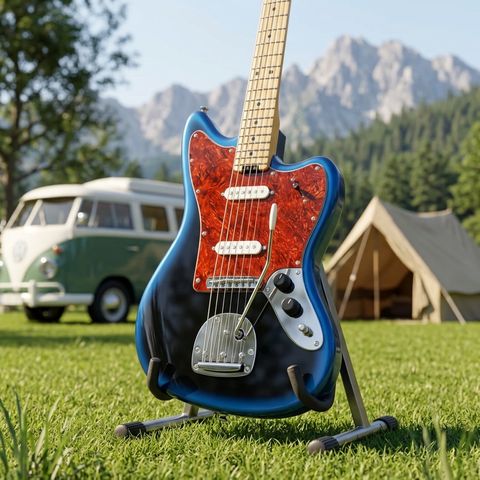
Gusto Guitar GTST-03 example. A product photograph does not confirm the specifications of a proposed alternative model.
Define customers for an LP-style vs ST-style range
LP-style and ST-style are useful shorthand for broad visual families. They are not complete engineering standards, and the names do not establish the brand or origin of a guitar. Gibson and Fender product names belong to their respective manufacturers. When sourcing another brand, describe its own model accurately and confirm the actual construction, electronics and dimensions instead of implying that it is an original branded instrument.
Official specifications illustrate why the details matter. Gibson lists a 24.75-inch scale for its Les Paul Standard 50s. Fender lists a 25.5-inch scale, an HSS pickup arrangement and a two-point tremolo for the Player II Stratocaster HSS. These are examples of particular instruments, not mandatory specifications for every similarly shaped guitar.
Therefore, two guitars with different outlines might overlap heavily in function, while two guitars sharing an outline might serve different players. Compare what the customer can actually do with them. A range built only from shape names risks buying apparent variety without a convincing reason to choose one model over another.
Define the customer job before choosing the model mix
A first electric guitar with straightforward ownership
For this customer, the central questions may be comfort, manageable controls and an easy route to a reliable setup. Ask whether the package explains tuning, string changes and the included accessories clearly. A dramatic finish does not compensate for an instrument that arrives poorly adjusted or requires unfamiliar procedures without instructions.
Do not assume a fixed bridge automatically means a better beginner guitar or that a tremolo is too complicated for everyone. Find out whether the customer intends to use the arm, has access to setup help and understands the working arrangement. The buying decision should connect to that support situation rather than a blanket rule about beginners.
A working player adding a useful second sound
This customer already has a reference instrument. Ask what is missing: a different pickup response, a different physical fit, a bridge function or a more suitable control layout. If the proposed second model repeats the existing guitar’s useful settings, another silhouette alone may not justify the purchase.
A customer buying primarily for appearance
Appearance is a legitimate requirement, but it should be described honestly. Offer the requested visual family while still checking reach, balance and operating controls. Keep cosmetic options within a confirmed functional model rather than treating every colour as a separate product family in your planning.
Use a differentiation matrix before placing an order
| Range decision | Question for each proposed model | Evidence to retain |
|---|---|---|
| Playing fit | Does the body and neck offer a useful alternative for the intended customer? | Sample measurements and seated/standing trial notes. |
| Electrical function | Which pickup combinations and controls differ in practice? | A switching diagram and comparable recordings. |
| Bridge use | Is a moving bridge needed, and how is it supplied and maintained? | Setup instructions and replacement-part identification. |
| Stock complexity | Does the additional variant address demand or only add another finish? | Enquiry reasons, sell-through and stock-age records. |
| After-sales support | Which components can be sourced accurately when a repair is needed? | Dimensions, part references and a service contact. |
Use this sheet to expose overlap before debating quantities. If the only clear difference between two proposed models is the finish, count them as variants of a similar offer. If one gives a distinct control or bridge function that customers request, explain that difference in the sales description and demonstration.
Compare scale and feel without confusing the variables
Scale length belongs on the specification sheet because it affects the geometry the player experiences. It does not describe neck thickness, fret condition, string gauge or action. A shorter listed scale does not prove that a complete instrument will feel easier to play than another sample with a longer scale.
Run the comparison with the intended tuning and record the string sets fitted to both samples. Have players try ordinary chord changes, a stretch they use in songs and a controlled bend if relevant. Record the actual difficulty rather than asking which guitar is supposedly easier based on a style label.
Also check the complete standing position. The location of the bridge, strap buttons and body contact points changes where the hands meet the instrument. Measure sample weight, but do not let that single number replace a balance test. A comfortable demonstration lasting one minute may conceal a reach problem during a longer lesson or rehearsal.
Price the working product, not only the factory quotation
A purchasing comparison should include the costs required to put a playable, supportable guitar into the customer’s hands. Relevant items may include transport, protective packaging, incoming inspection, setup labour, locally applicable charges and service stock. Obtain current quotations for your destination rather than reusing old listing prices or minimum-order claims.
Make these costs visible at model level. If one configuration repeatedly needs more setup time, investigate the reason before interpreting its lower purchase price as a better margin. Likewise, an expensive case option may make sense for a particular sales channel without being necessary for every customer or shipment.
Keep the financial model separate from claims about tone. A more expensive finish, hardware option or neck joint does not by itself establish a better musical result. Explain what the added cost buys in observable terms so staff can answer questions without relying on vague quality rankings.
Approve samples with a repeatable demonstration
Use the same musical tasks
Choose three short passages: clean chords, a single-note line and a driven rhythm part if the target customer needs it. Keep the amplifier and effects documented. Compare at a sensible matched listening level so a louder output is not automatically judged more impressive.
Exercise the controls during playing
Change pickup position and adjust volume while repeating a phrase. Check whether staff can explain each useful setting accurately. Do not advertise coil splitting or another switching function until it has been confirmed on the actual specification and demonstrated on the sample.
Test the ownership routine
Have the person responsible for shop setup identify the necessary tools, stringing route and adjustment access. Ask which parts are unique to the model. A guitar that sounds suitable can still create avoidable service delays if its replacement components are poorly documented.
Start with a small, readable range architecture
For an illustrative trial, a store might compare one straightforward configuration in each visual family and add a third instrument only when it fills an identified functional gap. This is a planning example, not a recommended universal stock ratio. Your own customer enquiries and sales history should determine quantities.
Write a one-sentence reason for each model’s inclusion. “Alternative pickup combinations for customers who need them” is testable; “more choice” is not specific enough. If staff cannot distinguish two offers without discussing colour, reconsider whether both need equal stock depth at launch.
After the trial, record why customers choose or reject each sample. Separate a comfort objection from a price objection, and distinguish an unavailable colour from a missing function. This makes the next order a response to evidence rather than a repetition of the first buyer’s personal preference.
Keep model, configuration and finish records separate
Use a stable product-family identifier, a configuration revision and a finish code. Attach the approved sample, bill of materials or agreed specification and inspection notes to that record. This prevents a later finish order from silently becoming a different electrical or mechanical specification.
Where a supplier proposes substitutions, ask exactly which field changes and whether the replacement affects fit, function, appearance or service parts. Record approval before updating the sales description. Avoid promising that two runs are identical merely because the model name has not changed.
Questions buyers should settle before expanding
Should an LP-style and ST-style range be split equally?
There is no defensible universal ratio. Start from the customers you serve, available cash and replenishment conditions. Review stock age and lost enquiries before increasing either side.
Does an HSS configuration make every other model redundant?
No. Pickup arrangement is only one part of the choice. Feel, useful control settings, bridge operation and physical fit still need evaluation. Demonstrate the actual instruments instead of counting pickups as a versatility score.
Can a catalogue picture confirm interchangeable parts?
No. Request measurements and part identification. Similar-looking bridges, pickguards and electrical components may have different dimensions or mounting arrangements.
Map the solid-body range and the semi-hollow and jazz range against different customer needs. A range decision should preserve meaningful distinctions in configuration rather than simply add similar silhouettes.
Build a range that staff can explain
A useful product range has fewer unanswered questions, not simply more model numbers. Give each configuration a customer role, approve its sample, calculate the support burden and monitor what customers actually ask for. Then expand the parts of the range that show a clear purpose.
Explore Gusto Guitar’s solid body electric guitars and request the current specification for any proposed configuration. Treat every quoted option as something to confirm; this guide does not claim that Gusto supplies every external example discussed above.

Get Best Guitars
Join Gustoguitar.com Newsletter to get more information of electric guitars, classical guitars, and all kinds of guitars.


