

 By Gusto Guitar
Compare the complete guitar and the confirmed material specification: a wood name alone cannot settle weight, finish quality, amplified sound or value.
A poplar vs mahogany guitar-body comparison should evaluate verified construction and complete instruments before assigning qualities to a wood name. A more useful approach separates the material being supplied, the way the body is constructed and the performance of the completed guitar. This matters for an individual player choosing a comfortable instrument and for a dealer trying to keep repeat orders consistent without turning a broad timber label into a promise it cannot support.
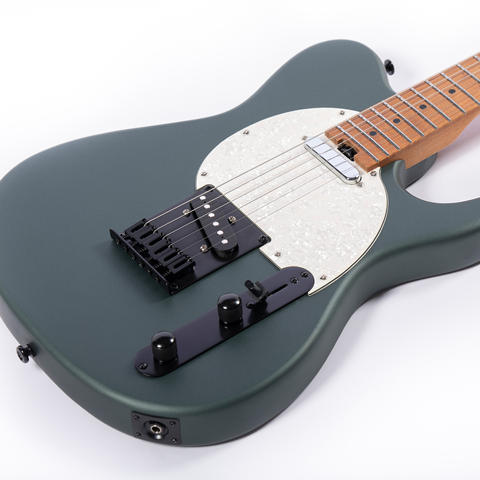
The GTTL-02 product page identifies a poplar body. A painted exterior does not independently verify the material inside a different guitar.
Define the materials in a poplar vs mahogany comparison
Start by asking which component the material description applies to. A guitar may have one material for the main body and another for a cap or decorative surface. The neck and fingerboard are separate fields. A listing that places several wood names in a title may not tell you how those materials are distributed.
For manufacturer examples, Fender lists poplar for the Squier Sonic Stratocaster body, while Gibson describes its Les Paul Studio with a mahogany body and maple cap. The second description already contains more construction information than simply “mahogany guitar.” Neither example supplies the specification of a similarly shaped instrument from another maker.
For a purchasing document, keep the body core, any cap, any veneer and any other material separate. Ask the supplier to identify the timber more precisely when the trade name is ambiguous. Do not assume translated common names establish an exact species, or that a material mentioned in an old catalogue remains unchanged in a current order.
Why the familiar sound comparison is hard to interpret
Suppose a poplar-bodied guitar and a mahogany-bodied guitar sound different through an amplifier. If their pickups, scale lengths, bridges, strings and setups also differ, the comparison tells you that two complete guitars sound different. It does not isolate the body material as the cause.
This does not require pretending that construction is irrelevant. It requires matching the strength of your conclusion to the test you performed. A personal preference for one sample is a valid buying observation; a universal rule about every instrument made from that wood would need much more evidence.
Keep two questions separate: “Do I like this guitar?” and “What caused the difference?” The first can be answered through a useful audition. The second is a controlled-comparison problem. Confusing them encourages descriptions such as guaranteed warmth, brightness or sustain that a retailer cannot verify from a body-material field.
Measure weight instead of predicting it from the label
If comfort is the concern, request the finished sample’s measured weight and try its balance on a strap. Body size, thickness, internal cavities and the rest of the hardware contribute to the result. A lighter body blank does not automatically mean a lighter or better-balanced complete instrument.
For a repeat order, decide whether weight is an individual preference or an agreed acceptance criterion. If it is important enough to place in the order, specify how and when it will be measured. Ask what variation is expected instead of inventing a tolerance based on a single attractive sample.
Also record seated comfort and standing reach. An instrument can meet a numerical weight preference while sitting awkwardly against the player’s body. The material choice should support the physical design you want, not replace an assessment of that design.
Match the finish brief to the appearance you actually want
An opaque colour and a transparent finish ask different visual questions. Under an opaque finish, the player sees the paint surface rather than a complete view of the wood. With a transparent finish, grain, colour variation, joints and any decorative layer may become part of the product’s appearance.
Ask whether the sample photograph represents the same finish system and construction proposed for the order. A visible figured surface may be a cap or veneer; it should not be described as the entire body material without confirmation. Conversely, an attractive painted guitar should not be treated as inferior simply because its grain is hidden.
For dealers, approve an appearance range with more than one representative sample or clearly documented photographs where practical. Specify which variations are acceptable and which require further approval. “Match the sample” is incomplete if the two parties disagree about whether it means colour, grain pattern, gloss level or all three.
A comparison sheet for poplar and mahogany options
| Question | Evidence to request for either material | Avoid assuming |
|---|---|---|
| Material identity | Confirmed body-core description and more precise timber identification where needed. | A translated trade name identifies every board exactly. |
| Construction | Body thickness, joints, cap or veneer and any chambering. | One wood name describes the whole assembly. |
| Comfort | Finished weight and seated/standing trials. | The label guarantees a light or balanced guitar. |
| Appearance | Approved finish sample and acceptable visual variation. | A photograph proves the construction beneath it. |
| Sound | Comparable demonstrations of the actual configurations. | A material name guarantees one tonal result. |
| Repeat supply | A revision-controlled specification and substitution procedure. | An unchanged model name means an unchanged build. |
Listen to complete instruments under comparable conditions
Choose a clean chord progression, a single-note phrase and the driven part you expect to use. Record the strings, tuning and amplifier settings. Match the listening level sensibly so a louder pickup does not become an automatic advantage in a supposed wood comparison.
Listen for the qualities you need: note separation, response to a softer attack and how the part sits with accompaniment. Keep your notes about the instrument rather than forcing the result into a preconceived wood description. If the preferred sample has different pickups, acknowledge that difference.
For a supplier demonstration, request the same short passages on both candidates with processing identified. A useful result may be that both meet your requirements and the decision rests on feel or cost. There is no need to manufacture a dramatic tonal ranking to justify a purchase.
Judge workmanship separately from the material category
Inspect the finish, hardware installation, neck fit, fret condition and working controls of each sample. A more expensive material description cannot compensate for poor execution elsewhere. Equally, a guitar using a familiar lower-priced material should not be dismissed before its actual workmanship is examined.
If a screw or fitting needs service, follow the model’s instructions and have the condition assessed rather than assuming a repair method from the wood label. Local construction details, previous work and the fastener itself can matter. The purchasing question is whether the instrument is correctly built and supportable.
Ask the supplier how material and construction are checked before finishing. You do not need confidential factory methods, but you do need enough documentation to understand what the delivered description means. Do not substitute a polished marketing paragraph for an agreed specification.
Compare the quoted upgrade in concrete terms
If one body option costs more, ask what changes along with it. Does the quotation include another finish, different construction, an additional decorative layer or other components? Compare matched configurations before interpreting the price difference as the cost of changing only the wood.
For a retailer, connect the option to a customer requirement. A transparent appearance, a particular construction brief or a measured weight target can provide a specific reason for a choice. A vague assertion that one wood is always professional does not help staff explain why the customer should pay more.
Use current quotations for the actual order and destination. The wood name does not establish a reliable price, minimum quantity or delivery promise, and old marketplace listings are not a substitute for confirmation.
Prevent silent material changes in later batches
Keep the approved model specification, sample identifier and date together. Separate cosmetic variation from a material substitution. If a different timber or construction is proposed, ask for the exact revised field and whether a new sample or description is needed.
Retain a short customer-facing description that matches the confirmed build. This is especially important when several finishes share one product family. Updating an internal purchase order without updating the public description can leave the website claiming a material that is no longer supplied.
Request comparable specifications for models in the solid-body electric guitar category. Before introducing another body type, use the solid body vs semi-hollow comparison to separate construction from material claims.
Questions worth asking before deciding
Is mahogany always better than poplar?
No single material field establishes the quality of a complete guitar. Define the desired construction, appearance and playing result, then assess the sample against those requirements.
Can I identify the body wood from a painted photograph?
An opaque exterior is not an independent material verification. Use the confirmed specification and appropriate supplier documentation.
Which choice is right for my range?
The one that meets your product brief consistently at an acceptable total cost. Compare the actual models rather than treating wood names as a substitute for customer needs.
Compare Gusto Guitar’s solid-body options and semi-hollow constructions, then request the current material specification for the model and finish you intend to order.

Get Best Guitars
Join Gustoguitar.com Newsletter to get more information of electric guitars, classical guitars, and all kinds of guitars.


