

 By Gusto Guitar
Choose the playing surface you prefer, then confirm its finish and care requirements; fingerboard colour alone does not establish feel, maintenance or amplified tone.
Rosewood vs maple fretboards should be compared through the actual surface, finish, fretwork and complete neck that the player will use. Two guitars can look very different yet feel similar, or share a fingerboard material while playing differently. A useful comparison focuses on the actual instruments and the care instructions that apply to their surfaces.
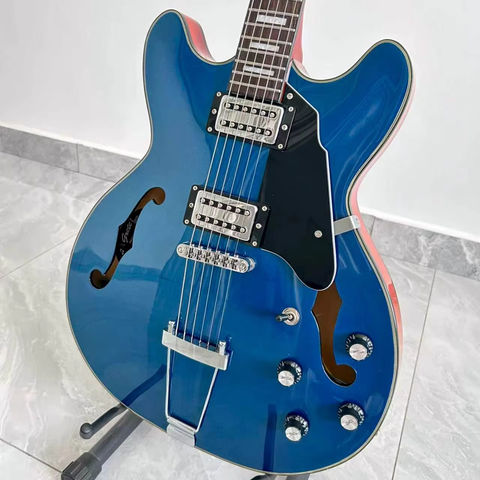
Gusto Guitar GT335-01 reference image. A dark fingerboard in a photograph is not independent proof of its wood species or surface treatment.
Compare rosewood vs maple fretboards at the playing surface
Maple is often seen with a protective finish, while rosewood fingerboards are often supplied without that type of surface coating. Fender discusses this difference in its explanation of rosewood fingerboards, connecting the contrasting feel to its own finishing choices. That is a useful starting point, but the finish on the particular guitar still needs confirmation.
Do not turn a common arrangement into a rule about every instrument. A supplier may offer a different surface treatment, and a used guitar may have been altered. Ask what is actually present before choosing a care product or deciding that a photograph represents bare wood.
The back of the neck is another separate surface. A guitar can have one finish on the shaft and another arrangement on the fingerboard. If your main concern is a sticky feeling under the thumb, identify the back finish rather than attributing that experience automatically to the fingerboard material.
Test feel through movements, not just a held chord
Slides and position changes
Play a short phrase that moves between two positions you use frequently. Notice whether the contact feels comfortable and whether your hand can release pressure cleanly during the shift. Repeat it at an ordinary playing temperature and with your usual hand condition, rather than judging a cold display instrument from one touch.
Bends and vibrato
Try the bends and vibrato used in your music. String gauge, action, fret height and surface condition can influence the experience. If the two comparison guitars differ in these areas, record those differences instead of calling the result a controlled test of rosewood against maple.
Chord work
Include first-position chords and a shape farther up the neck. Ask whether any difficulty comes from reach, neck profile, fret condition or the surface itself. A preference for one complete neck is valid even when you cannot isolate one material as the cause.
Compare neck geometry independently
Fingerboard radius describes curvature, while neck profile describes another part of the neck’s shape. Nut width and string spacing introduce additional dimensions. None of these is settled by the word rosewood or maple, and they should not disappear from a comparison because the colour is more visible.
For an order, request the actual measurements and fret specification of each option. Do not assume that choosing a different fingerboard from a drop-down menu leaves every other detail unchanged. Confirm whether the alternatives share a neck profile, radius and setup.
If buying remotely, ask for a demonstration that shows the playing tasks you need and a clear description of the sample. A close photograph can help you inspect appearance and visible condition, but it cannot replace all the information needed to predict feel.
Choose appearance with a realistic reference
The contrast between a light and dark fingerboard can change how inlays, binding and the body’s finish look together. That is a legitimate preference. Compare the whole instrument under ordinary lighting, not only a heavily edited close-up with exaggerated contrast.
Natural wood varies. Ask what colour and grain range is normal for the proposed option and whether the picture shows the actual instrument or a representative sample. If you require a particular appearance, make that an explicit approval question before ordering.
On an older guitar, distinguish ordinary surface wear from a condition needing attention. Do not use a dark patch, a glossy area or a change in colour as a complete diagnosis. Ask a competent person to assess an unfamiliar surface before attempting to make it look new.
Cleaning and conditioning are different tasks
Routine cleaning removes the material left by playing and handling. Conditioning is a separate operation for an appropriate surface, using a product whose instructions fit that instrument. It should not become an automatic step every time the guitar is picked up or restrung.
Fender’s Magic Fretboard Oil listing identifies unfinished fingerboards, including rosewood, as its intended use. The important purchasing lesson is the stated surface compatibility, not that every fingerboard needs this particular product.
For a finished maple board, do not assume an oil intended for unfinished wood is appropriate. Confirm the guitar maker’s guidance for the coating. Likewise, do not apply a generic furniture product because it mentions the same wood species; coatings, inlays and surrounding hardware also need consideration.
A simple care decision process
First, identify the model and confirm the fingerboard’s material and surface treatment. If that information is unclear, pause before applying a new chemical product. A supplier or technician can help resolve the uncertainty more safely than an experiment based on colour.
Second, use the least involved routine that meets the maker’s instructions. A suitable clean, soft cloth is a useful basic tool. Keep it free of grit and avoid spreading residue from one part of the guitar onto another. Heavier contamination or a damaged coating warrants a more specific assessment.
Third, if the approved instructions call for a conditioner, follow that product’s directions rather than inventing an application quantity or schedule. More product is not automatically more protection. Record what was used if the instrument will be maintained by several people.
| Decision point | What to establish | What not to infer |
|---|---|---|
| Wood identity | The confirmed fingerboard material for the exact option. | Every dark board is rosewood. |
| Surface | The finish or other treatment and approved care instructions. | A wood name alone establishes chemical compatibility. |
| Playability | Profile, radius, frets, strings and actual setup. | One material makes every neck faster or easier. |
| Appearance | Representative colour, grain, inlays and acceptable variation. | One image guarantees an identical later board. |
| Sound | The response of the complete guitar under comparable conditions. | The fingerboard name guarantees a tonal ranking. |
Keep tonal preferences tied to the audition
Manufacturers and players may describe tonal tendencies for different materials. Those descriptions do not remove the need to hear the proposed guitar. When comparing two instruments with different pickups, strings, hardware or dimensions, you are hearing all of those differences together.
Use the same phrases and sensible matched listening levels. Listen for the note separation, attack and response to touch that matter to your playing. If you prefer one guitar, describe that result without claiming you have demonstrated what every rosewood or maple board will do.
Avoid paying for a promised tonal change that is described only in adjectives. Ask what configuration is being supplied and whether you can evaluate it. Appearance or feel can be sufficient reasons for a choice without inventing an unsupported sound guarantee.
For retailers, keep the option and the care card aligned
If a model is offered with several fingerboards, give each configuration a clear identifier. Keep the material, finish and care guidance together so staff do not hand every customer the same maintenance advice by habit.
When a supplier proposes a material substitution, update the agreed record and review the public description. A similar-looking alternative should not silently retain a rosewood label. Ask for precise identification where sourcing documentation requires it, rather than trying to decide trade or shipping requirements from a photograph.
For incoming inspection, verify the ordered configuration, visible workmanship and playing condition. Do not apply oil merely to make every board look darker before photography. That can obscure the normal appearance you need customers to understand and may conflict with the maker’s instructions.
Compare fretboards on complete instruments in the solid-body guitar range. The body-construction guide provides a separate comparison so fretboard material is not confused with body design or the rest of the setup.
Questions that help make the choice
Is rosewood always easier to maintain?
Maintenance depends on the actual surface and condition, not only the species label. Compare the care routines specified for the two instruments you are considering.
Does maple always feel glossy?
No universal finish should be assumed. Confirm the supplied surface treatment and try the instrument. Also distinguish the fingerboard from the back of the neck.
Can I choose purely by appearance?
Yes, appearance can be a valid preference when both instruments meet your playing needs. Still confirm the configuration and care instructions before ordering.
Compare Gusto Guitar’s solid-body guitars and semi-hollow options, then ask for the current fingerboard and finish specification of the model you intend to buy.

Get Best Guitars
Join Gustoguitar.com Newsletter to get more information of electric guitars, classical guitars, and all kinds of guitars.


