

 By Gusto Guitar
Read the claim for the assembled product and the stated exposure, not just the outer fabric.
Waterproof guitar bags and water-resistant bags make different claims, so the complete construction and supporting evidence need to be checked before purchase. A fabric may resist brief wetting while the assembled bag still admits water through a zipper, seam, opening, or worn area. A product described as waterproof also needs a defined basis and conditions. This guide explains how to read the claim, request evidence, and plan sensible carrying without turning a catalog word into a guarantee that a Gusto bag will protect a guitar during heavy rain or immersion.
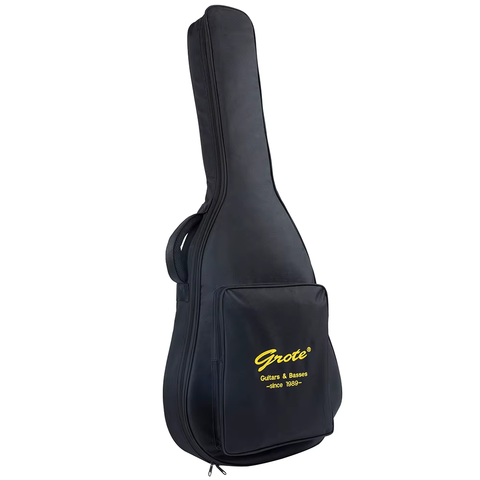
Define claims for waterproof guitar bags
Copy the wording used for the actual model and identify what it describes. Does it concern the outer material, a coating, a rain cover, or the complete closed product? Keep those scopes separate. A statement about fabric should not silently become a statement that every seam and closure is watertight.
Gator’s GBE-ELECT page describes a water-resistant exterior. That is a useful example of a limited material-related claim, not a Gusto specification. Its wording should not be strengthened to waterproof merely because the bag is intended to carry an instrument outdoors.
Define the exposure you are concerned about
A short walk through light rain, a wet vehicle floor, sustained rain, and immersion are different situations. Describe the actual carrying route and likely exposure. A product may be useful for one situation without being suitable for another. Ask the maker which conditions its claim addresses rather than relying on the most demanding interpretation of the word.
Keep duration, orientation, closure condition, and product state in the discussion where relevant. A new sample and a worn bag may not behave identically. Do not create a universal exposure limit from a casual demonstration. If a specific performance level is important, it needs appropriate evidence and a clear statement of scope.
Inspect closures and seams as part of the system
Look at the zipper route, seam construction, openings, strap attachments, and the way any cover fits. These features can affect the assembled product even when the main panel sheds water. Visual inspection can identify design questions, but it cannot prove a water-resistance rating by itself.
Ask whether a closure must be fully shut or positioned in a particular way for the claim to apply. If a rain cover is required, verify that it is included and correctly fitted to the loaded bag. A cover shown in a promotional photograph should not be assumed to be part of the supplied package without confirmation.
Distinguish a bag from a rated rigid case
Some rigid cases are marketed with specific water and dust protection claims. Gator’s official Titan guitar-case range is a named example of a waterproof case category. That does not establish the same performance for a soft gig bag, another case, or a visually similar product.
If a rating or test is cited, request the actual model, applicable documentation, and conditions. Do not infer a rating from a range name or repeat a numerical code without understanding its scope. A test claim for one component or product revision should not be transferred automatically to every instrument carrier sold by the business.
Ask what was actually tested
A meaningful report identifies the sample, method, conditions, and result. Ask whether it concerns the material alone or the complete loaded or closed product as appropriate. Keep any limitations visible. A supplier’s video of water beading on a panel is not equivalent to evidence about seams and closures under defined exposure.
Do not perform an improvised water test with a valuable guitar inside. If an assessment is needed, agree a suitable method with the maker or an appropriate specialist. The purpose is to establish a claim safely and reproducibly, not to risk the instrument to discover whether a marketing phrase was intended literally.
Consider fit and carrying position
An overfilled pocket, strained closure, or poorly fitted instrument can change how the bag closes. Check the product in its actual loaded state. Make sure accessories do not obstruct the opening or prevent a cover from sitting as designed. An empty-bag demonstration may not represent normal use.
Observe how the bag sits when carried and set down. Do not assume that a water-resistant front panel protects an instrument placed on a wet surface. Follow the maker’s restrictions and choose a sensible dry location. Practical handling remains important even when the product has a supported resistance claim.
Keep humidity separate from liquid ingress
A bag that limits rain entry is not necessarily a controlled humidity environment. Water vapor, temperature, and long-term storage are different questions from a brief liquid-exposure claim. Do not describe a water-resistant shell as humidity protection without evidence. Use the instrument maker’s care instructions for storage conditions.
If the instrument or bag becomes damp, address that condition before long storage. Follow approved drying and care advice and avoid trapping moisture through an improvised sealing routine. A stronger exterior barrier does not make already wet contents safe. Keep the actual condition of the bag and instrument in the decision.
Read maintenance and exclusions
Ask how the material and closure should be cleaned, dried, and stored. Unapproved chemicals or aggressive treatment can affect surfaces and components. Do not apply a generic waterproofing spray unless the maker confirms it is suitable for that bag and its materials. A care product should not become an undocumented experiment.
Keep performance claims separate from warranty coverage. A product may state a resistance feature while its commercial terms have specific limitations. Read the current terms for the actual item rather than assuming that a waterproof word guarantees replacement of any damaged instrument. This guide does not establish the coverage of Gusto or another supplier.
Write precise purchasing requirements
If exposure resistance matters, state the intended use and ask the supplier what it can support with evidence. Identify whether a bag, cover, or case is being proposed. Keep the material description, construction, test claim, and included items in separate fields. This makes competing offers easier to compare honestly.
For wholesale work, approve a representative product and retain its revision. Ask whether changes to fabric, coating, zipper, seams, or cover require review. A superficially similar replacement may not support the same claim. The controlled record should follow the actual construction rather than only a shared product name.
Use accurate product-page language
Repeat only the verified scope of the claim. If the evidence concerns a water-resistant exterior, say that rather than promising protection in any weather. Do not use rain or immersion imagery that implies performance beyond the available record. A photograph can create an expectation even when the written specification is cautious.
Keep the description consistent across title, table, image alt text, and SEO. A conservative body paragraph does not correct an exaggerated waterproof title. If the supplier’s source wording is ambiguous, resolve it before publishing. Accurate limits help the customer choose an appropriate carrier instead of relying on a claim that nobody has defined.
Plan the journey beyond the product label
Use available shelter, avoid leaving the instrument on wet ground, and keep unnecessary exposure brief. These are practical carrying choices, not substitutes for evidence. If the route creates conditions beyond the accessory’s supported use, choose another plan rather than assuming careful handling can turn a limited bag into a fully sealed system.
For travel or shipping, assess the entire arrangement and the requirements of the handling service. A daily gig bag, a rated case, and an outer shipping package have different roles. Keep those roles clear so that one water-related claim is not asked to prove impact, compression, and transport suitability as well.
Compare the actual guitar bags and cases using the claim and construction checks above. For a compact instrument in the headless guitar range, verify fit independently from any water-protection claim.
Ask about the actual Gusto option
| Claim or feature | Question | Do not assume |
|---|---|---|
| Water-resistant fabric | Which material and conditions? | Whole bag is sealed |
| Waterproof wording | Which product and evidence? | Unlimited exposure |
| Rain cover | Included and fitted how? | Photo means supplied |
| Rating | Applicable model and report? | Every range item shares it |
| Storage | Actual humidity and dampness? | Rain resistance controls humidity |
| Care | Approved method and restrictions? | Any coating spray is suitable |
Identify the relevant instrument and accessory in the Gusto Guitar product range and request the current material, closure, cover, and performance information. Leave unverified claims open. A title containing waterproof is a reason to ask for the basis, not proof of immersion protection.
The useful distinction is between a supported statement for a defined product and an assumption made from a word. Choose the carrier that suits the real exposure and has evidence you can interpret. Describe its limits honestly, and keep liquid resistance, climate care, fit, and transport protection as separate parts of the decision.

Get Best Guitars
Join Gustoguitar.com Newsletter to get more information of electric guitars, classical guitars, and all kinds of guitars.


