

 By Gusto Guitar
Two extra frets add two fretted semitones on each string, but they do not define scale length, comfort, pickup design or the quality of the complete guitar.
A 22-fret vs 24-fret comparison should start with the musical range and upper-fret access required, then evaluate the complete instrument. A specification may promise extra range while saying little about the heel, cutaway and playing position. Conversely, a 22-fret instrument may cover your entire set without a compromise. Compare the usable range and physical access before treating a larger fret count as an automatic upgrade.
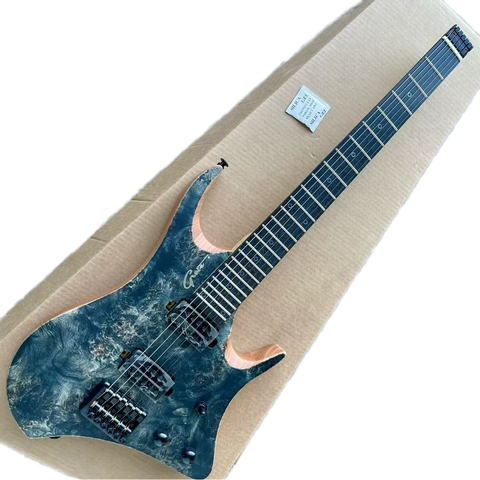
Gusto Guitar GTWT-01 reference image. Confirm fret count, scale and upper-register access as separate model specifications.
Define upper-register needs in a 22-fret vs 24-fret comparison
On the same tuning and string, moving from the 22nd to the 24th fret adds two semitones of fretted range. The 24th fret is two octaves above the open string. That relationship is about pitch positions, not the number of strings on the instrument.
For a six-string in ordinary E standard tuning, the first string is open E; its 22nd fret gives D and its 24th gives E two octaves above the open note. This example must be adjusted if the tuning changes. Do not quote the same highest-note claim for every alternate tuning.
Write down the actual notes in your arrangements. If the extra frets appear only in a passage you never intend to play, they may not be a priority. If a recurring line needs those positions, access to them can become a genuine requirement rather than a brochure advantage.
Fret count is not scale length
Scale length and fret count describe different dimensions of a guitar. A maker can place different numbers of frets on instruments sharing a nominal scale. More frets do not automatically make the distances between familiar lower-position frets larger.
A documented comparison is available in the PRS 2025 product catalogue, which lists both S2 Standard 22 and S2 Standard 24 configurations with a 25-inch scale. The catalogue also contains other specification differences, so it should not be treated as a controlled tonal experiment.
For any proposed Gusto model, request the actual scale and fret count independently. Do not fill a missing scale field from the number of frets or assume a copied catalogue title has correctly described both.
Upper access is a physical test
Cutaway clearance
Play the high-register phrase rather than just touching the last fret. Check whether the body allows the fingers and hand to move through the required positions. A visible cutaway does not prove that every player can use the highest notes comfortably.
Heel and thumb position
Notice where the thumb and palm meet the neck joint. Some players change their hand position in the upper register, and the shape of that transition matters. Ask whether the difficulty is access, technique or an unsuitable setup before attributing it to fret count alone.
Standing and seated reach
Repeat the passage in the position where you will perform it. The guitar may sit differently on a strap than on the leg. An audition performed only with the instrument held unusually high or tilted may not represent your working position.
Compare the part with its musical context
Take a melody or solo phrase that actually approaches the upper limit. Identify which notes are essential and which can be phrased elsewhere. A different fingering may be acceptable, but it should be a deliberate musical choice rather than a surprise after purchase.
If the passage uses a bend to reach a higher pitch, test that movement on the actual instrument. A bent note is not identical in articulation or feel to an independently fretted note. Do not assume it is always a suitable substitute for a missing position.
Also listen to the high notes with the rest of the arrangement. Being able to touch the last fret is not the whole test; the note must speak in the way the phrase requires, with manageable noise and a response you can control.
Do not infer a universal pickup sound from fret count
The neck pickup and the end of the fingerboard both need physical space in a design. However, the exact layout depends on the complete instrument. Ask for the actual pickup positions and model rather than assuming every 24-fret guitar makes the same change relative to every 22-fret guitar.
When two samples also differ in pickups, bridge, construction, strings or setup, their audible difference cannot be assigned solely to two extra frets. Listen to the complete guitars and describe your preference at that level.
The official Ibanez RG7421 specification, for example, lists 24 frets alongside separate scale, neck and pickup information. That separation is the right way to read a specification: the fret count does not replace the other fields.
A practical 22-versus-24 comparison
| Requirement | What to test | What to record |
|---|---|---|
| Required notes | The highest passages in the intended tuning. | Which fretted positions are genuinely needed. |
| Access | A phrase across the last several frets, seated and standing. | Clearance, hand position and any uncomfortable movement. |
| Note response | Single notes, sustained notes and relevant bends. | Whether the intended phrase works at the approved setup. |
| Lower-register fit | Ordinary chords and familiar position changes. | Whether the rest of the guitar remains comfortable. |
| Specification | Scale, profile, radius, frets, strings and pickup layout. | Differences that prevent a one-variable comparison. |
Inspect the working condition near the end of the board
Play individual notes through the upper area with your normal attack. Listen for an uneven response or unwanted contact that interrupts the phrase. A guitar with more positions still needs an appropriate setup and fretwork.
If a note fails during a bend, have the cause assessed rather than assuming all 24-fret guitars behave that way or that 22 frets would automatically fix it. Fingerboard geometry, frets and setup belong in that investigation.
For a remote sample, request a slow demonstration that names the tested positions. A fast solo may pass over an issue too briefly to evaluate. Keep the string set and tuning identified so a later check can reproduce the conditions.
Do not sacrifice the rest of the instrument for an unused feature
A player can become so focused on the last two frets that ordinary comfort and control placement receive little attention. Spend most of the audition on the material you actually play most often, then verify the upper requirement specifically.
If both instruments cover the repertoire, compare their complete fit, useful sounds, support and cost. There is no need to invent a deficiency in the 22-fret guitar simply because another model offers 24.
If only the 24-fret model meets an essential note requirement, still check that the positions are usable and that the rest of the design suits you. Available range and usable range should agree before approval.
For dealers, define the role of each model
Use fret count as one clear field in the product record, not as a general skill rating. A 22-fret guitar is not automatically for beginners and a 24-fret guitar is not automatically for advanced players. Match the model to a customer task.
Keep the approved sample’s fret count, scale, neck dimensions and upper-access photographs together. If a supplier offers another configuration, ask which fields change. A different fingerboard length can be part of a wider design change rather than a simple cosmetic option.
On the website, describe the actual product and avoid claiming two octaves of additional range when the real difference is two frets. Also distinguish frets from strings when sorting catalogue titles; a seven-string instrument and a 24-fret instrument answer different questions.
Verify catalogue wording before counting models
Use the actual fret-count field and a clear view of the complete fingerboard. Decorative inlays or a cropped photograph are not a dependable counting method. If the title and specification disagree, ask the supplier to resolve the discrepancy before publishing the page or treating it as a different model.
Check upper-fret access on complete models in the solid-body guitar range. If the shortlist includes a headless design, the headless guitar buying guide adds balance and playing-position checks that the fret count cannot describe.
Common fret-count questions
Does 24 frets mean a longer scale?
No. Request both specifications separately. Manufacturer examples show that 22- and 24-fret configurations can share a scale length.
Is 24 frets required for lead playing?
Only your actual parts establish the necessary range. Many lead passages fit within 22 frets; others need the additional positions.
Can I rely on a bend instead of an extra fret?
Sometimes an arrangement permits that choice, but the articulation and physical requirement differ. Test the exact phrase instead of assuming equivalence.
Explore Gusto Guitar’s headless guitars and extended-string category, then request confirmed fret count, scale and upper-access details for your shortlist.

Get Best Guitars
Join Gustoguitar.com Newsletter to get more information of electric guitars, classical guitars, and all kinds of guitars.


