

 By Gusto Guitar
Identify the exact hardware before choosing strings, adjusting the bridge, or ordering spare parts.
Headless guitar string locks and bridge tuners must be identified as an exact hardware system before you choose strings or make adjustments. A buyer needs to identify where the string is anchored, where it is tuned, and which parts can be adjusted. Similar photographs can conceal different mechanisms and service requirements. This guide explains the questions that make a headless system understandable without assigning an unverified bridge brand to a Gusto instrument or treating one manufacturer’s instructions as a universal procedure.
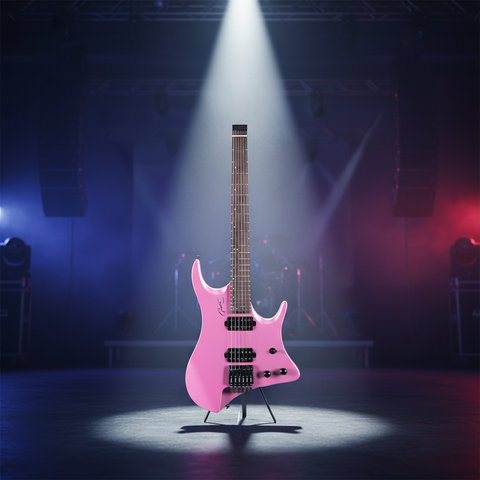
Identify headless guitar string locks and tuner designs
Start at one end of a string and follow it visually to the other. Identify the point where it is retained near the end of the neck, its bearing points, and the mechanism used for tuning. Ask the supplier for labeled photographs if the arrangement is unclear. A product title that says locking system is not a sufficient parts map.
Separate a retaining screw from an adjustment screw. Several small screws may appear near the same bridge assembly but perform different jobs. Do not turn one to discover its purpose. The correct hardware guide should identify the controls and explain which adjustments are intended for the user. Keep that guide connected to the actual model and hardware revision.
Understand why hardware generation matters
A manufacturer may revise a lock, tuner, washer, or adjustment mechanism while retaining a similar overall appearance. Ask for the hardware name and generation where available. If no branded identification exists, request a supported supplier part reference and clear photographs. Accurate identification is more useful than assigning a famous system name because the silhouette looks familiar.
The official EGS Arc guide separately identifies its locks, tuners, and adjustment parts. That named example shows why a system-specific guide matters. Its screw sizes, procedures, and component details apply to the described strandberg hardware, not automatically to another headless guitar.
Check the string format it accepts
Ask whether the system uses ordinary single-ball strings, a double-ball format, or another specified arrangement. Confirm the permitted string dimensions and any constraints around wound sections or end construction. Do not assume that every headless guitar accepts every conventional set simply because some headless systems do.
For extended-range instruments, verify the intended low-string fit at the actual lock and bridge. Nominal gauge is only one piece of the compatibility question. A string’s construction can affect where it fits and bears. Request the approved set or maker’s compatibility information rather than forcing a string through a component that appears too small.
Distinguish tuning from intonation and action
A tuning control changes the string’s pitch in normal use. Action and intonation adjustments concern different aspects of setup and may involve other parts of the assembly. Ask the maker to identify each function in the actual system. An instrument can be easy to tune while requiring a specific procedure for other adjustments.
Keep a record of the delivered strings and tuning before making setup changes. If several variables change together, later observations become harder to interpret. A buyer should be able to describe what was received and what was adjusted. This matters especially when assessing a sample for repeat production or discussing a problem with a supplier.
Examine access and operating space
Check whether the tuning controls can be reached comfortably in the normal playing position. Confirm the tools needed for any permitted maintenance and whether they are included. A compact body can place controls close together, so judge access on the actual instrument rather than an isolated hardware photograph.
For storage and carrying, check clearance around rear-mounted tuners and any exposed string ends. A headless outline can reduce one dimension while leaving other projections that need protection. Do not approve a case by overall length alone. A useful media record shows the bridge and neck-end areas clearly without pretending that the photograph proves compatibility.
Evaluate the lock as part of the whole setup
The lock must be used according to its own instructions. More force is not a general cure for slipping, and an unfamiliar small component should not be removed simply because another system omits it. If the string will not remain secure, stop and identify the mechanism before repeating the attempt.
Ask whether the system has replaceable wear parts and how they are named. A small missing or damaged part can make a large practical difference, but that does not justify improvising a substitute. Retain the supplier’s approved part reference and a clear photograph. This improves future service without claiming that a generic replacement will fit.
Compare fixed and moving bridge arrangements separately
Headless describes an overall layout, not a guarantee that the bridge is fixed. Identify whether the actual instrument has a fixed system or a moving bridge and obtain the relevant instructions. A string change, tuning change, or setup adjustment can require different handling depending on that mechanism.
For a purchase brief, state the required bridge function explicitly. Do not rely on an image caption or body-style name to carry the requirement. Ask the supplier to confirm the operating behavior in writing and demonstrate the sample if needed. That closes a functional question that a broad headless label leaves unanswered.
Test the system without overinterpreting one symptom
Tune the instrument using the prescribed method and observe its behavior under normal playing. If pitch changes repeatedly, record which string, what action preceded the change, and whether the condition is repeatable. Avoid immediately blaming the lock, bridge, string brand, or absence of a headstock. Several factors can require investigation.
Use the maker’s troubleshooting route where available. Supply the hardware identification, string set, tuning, and relevant photographs. A concise evidence record can be more useful than repeatedly turning controls or replacing parts. If you cannot identify the system, ask the supplier to do so before following another brand’s repair instructions.
Build a spare-parts record early
For an individual instrument, retain the model, hardware revision, adjustment-tool information, and replacement route. For a wholesale order, ask which parts can be supplied and under what current terms. Availability should be confirmed; a generic statement that spare parts exist does not identify the correct component or guarantee future stock.
Record critical dimensions only from reliable documentation or actual measurements. Similar threads or outer shapes do not establish interchangeability. A replacement tuner, lock, saddle, or screw should be checked against the actual assembly. The cost of a small part is less important than avoiding damage from installing an incompatible one.
Write a useful headless specification
A strong specification identifies string count, actual scale arrangement, bridge function, string format, hardware reference, and relevant instructions. Keep those fields separate from body weight and travel claims. Headless does not automatically mean multiscale, exceptionally light, or suitable for every airline bag.
If the supplier cannot confirm a field, mark it as awaiting evidence. Do not fill the gap with specifications from a visually similar branded guitar. A clear partial record is safer and more useful than a confident but unsupported complete one. It also directs the next inquiry toward the exact information needed for approval.
Keep tool information with the actual revision
Ask which tools are needed for normal operation and which are reserved for setup or service. Label them by function where practical, using the correct documented sizes rather than an assumed universal set. Keep tools secured away from the finish during carrying. If hardware is replaced, check whether the tool list and instructions also need revision. A small maintenance kit is useful only when its contents match the instrument; carrying an almost-fitting key does not make an unfamiliar adjustment safe or repeatable.
Identify the model in the headless electric guitar range and request the instructions for its installed hardware. The headless guitar buying guide places string locks, bridge tuners and maintenance access within the complete buying decision.
What to ask before ordering
| Function | Identify | Do not assume |
|---|---|---|
| String retention | Actual lock and required parts | Every screw is a clamp |
| Tuning | Normal pitch-adjusting control | All bridge controls tune |
| Setup | Separate action and intonation controls | One method suits all systems |
| Strings | Approved format and fit | Any gauge fits |
| Service | Hardware revision and part reference | Similar appearance means interchangeable |
Identify the headless candidate in the Gusto Guitar product range and request current hardware photographs, the string specification, system instructions, and parts identification. Ask for a demonstration of normal tuning and any promised functions. Keep the response attached to the model rather than treating it as a statement about every headless instrument.
The right system is one the player can operate and the buyer can document and support. That decision may depend on access, string availability, maintenance, and service as much as appearance. Understanding the exact locks and tuners turns a novel-looking instrument into a practical product with clear requirements and a reliable route for future questions.

Get Best Guitars
Join Gustoguitar.com Newsletter to get more information of electric guitars, classical guitars, and all kinds of guitars.


