

 By Gusto Guitar
Compare the playing surface, finish, appearance, and verified specification of the actual neck.
An ebony vs rosewood fretboard comparison involves the playing surface, fretwork, neck shape and care requirements of the actual instrument. The fingers meet strings, frets, edges, and sometimes the board itself, while neck shape and setup affect the whole experience. A useful comparison separates those factors instead of attributing every difference to the wood. This guide explains how to assess appearance, feel, care requirements, and the reliability of material descriptions. It does not identify a species from a photograph, assign an automatic quality grade, or promise a tonal result for a particular Gusto guitar.
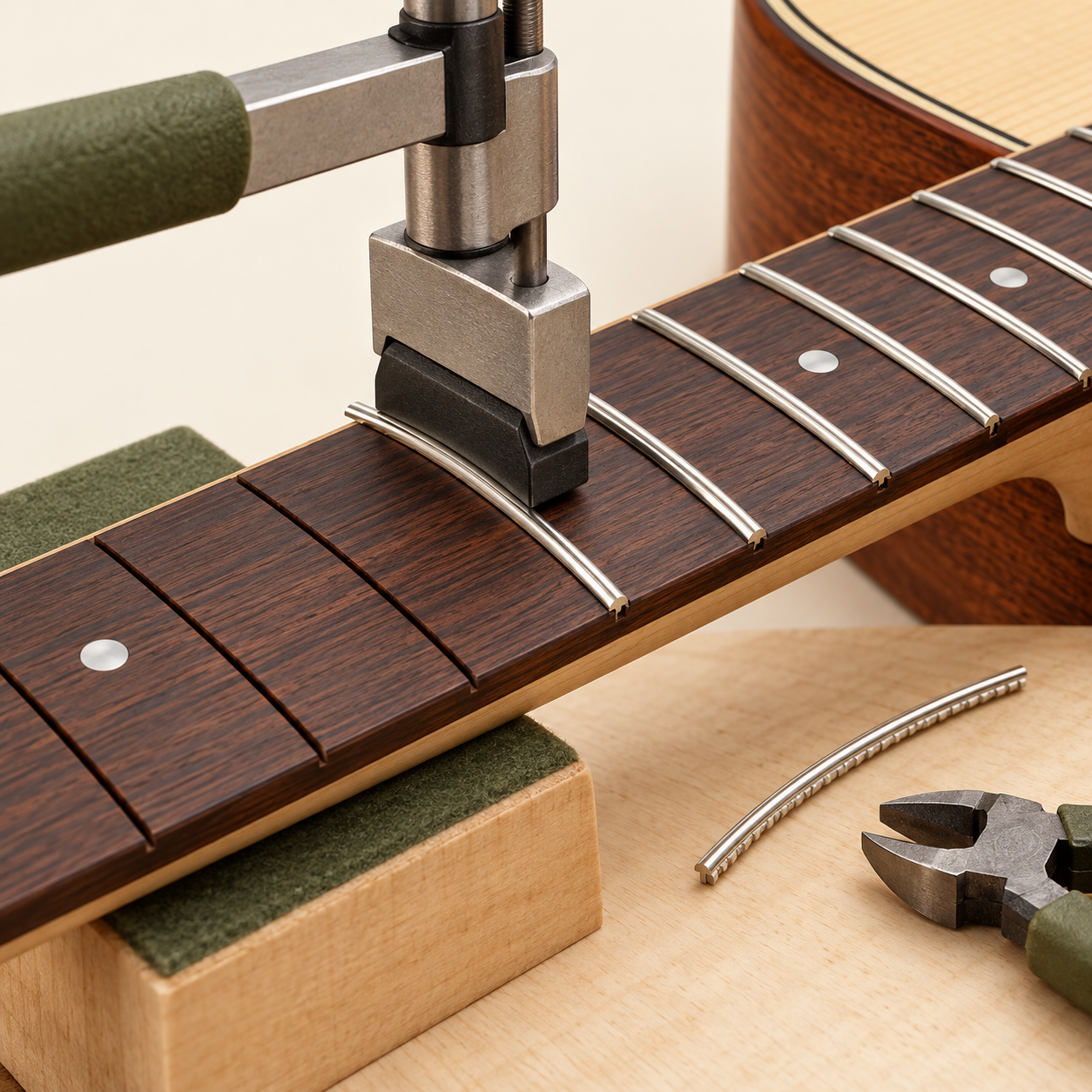
Compare ebony vs rosewood at the playing surface
Ask for the fingerboard material of the exact model and revision. Keep it separate from the neck-shaft material. A maple neck with a dark fingerboard is not contradictory, but a listing that alternates between ebony and rosewood needs clarification. Request a corrected record before approving a sample or publishing a product description.
Ask whether the material wording is a commercial description or an exact species declaration. Do not upgrade a broad term into a botanical claim without evidence. If precise species matters to the order, make it part of the purchasing requirement. Photographs can show the surface and workmanship, while material records answer a different question about identity.
Do not make blackness a quality test
Fender’s discussion of ebony fingerboards explains that natural ebony can include lighter streaks. Color variation therefore should not automatically be treated as a defect or proof that a board is another material. The historical article is useful for that appearance point; its older trade-rule discussion should not be used as current legal guidance.
For either material, agree the intended visual result. A buyer seeking a uniform appearance may need a defined reference, while another may welcome natural variation. Neither preference establishes a universal grade. Ask whether any coloring or finishing treatment is used and how it should be described. Keep the approved appearance separate from the material-identity record.
Evaluate feel on the complete neck
Play the same passages on the candidates if a physical comparison is possible. Include chords, shifts, bends, and work at different parts of the neck. Notice whether the preference concerns the board surface, fret height, neck thickness, string spacing, or edge finishing. These features can change together between models and make a simple wood explanation unreliable.
Check the instrument seated and standing using a comfortable position. Do not force a painful grip to decide whether the wood is fast. A fretboard preference should be connected to an actual playing experience, not a label that tells you what to feel. Record which neck and setup were tested so that your notes remain useful when considering another model.
Inspect the frets and edges independently
Look for the agreed quality of fret-end finishing, seating, and surface condition. Check normal playing movement for roughness or a repeatable note problem. A premium material label cannot compensate for poor fretwork. Conversely, a well-prepared board should not be dismissed simply because another material has stronger marketing associations.
If a sample has an issue, document the string, fret, action, and observable symptom. Avoid diagnosing the cause from the wood alone. The relevant remedy may concern setup, fretwork, or another part of the neck. Keeping the observation separate from a guessed explanation makes communication with the supplier more accurate and easier to act on.
Ask whether the board has a finish
Care instructions should follow the actual surface and the instrument maker’s guidance. Do not assume every dark fingerboard is unfinished or that every product sold as fingerboard oil is appropriate. Ask for the model’s maintenance instructions and compatible cleaning method. A retail label such as lemon oil does not by itself establish suitability for a particular surface.
Start with the least intrusive approved cleaning method. Keep liquids and abrasive materials away from areas where the maker has not authorized them. If the board has an unknown treatment, obtain clarification before applying a product. The purpose is to preserve the actual instrument rather than follow a generic routine attached to a wood name.
Compare sound at the right level of certainty
When two instruments have different pickups, scale lengths, strings, bridges, or construction, their sound cannot isolate the fingerboard material. You can still decide which instrument you prefer. Record that as a complete-instrument preference and avoid turning it into a guarantee that every ebony board sounds one way and every rosewood board another.
A more controlled trial can reduce some uncertainty but does not remove all variation between individual instruments. Use consistent amplifier settings and playing material where practical. Ask whether the difference matters in the actual musical setting. A small impression in a quiet comparison may be less important to your purchase than comfort, reliable setup, or the ability to obtain the required specification consistently.
Distinguish material preference from product positioning
Some customers search for a particular fingerboard material because of prior experience or an aesthetic preference. That can be a legitimate range-planning consideration. It does not require claiming that one material is always professional and the other entry level. Explain the actual instrument’s features rather than using wood terminology as a substitute for a complete value proposition.
For a retailer, keep the customer’s practical question visible. Someone may want a smooth-feeling neck, a certain visual contrast, or familiar maintenance. Translate that need into verifiable characteristics and a sample trial. A material-only recommendation can overlook a neck that fits the player better even though its board carries a different name.
Check consistency when ordering several instruments
Keep the approved sample’s material declaration, appearance photographs, and specification revision together. Agree how natural variation will be handled in a batch. If a supplier proposes a material substitution, ask whether it changes appearance, maintenance, customer expectations, or the approved product description. Do not let a visually similar substitute pass unnoticed into an existing listing.
Inspection should identify what can be checked directly and what depends on documentation. Surface condition and visible workmanship can be examined on the completed instrument. Species may need supporting records. A report that labels everything visually verified can overstate the evidence. Use precise status language so future buyers and service staff understand the basis of the claim.
Keep sourcing questions current
Ask for any material documentation relevant to the actual species, shipment, and destination. Do not infer current trade requirements from an old guitar article or a seller’s general assurance. If compliance advice is needed, consult current official sources or an appropriately qualified adviser for that transaction. This comparison intentionally avoids making a blanket legal claim about all ebony or rosewood.
For product content, retain only claims you can support. Avoid unsupported environmental labels, origin claims, and assumptions that natural streaking indicates poor sourcing. A transparent supplier record can distinguish a material declaration, a chain-of-custody document, and a general marketing statement. Those are different evidence types and should not be treated as interchangeable.
An example of a useful comparison record
Suppose two hypothetical guitars feel different under the same short playing trial. One has an ebony board, taller frets, and a flatter radius; the other has rosewood, lower frets, and a different neck profile. Record all those differences. The trial supports choosing between those guitars, not a claim that the fingerboard species alone produced the preference.
If you want to understand the preference, ask to try a closer configuration match. Keep your original notes and identify which feature seems important. You may discover that fret height or neck shape matters most. That is a useful result because it helps you select the next instrument without relying on an explanation the test never established.
Review the actual neck and fretboard on a model in the solid-body guitar range. If you are also considering a different instrument format, the headless guitar buying guide provides a broader checklist so fretboard material does not become the only selection criterion.
What to request from Gusto Guitar
| Question | Evidence | Do not infer |
|---|---|---|
| What is the material? | Model-specific declaration | Species from darkness |
| Why does it feel different? | Neck and setup trial | Wood as the only variable |
| Is variation acceptable? | Agreed appearance sample | Streaks as automatic defects |
| How should it be cleaned? | Maker-approved care | Any oil suits every board |
| Can the order repeat it? | Revision and change record | Photo equals material proof |
Identify the relevant instrument in the Gusto Guitar product range, then request its current fingerboard statement, neck measurements, finish information, and care instructions. Ask for sample photographs that show the actual surface and edges. Do not assume that a dark board in a catalog image proves a specific material or grade.
Choose the verified instrument that fits the player’s needs and the order brief. Ebony and rosewood can both be part of a suitable build; the decision should remain connected to the complete neck, its workmanship, and the evidence available. A careful comparison yields clear questions and an informed preference rather than a universal winner that ignores the guitar itself.

Get Best Guitars
Join Gustoguitar.com Newsletter to get more information of electric guitars, classical guitars, and all kinds of guitars.


