

 By Gusto Guitar
Choose the pitch-control function you will use, then compare tuning routines, setup changes and service requirements for the exact bridge—not just the presence of an arm.
A fixed bridge vs tremolo decision should connect the player’s needs with the setup and maintenance requirements of the exact installed bridge. If a part depends on an arm-controlled pitch movement, that function deserves a place in the brief. If it does not, a simpler working routine may matter more. The comparison is not a contest between basic and professional hardware: it is a decision about what the complete instrument must do and what its owner can maintain reliably.
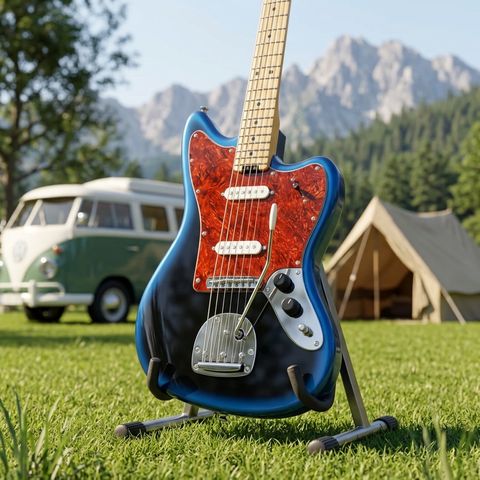
Gusto Guitar GTST-03 reference image. Confirm the installed bridge design and operating range; appearance alone does not establish a brand or mechanism.
Define playing requirements for fixed bridge vs tremolo
A fixed bridge does not move as an arm-operated pitch-control system during ordinary playing. It can still have adjustments for setup, and the way those adjustments are made varies between designs. Do not interpret fixed as a promise that the instrument never requires intonation or string-height work.
The string anchoring arrangement is another field to confirm. A separate tailpiece, a bridge-mounted anchor and strings passing through the body should not be treated as interchangeable descriptions. Ask for the actual model and its instructions when service or replacement compatibility matters.
For a player who does not need an arm, the main benefit may be avoiding an unused moving system and its operating routine. That is a practical preference rather than proof that every fixed bridge provides better sound or perfect tuning.
Tremolo is a family of systems, not one specification
Fender’s tremolo primer explains that these systems change pitch even though the familiar guitar term is tremolo. Their complete operation can involve more than the bridge alone, including the tailpiece, arm and other components.
Ask whether the supplied arrangement allows downward pitch movement only or movement in both directions. Also confirm whether it is set to float or supplied in another operating state. The presence of an arm does not answer all of those questions.
Do not identify a particular branded system solely from its outline in a photograph. A visually similar bridge may have different parts, mounting dimensions or procedures. For a quotation, record the exact designation or a clear unbranded specification rather than borrowing a premium brand name.
Understand the balancing issue on a floating system
Yamaha’s electric-guitar troubleshooting guide describes a floating arrangement as a balance between string tension and spring tension. It explains why disrupting that balance can make tuning one string affect the others.
This is why a proposed change of tuning or string set deserves consideration before the purchase, not only after arrival. Ask how the guitar is supplied and what work may be needed for the configuration you intend to use. A factory setup in another tuning is not necessarily your finished working setup.
The lesson is not that every tremolo is difficult or that a player cannot learn its routine. It is that a floating mechanism introduces a relationship absent from a fixed arrangement. Give yourself a suitable instruction and support plan if the function is valuable to your music.
Compare the bridge through a real part
Arm-controlled phrasing
Play the movement you actually need: a gentle pitch variation, a larger downward movement or another specific gesture. Ask whether the sample supports that range and whether the arm position suits the picking hand. An impressive extreme demonstration may say little about subtle control.
Ordinary bends and held notes
Include a bend against another sustained string if that is part of your vocabulary. Floyd Rose’s troubleshooting guidance notes that other strings can go slightly flat when a string is bent on a floating arrangement. Decide whether that behaviour matters in the part you are evaluating.
Return to the starting pitch
After representative arm use, check tuning with a tuner and repeat the phrase. Record what happened instead of accepting a general assurance of excellent stability. If a problem appears, have the complete system assessed; bridge branding alone does not diagnose the cause.
Do not confuse locking hardware with a universal guarantee
A locking system may have specific string clamps, fine tuners and operating instructions. A locking tuner is another component and should not automatically be treated as the same thing as a locking bridge and nut arrangement.
Ask which points actually lock the string and which tuning controls remain available in normal use. If tools are required, confirm what is supplied and how replacements are identified. The buying record should make the ordinary tuning process understandable.
Also evaluate adjustment access while holding the guitar normally. A system can function well yet be inconvenient for a particular player’s hands or performance routine. That is a fit question worth resolving before committing to a configuration.
A bridge decision worksheet
| Requirement | Fixed-bridge question | Tremolo-system question |
|---|---|---|
| Musical function | Do the required parts work without arm-controlled pitch changes? | Does the actual operating range support the intended gestures? |
| Tuning routine | Is the intended tuning and string set approved? | How does the supplied operating state affect retuning? |
| String changes | What is the stringing route and required tool set? | What procedure maintains or restores the correct setup? |
| Performance | Are bends, palm muting and hand position comfortable? | Are those tasks and arm operation comfortable together? |
| Support | Can model-specific parts and setup help be obtained? | Are the correct arm, clamps, springs and service details identified? |
Plan for retuning and changes between songs
If your set uses several tunings, rehearse the actual transition with the proposed instrument. Do not assume a change that was quick on a fixed bridge will require the same routine on a floating system. Ask whether another instrument or an agreed setup approach is more practical for the show.
Similarly, ask how a string failure would affect the performance routine and what recovery is realistic for that mechanism. You do not need to deliberately break a string during an audition. You need the maker’s explanation and a workable contingency.
These questions can change the value of a feature. An arm that is essential in several songs may justify extra preparation, while an unused system may add work without serving the brief.
Budget for the correct setup and service
Request the intended tuning, installed string gauges and supplied bridge state in the order. Confirm who will perform any necessary adjustment after delivery and where competent help is available. A setup allowance is part of comparing the working product.
Do not apply adjustment instructions from a different bridge simply because both have an arm. Follow the exact maker’s procedure or use qualified assistance. Likewise, avoid assuming replacement arms and other small parts interchange because they look similar.
For dealers, retain the bridge identity and parts references with the sample record. If a later batch uses another unit, assess the operational and service differences before treating it as a cosmetic substitution.
Make a remote bridge demonstration reproducible
Ask for a continuous sequence: show the initial tuning, play the relevant phrase, use the arm within the intended range where fitted, then show the tuning again. Keep any retuning visible. Separate clips can hide the operating routine you are trying to assess.
Record the string set and tuning alongside that sequence. If a sample is adjusted later, repeat the same test before deciding whether the change improved the result. Agree any acceptance criteria with the supplier rather than inventing a universal tolerance from one video. This turns a claim about stability into an observation that both parties can discuss.
A fixed bridge is not a sound-quality shortcut
Different sample guitars may differ in construction, pickups, strings and setup as well as bridge design. A listening preference between them does not isolate the bridge as the cause or prove a universal sustain ranking.
Evaluate the complete instrument through your music, then judge whether the pitch-control function and ownership routine fit. That produces a more defensible decision than buying a bridge category because a slogan promises the best tone.
Match the proposed bridge to an instrument in the solid-body guitar category. For a compact tuning layout, the headless guitar buying guide supplies additional identification and maintenance questions before choosing hardware.
Questions before approving the model
Does every tremolo pull pitch upward?
No operating range should be assumed. Confirm the actual design and supplied setup state.
Is a fixed bridge always better for beginners?
It may simplify some routines, but the player’s goals and available setup support matter. Choose a manageable instrument with the required functions.
Can a photo confirm a branded bridge?
Do not rely on resemblance alone. Request identification and the relevant specification from the supplier.
Compare Gusto Guitar’s solid-body models and request the exact bridge configuration and setup details for the guitar you intend to order.

Get Best Guitars
Join Gustoguitar.com Newsletter to get more information of electric guitars, classical guitars, and all kinds of guitars.


