

 By Gusto Guitar
Choose protection by fit, handling, and travel conditions rather than by a simple soft-versus-hard label.
Comparing a guitar gig bag vs hard case starts with the instrument, the journey and the protection each carrier can actually provide. A well-fitted padded bag may be convenient for a short journey you control, while a suitable rigid case may be preferable when other equipment can press against the instrument. Neither category guarantees that a guitar will survive every impact, journey, or weather condition. The useful comparison begins with the instrument’s shape, the way it is supported, and the handling risks you expect. This guide explains those decisions without claiming that any unverified Gusto bag or case has a particular protection rating.
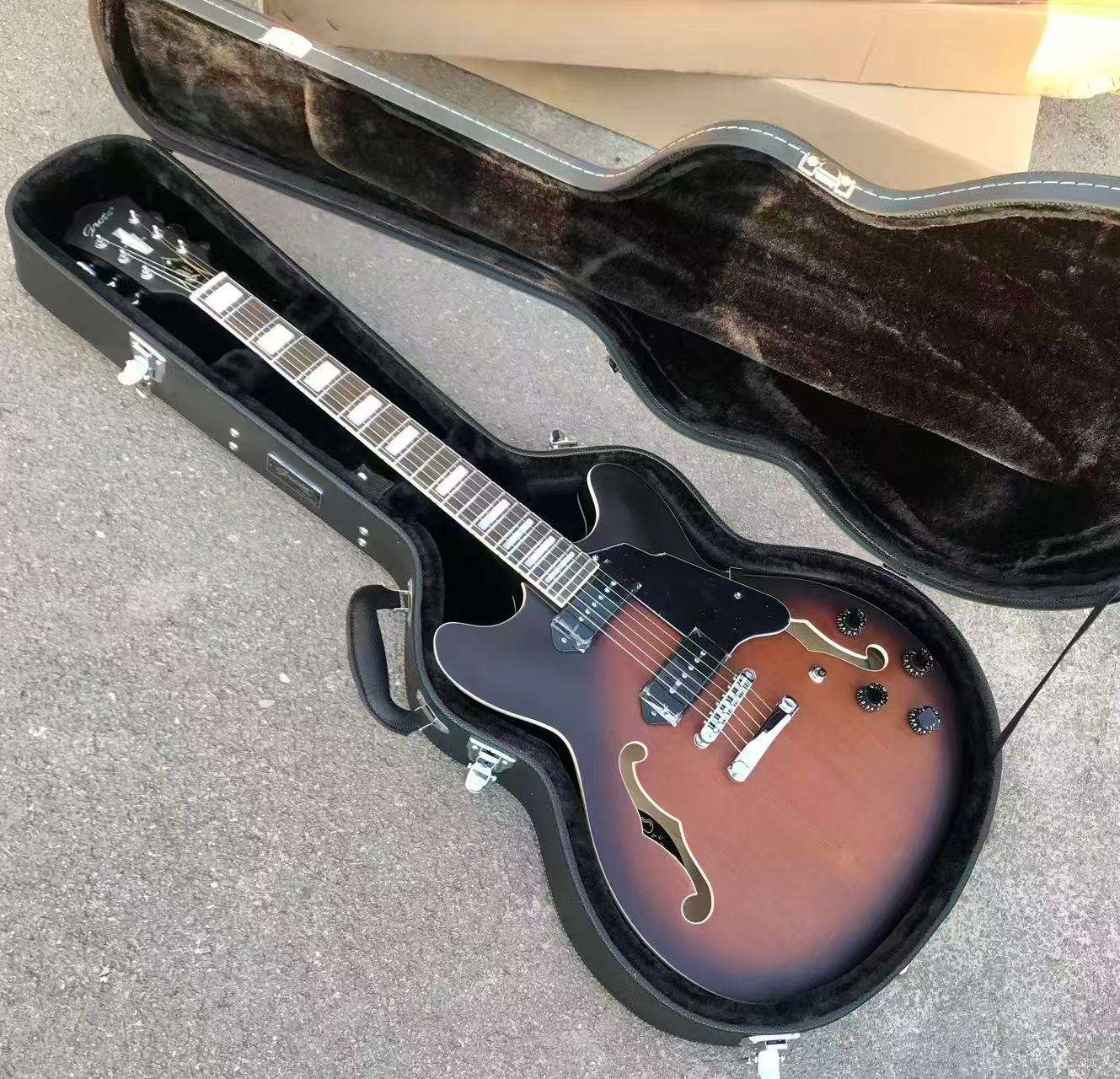
Compare guitar gig bag vs hard case construction
Think through the trip from the instrument stand to the destination. Will you walk, use public transport, place the guitar in a car, hand it to another person, or pack it with other equipment? Who controls where it is placed? A journey involving stairs and crowded doors creates different priorities from a storage rack or a courier shipment. Write the main risks in plain language before comparing product labels.
Distinguish carrying from shipping. A bag that is comfortable on your back is not necessarily suitable as the only protection in a parcel network. Similarly, a rigid case is not automatically a complete shipping package. External packaging, restraint, cushioning, and the carrier’s requirements remain separate questions. Evaluate each stage instead of asking one accessory to solve every possible transport situation.
Fit comes before the shell category
Check that the instrument fits the actual interior shape. Overall length alone is insufficient when the body has an offset outline, unusual horns, an angled headstock, or a protruding control. A guitar that slides within a hard case can still suffer damage. A tight bag can press against hardware or require force to close. Neither is an acceptable fit merely because the product description says electric guitar.
Gator’s official measuring guidance separates overall length from body dimensions and bout widths. Use those profile measurements to discuss fit with the case maker. The lesson is to compare an instrument’s actual envelope with the relevant interior, rather than using scale length as a substitute for case size. Exact clearances still need confirmation for the chosen pair.
What a gig bag can make easier
A gig bag often favors portability, flexible storage, and convenient carrying. Look at the handle, shoulder straps, balance, and opening arrangement rather than assuming that every padded bag is comfortable. Try lifting it with the intended instrument inside. A good empty-bag impression can change when the guitar’s weight pulls on the straps or causes the bag to hang awkwardly.
Check where accessories sit. A pocket is useful only if its contents do not press into the guitar through the lining. Keep heavy or sharp items away from the instrument unless the design provides an appropriate separate compartment. Verify that the zipper can move without touching the finish and that the guitar can be inserted without dragging delicate areas against the opening.
Padding should be assessed as a system. Thickness is relevant, but fit, material behavior, coverage, and support matter too. A thick-looking panel may leave the bottom edge or hardware area poorly protected. Ask where stated padding is measured and whether the neck is supported. Do not turn one advertised thickness into a universal claim about drop protection.
What a rigid case can add
A hard case provides a more rigid outer structure, but the value of that structure depends on its construction, closure, and internal fit. Inspect hinges, latches, handle attachment, and the way the lid meets the base. A rigid-looking shell with damaged hardware or poor alignment may not provide the protection you expect. Ask for model-specific information rather than judging only by appearance.
Inside, check that support is placed under appropriate parts of the instrument. The lid should close normally without becoming a clamp on the bridge, headstock, or control knobs. There should be no need to force the latches. If a case uses a shaped insert, confirm that it is intended for the actual instrument rather than merely a similar body style.
A larger or heavier case may also change handling. Make sure it can be carried safely through the doors, vehicles, and storage spaces you use. A protection choice that is routinely left at home because it is inconvenient may fail the practical requirement even if its construction is impressive. Consider whether separate everyday and occasional-travel solutions make sense for your use.
Compare the weak points, not only the main panels
On a bag, inspect stitching, zipper ends, strap anchors, and the lower contact area. On a case, inspect hinges, latches, feet, handle mounts, and the closure seal where relevant. These features can determine how the accessory behaves during normal handling. Record observable concerns without claiming a strength rating from a visual inspection.
Ask what can be repaired and how parts are identified. A replaceable strap or latch can extend useful service, but availability must be confirmed. Keep the product model and purchase record. A general statement about repairable construction is not the same as a current promise to supply every component in your country.
Be precise about water and climate
A water-resistant outer fabric is not proof that the whole bag is waterproof. Closures, seams, wear, and exposure conditions matter. Likewise, a rigid case is not necessarily sealed. If rain exposure is part of your journey, ask what the maker actually claims and what evidence supports it. Avoid treating a material description as a guarantee for the assembled product.
A case or bag also does not replace sensible climate management. Do not assume that either can make a hot parked car or a damp storage room suitable for the instrument. Follow the guitar maker’s care advice and the accessory maker’s restrictions. Keeping weather resistance, humidity management, and impact protection separate makes product claims easier to understand.
Use a practical fit and carry trial
Place the instrument in the accessory on a stable surface. Check support, hardware clearance, and closure without force. Lift it carefully, observe balance, and test the handle or straps in a controlled setting. Reopen it and check whether the instrument has shifted. This is a basic suitability check, not a simulation of rough handling or a certified impact test.
Use the actual accessories you intend to carry, but avoid loading pockets with objects that can damage the instrument. Check that removing the guitar is straightforward and that the lid or bag does not tip unexpectedly. If the fit remains uncertain, send measurements and photographs to the maker before using it for transport. Do not solve an unknown fit by adding arbitrary pressure points.
Make a decision that matches the risk
For a player carrying the guitar personally over a short, controlled route, portability may be a leading concern. For shared equipment spaces, more rigid protection may be useful. For shipping or checked travel, request requirements specific to that handling system and assess the entire packing arrangement. These examples are decision scenarios, not blanket recommendations for every instrument or carrier.
The better choice is the one that meets your defined needs with a verified fit and realistic protection claims. There is no universal rule that the most expensive bag beats every case, or that every hard shell beats every bag. Compare actual products and evidence at a similar level of detail rather than comparing one category’s best example with the other’s simplest example.
Review guitar bags and cases alongside the instrument that must fit inside. The headless guitar buying guide explains why a different outline and tuner arrangement can change the carrier-fit questions.
Questions to settle before ordering
| Need | Gig bag questions | Hard case questions |
|---|---|---|
| Fit | Does padding support the actual outline? | Does the shaped interior match the guitar? |
| Carrying | Are straps and balance suitable when loaded? | Are weight and handle placement manageable? |
| Handling | Are vulnerable areas covered? | Are shell, latches, and internal supports suitable? |
| Weather | What does the assembled bag claim? | Is a seal or rating actually documented? |
| Shipping | What extra packing is required? | What extra packing is required? |
Ask for the interior dimensions, intended instrument shapes, support arrangement, included straps or keys, care instructions, and any documented transport or weather claims. Confirm whether the listing’s dimensions are internal, external, or shipping measurements. For wholesale orders, agree the product revision and sample before relying on a photograph to approve a batch.
Review the Gusto Guitar product range to identify the instrument that needs protection, then request the current bag or case options and their actual fit information. A useful inquiry names the guitar and intended journey. It leaves performance limits open for verification instead of treating a familiar accessory name as a complete specification.

Get Best Guitars
Join Gustoguitar.com Newsletter to get more information of electric guitars, classical guitars, and all kinds of guitars.


