

 By Gusto Guitar
First distinguish a complete body from a maple top or neck, then compare the actual builds.
A maple vs mahogany comparison should first identify which part of the guitar each material description actually refers to. One may name a maple neck, another a maple top over a different body, and a third a body declared as mahogany. Before comparing price, sound, or weight, establish exactly what each material statement covers. This guide shows how to read those claims, document the construction, and assess complete instruments without assuming that a decorative top reveals the hidden body or that one wood guarantees a particular result.
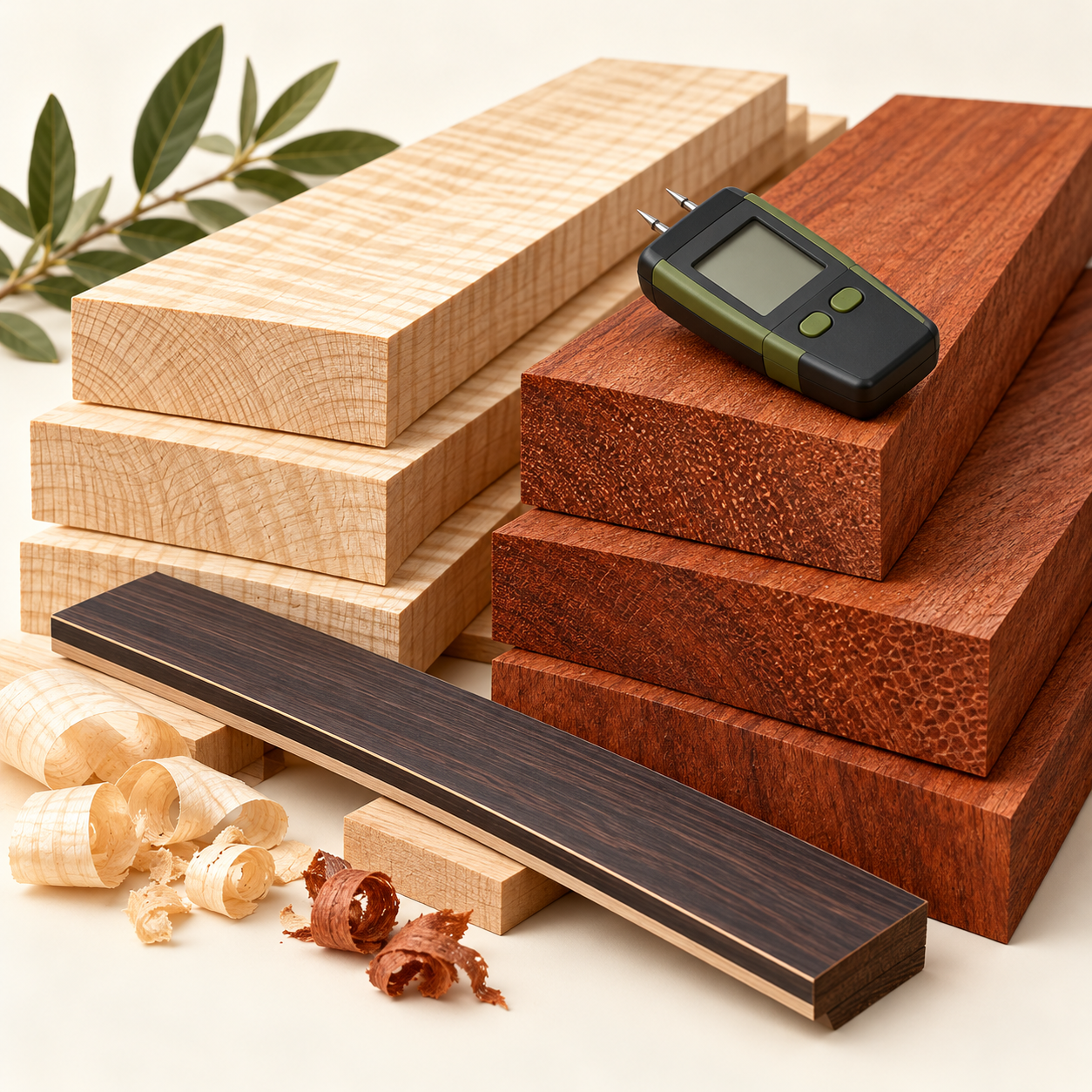
Identify the parts in a maple vs mahogany comparison
Divide the guitar specification into main body, separate top, neck, and fingerboard. Write a material statement for each relevant part. If a listing says maple guitar but only the neck field names maple, it does not establish a maple body. If it says mahogany with maple top, the two materials may be used together rather than offered as competing whole-body choices.
Fender’s body-wood overview notes that maple can be used as a top rather than the entire body. This is a useful terminology distinction. It is not evidence of the construction in a particular Gusto model. Ask the supplier to state the actual layers and their roles before using the material comparison in a buying decision.
Separate a structural top from a decorative surface
A visibly figured surface does not establish whether it is a substantial top, a thin decorative layer, or another finishing method. Request an accurate description and any relevant thickness specification. Keep the method of verification visible: a production drawing, a controlled material declaration, or a suitably documented construction photograph answers a different question from an exterior beauty shot.
Do not assume that a decorative layer makes the instrument poor quality, or that a thicker top makes every other aspect superior. Decide whether construction thickness matters to your requirement. A buyer may primarily want a particular appearance, while another requires a defined build. Both need an honest description, but their acceptance questions are not identical.
Compare full specifications before discussing tone
Two guitars with different pickups, bridges, scale lengths, and neck constructions cannot isolate a body-material difference. Make a side-by-side list of the complete builds. Identify what is held constant and what changes. This prevents a listening preference from being presented as proof that maple or mahogany alone created everything you heard.
For a practical comparison, use the same signal chain and clearly record the samples tested. Listen with the clean and driven sounds that reflect your intended use. Judge whether each instrument delivers the required response. Keep the conclusion at the level of the evidence: you may prefer one complete sample without proving a universal rule about all instruments using its material.
Measure the weight you will actually carry
If weight matters, request a complete-instrument measurement for the proposed sample. Ask whether a range can be agreed for production and how it will be checked. Body dimensions, cavities, layers, neck, and hardware all affect the result. Do not make a precise comfort promise from a generic comparison of material names.
Record balance as well as mass. A guitar may feel different seated and standing even when a scale shows a similar total. Use the intended strap and playing posture during a careful trial. For a retailer, it can be useful to keep actual sample observations rather than describing one material as automatically comfortable and another as automatically burdensome.
Decide what appearance is being purchased
For a transparent or burst finish, specify the acceptable visual reference and the treatment of natural variation. Figuring and color may differ between pieces. Ask whether the quotation includes a selected visual grade and how that grade is defined. A phrase such as premium flame is not a measurable standard unless both sides agree what it means.
For an opaque finish, the hidden material still needs an accurate specification even though the customer cannot see it. Do not let a solid color become an excuse for an uncontrolled substitution. At the same time, avoid claiming that an unseen decorative figure adds visible value to an opaque guitar. Connect each requirement to the product role and the actual finish.
Treat material names with appropriate precision
Commercial wood names can cover more than a buyer expects. Ask the supplier which description it can substantiate and retain that wording in the model record. Do not silently replace a broad commercial term with a botanical species name. If exact species is important to the order, make it an explicit requirement and agree the necessary evidence.
Keep documentation questions separate from visual grading. A beautiful finish cannot prove species, and a species declaration cannot approve finish workmanship. Where trade documentation is relevant, use current official requirements for the actual species and destination. This article does not provide a legal clearance or assume that every material marketed under a familiar name has the same documentation requirements.
Evaluate build quality on its own evidence
Inspect the assembled sample for the agreed neck fit, hardware installation, fretwork, electrical functions, and playing setup. Neither a maple nor a mahogany label demonstrates that these tasks were performed well. A material-focused purchase can still fail if basic playability or the delivered configuration is wrong.
Separate cosmetic observations from functional and structural concerns. Record location, instrument identity, and the relevant requirement. If a problem needs specialist assessment, obtain that assessment rather than diagnosing the cause from the wood name. This produces a useful correction request and prevents unsupported explanations from becoming part of the supplier record.
Ask for a controlled alternative quotation
If you genuinely need to choose between materials, request quotations that identify all differences. Ask whether changing the body material also changes the top, finish process, hardware, or sample approval work. A supplier may propose a different construction to meet the brief; that is useful information if it is visible and agreed.
Do not attribute the entire price difference to a wood premium when the quoted scopes differ. Keep development work, visual selection, packing, and included accessories in the comparison. The purpose is to understand what you are buying, not to force a complex instrument into a simple material-cost ranking that the quotations do not support.
Use samples to settle the right questions
Write the questions the sample must answer before ordering it. Appearance, handling, playing response, and specification verification may require different evidence. A delivered guitar can be tested for playability, while concealed construction may need an agreed production record. Define which evidence will close each question instead of expecting one sample photograph to do everything.
When approving a sample, retain its identification and specification revision. State which changes remain outstanding. If a later order introduces a different top or body construction, decide whether a new approval is required. Keeping change control explicit is especially useful when the finished appearance remains similar enough to conceal a meaningful specification change.
Describe the choice accurately on a product page
Use separate fields for body and top where they differ. Avoid a title that implies a full maple body when the only confirmed maple component is the neck. Explain the verified construction in plain language and use photographs for what they actually show. A caption should not turn visible figuring into a claim about thickness or hidden layers.
Link buying information to the relevant Gusto Guitar product range, then confirm current model details before publishing them. When information conflicts, correct the source record first rather than repeating the preferred version across titles, tables, and SEO text. Accurate internal consistency helps both the customer and the next person maintaining the catalog.
Compare proposed materials within the same solid-body guitar family before introducing another construction variable. For a body with cavities or a center block, the semi-hollow and hollow body guide identifies additional construction questions.
A useful final decision
| Listing phrase | What must be clarified | Evidence to retain |
|---|---|---|
| Maple guitar | Which part is maple? | Part-specific specification |
| Maple top | Construction and declared thickness | Approved drawing or material record |
| Mahogany body | Exact supported material wording | Supplier declaration |
| Figured finish | What creates the visible pattern? | Appearance sample and description |
| Lighter option | Finished instrument weight | Actual sample measurement |
Choose the instrument whose verified construction and complete performance meet your brief. If the brief requires a particular material combination, document it clearly. If the goal is appearance or handling, use the relevant sample evidence and avoid adding unsupported claims about why the result must occur.
The most important outcome may be discovering that the proposed comparison was not maple body versus mahogany body at all. It may be a choice between a separate maple top and a plain-body finish, or between two complete constructions with several differences. Naming that choice correctly makes the purchasing decision more useful than declaring a universal wood winner.

Get Best Guitars
Join Gustoguitar.com Newsletter to get more information of electric guitars, classical guitars, and all kinds of guitars.


